English
  Spanish
  French
  Arabic
  Portuguese
  Russian
  Chinese
 Learn about carbon zinc battery materials, components, dimensions, sealing technology and OEM production service. Huatai Battery provides reliable carbon zinc battery manufacturing and private-label solutions.
Carbon zinc batteries remain one of the most widely used forms of disposable dry battery for cost-sensitive consumer and industrial applications. Although the basic electrochemical principle is mature, producing a reliable carbon zinc battery is not simply a matter of putting manganese dioxide, a zinc can and a carbon rod together.
Battery performance depends on the interaction between electrode materials, electrolyte formulation, zinc can dimensions, carbon rod specifications, separator paper, sealing structure, current collection and assembly accuracy.
For customers looking to purchase finished carbon zinc batteries, develop a private-label product, or purchase battery components and manufacture batteries themselves, understanding these details is essential.

At Shandong Huatai New Energy Battery Co., Ltd., carbon zinc battery manufacturing is part of a much broader battery manufacturing system developed over decades. Huatai’s battery-manufacturing history can be traced back to the Linyi Battery Factory established in 1956. Today, the company is no longer simply a carbon zinc battery factory. It has developed into a diversified battery manufacturer covering carbon zinc batteries, alkaline batteries, lithium batteries, button cells, rechargeable batteries and other new-energy battery products.
This experience is particularly important when customers require a carbon zinc battery with specific discharge performance, dimensions, environmental requirements or private-label specifications.
What Is a Carbon Zinc Battery?
A carbon zinc battery is a primary, non-rechargeable battery based on a zinc–manganese dioxide electrochemical system. IEC 60086 classifies the conventional zinc/ammonium chloride or zinc chloride/manganese dioxide system as a 1.5 V primary battery system. The current IEC 60086-1:2026 edition also covers battery dimensions, nomenclature, terminal configuration, marking, performance testing, safety and environmental aspects.
A typical cylindrical carbon zinc battery consists of several interconnected components:
| Component | Main Function |
| Zinc can | Negative electrode and outer container |
| Manganese dioxide mixture | Main positive active material |
| Carbon black / acetylene black | Conductive material in the cathode mix |
| Ammonium chloride / zinc chloride | Electrolyte components |
| Carbon rod | Positive current collector |
| Separator / slurry paper | Separates materials and controls electrolyte interaction |
| Bottom bowl paper | Insulates and protects the bottom structure |
| Metal cap | Positive terminal structure |
| Bottom gasket | Insulation and sealing |
| Compression ring | Helps secure the upper assembly |
| Sealing compound | Prevents electrolyte leakage |
| PVC / aluminum film / PET label | External insulation, branding and product information |
The external label may look like a simple printed component, but its dimensions must match the battery’s physical structure. The same applies to many components that are invisible after assembly.
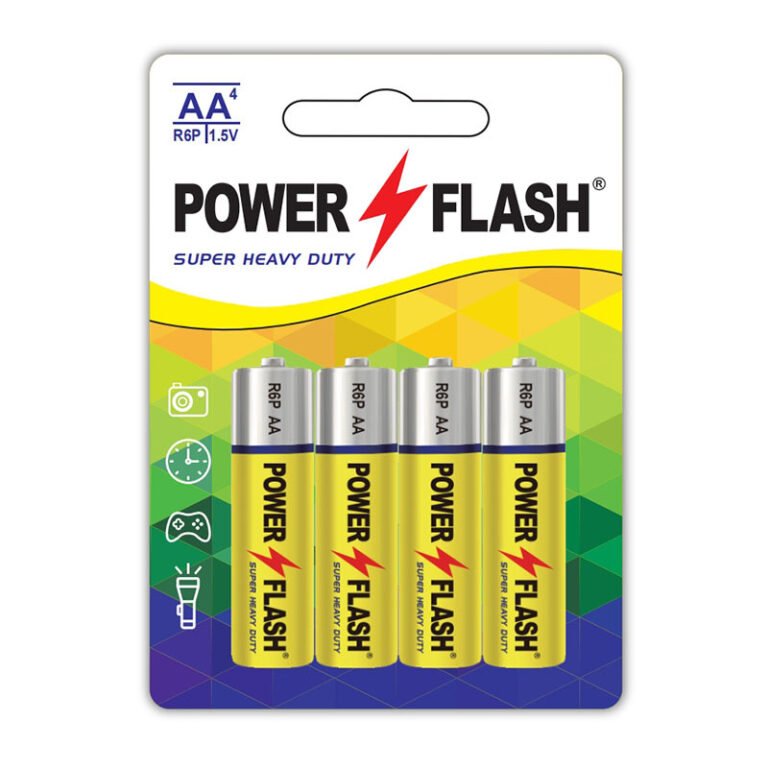
The Cathode Mix: Where Battery Performance Begins
The positive active-material mixture is one of the most important parts of a carbon zinc battery.
A typical formulation contains:
- Manganese dioxide (MnO₂)
- Zinc chloride (ZnCl₂)
- Ammonium chloride (NH₄Cl)
- Carbon black or acetylene black
- Other formulation components selected according to the required performance
The proportions cannot simply be copied from one battery model to another.
A customer who says, “I need an AA carbon zinc battery,” has not yet provided enough information to define the battery.
The manufacturer also needs to know:
What operating performance is required?
For example, a battery designed for a low-current wall clock and a battery intended for a flashlight may use the same R6/AA external dimensions but require different material formulations and performance targets.
Carbon zinc battery construction therefore starts with the application requirement, not simply the battery size.

Electrolytic Manganese Dioxide vs. Natural Manganese Dioxide
Manganese dioxide is particularly important because its activity has a direct influence on the electrochemical performance of the cell.
For carbon zinc battery production, manganese dioxide can broadly be considered in two categories:
Electrolytic Manganese Dioxide
Electrolytic manganese dioxide, commonly referred to as EMD, offers higher electrochemical activity and is generally used when higher-performing carbon zinc batteries are required.
It is suitable for applications where the customer expects stronger discharge performance and more consistent output.
Natural Manganese Dioxide
Natural manganese dioxide can be used for more economical carbon zinc battery formulations.
It is generally associated with conventional, cost-sensitive carbon zinc batteries, often in combination with a certain proportion of electrolytic manganese dioxide.
The final formulation should be determined according to the target battery performance, discharge characteristics and cost requirements.
This is why Huatai does not recommend customers specifying manganese dioxide only by the name of the material. The required battery performance should be defined first, followed by the material formulation.

Zinc Can: One Dimension Controls Many Other Components
The zinc can is particularly important because it serves both as the negative electrode and the main structural container.
Customers developing or purchasing carbon zinc battery materials need to specify several zinc-can parameters:
- Can diameter
- Can height
- Zinc sheet thickness
- Zinc material composition
- Can weight
- Zinc granule/sheet specifications used for stamping
- Lead and cadmium content
- Dimensional tolerances
Among these parameters, zinc can diameter is especially critical.
A change in the zinc can diameter can affect:
- Metal cap specification
- Label dimensions
- Separator/slurry paper width
- Bottom paper dimensions
- Compression ring specification
- Sealing components
- Assembly tooling
Therefore, a wrong diameter measurement does not create only one dimensional problem. It can create a chain reaction throughout the entire battery assembly process.
For this reason, Huatai normally confirms the exact zinc can dimensions before finalizing the corresponding component specifications.
Zinc Material and Environmental Requirements
The zinc can is not simply a metal shell. Its material quality influences mechanical strength, electrochemical behavior and manufacturing consistency.
Customers purchasing zinc material for their own carbon zinc battery production should clearly define:
Thickness + diameter + stamped can weight + chemical composition + heavy-metal limits.
Today, many international customers specifically require lead-free and cadmium-free battery materials.
For export-oriented battery production, environmental requirements should be established at the beginning of the project rather than checked after the battery has already been manufactured.
This is particularly important for customers supplying regulated markets or international retail channels.
Carbon Rod: A Small Component with a Major Function
The carbon rod is one of the key components inside a carbon zinc battery.
It functions primarily as the positive current collector, carrying current from the cathode mixture to the positive terminal. Conventional carbon zinc battery construction uses a carbon electrode surrounded by manganese dioxide and conductive carbon material.
When a customer purchases carbon rods for independent battery production, the required carbon rod length must be clearly specified.
The diameter is generally standardized for a given battery construction, but the length needs to correspond to the specific battery design.
A carbon rod that is too short or too long can create assembly and electrical-performance problems.
For this reason, Huatai recommends confirming the battery’s complete structural drawing before purchasing carbon rods in volume.

Separator and Slurry Paper Dimensions
Separator materials are another area where seemingly small dimensional errors can cause problems during production.
The slurry paper helps control contact between the cathode mixture and zinc structure while supporting electrolyte distribution and preventing unwanted material migration.
For common cylindrical carbon zinc batteries, typical paper widths include approximately:
| Battery Model | Typical Slurry Paper Width |
| R6 / AA | 42–43 mm |
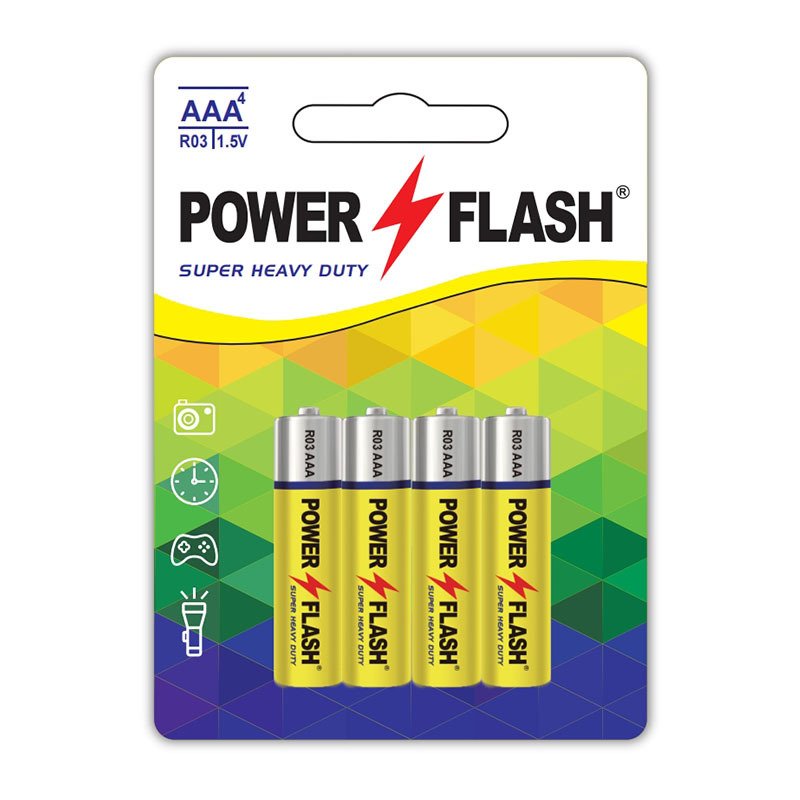
| R03 / AAA | 31–32 mm |
These values should not be treated as universal specifications for every factory or design. Actual dimensions should be confirmed against the customer’s zinc-can diameter, assembly method and production tooling.
This illustrates an important principle in battery manufacturing:
Battery components cannot always be purchased independently based only on a common model number.
Sealing Technology: Red Resin vs. Black Asphalt Compound
Sealing is directly related to battery reliability.
For carbon zinc batteries, two common sealing-compound options are:
Red Resin Sealing Compound
Resin-based sealing compounds generally provide stronger sealing performance and are typically more expensive.
For customers who place greater emphasis on leakage resistance and product quality, resin sealing is often the preferred option.
Black Asphalt Sealing Compound
Asphalt-based sealing compounds are generally more economical and can be selected for cost-sensitive battery products.
However, the final selection should consider the customer’s target market, expected storage conditions, required leakage performance and cost target.
For many carbon zinc batteries manufactured by Huatai, higher-performance resin sealing is preferred because leakage resistance is a key part of finished-battery quality.
A low-cost battery that develops leakage during storage can create significantly greater losses for a distributor than the initial saving on sealing material.

Battery Label Materials: PVC, Aluminum Film and PET
The external battery label is also part of the engineering specification.
Common label materials include:
- PVC
- Aluminum film
- PET
PVC labels are widely used for conventional battery products.
Aluminum-film labels can provide a different appearance and surface characteristics and are used for selected product designs.
Some customers specifically request PET labels, particularly when their branding or packaging specifications require a different substrate.
For private-label carbon zinc battery projects, Huatai normally confirms the label material together with:
- Label dimensions
- Printing colors
- Artwork
- Adhesive requirements
- Battery diameter
- Packaging requirements
Again, battery diameter comes first because the label size must match the cylindrical body.

Why Battery Performance Must Be Defined Before Material Procurement
One of the most common mistakes in battery customization is to start by asking:
“How much does each raw material cost?”
The more important first question is:
“What performance must the finished battery achieve?”
A customer may require:
- A specific discharge duration
- Specific load conditions
- Specific current
- Particular storage life
- Leakage resistance
- Low-temperature performance
- High-temperature storage performance
- Lead-free and cadmium-free construction
- A specific target cost
For example, saying that an R6/AA battery should provide a certain number of minutes of discharge is useful only if the test load, cutoff voltage, temperature and test method are also defined.
IEC 60086-1 establishes standardized approaches covering dimensions, electrical characteristics, performance testing and safety, helping manufacturers and users compare primary batteries on a consistent basis.
Therefore, a professional battery manufacturer should convert the customer’s application requirement into a measurable battery specification before confirming the formulation and components.
A Practical Specification Checklist for Custom Carbon Zinc Batteries
For customers developing their own carbon zinc battery, Huatai recommends confirming the following information before purchasing materials:
| Specification Area | Information to Confirm |
| Battery model | R6/AA, R03/AAA, R14/C, R20/D, 6F22/9V, etc. |
| Target performance | Discharge duration, load and cutoff voltage |
| Zinc can | Diameter, height, thickness, weight and composition |
| Heavy metals | Lead, cadmium and other applicable limits |
| MnO₂ | EMD, natural MnO₂ or blended formulation |
| Electrolyte | NH₄Cl/ZnCl₂ formulation |
| Conductive material | Carbon black or acetylene black |
| Carbon rod | Length and diameter |
| Separator | Material and width |
| Label | PVC, aluminum film or PET |
| Sealing | Resin or asphalt compound |
| Packaging | Shrink film, cartons and private-label requirements |
| Compliance | Applicable market standards and environmental requirements |
This checklist can save considerable time because changing one dimensional parameter after mass production has started may require several related components to be changed.

Huatai Battery: From Carbon Zinc Manufacturing to Integrated Battery Production
Huatai’s carbon zinc battery business is supported by a much longer manufacturing history than the product category itself might suggest.
The company’s battery-manufacturing roots can be traced back to the Linyi Battery Factory established in 1956. Over the following decades, the business developed from traditional dry-cell production into a diversified battery manufacturer.
Today, Shandong Huatai New Energy Battery Co., Ltd. produces and develops multiple battery categories, including:
- Carbon zinc batteries
- Alkaline batteries
- Lithium primary batteries
- Button cells
- Rechargeable batteries
- Lithium battery products
- Other new-energy battery solutions
This broader manufacturing capability matters to carbon zinc battery customers because battery development is rarely limited to one component.
A customer may initially request an R6 carbon zinc battery, then later need an LR6 alkaline battery, a private-label battery series, or another battery chemistry for a different application.
A manufacturer with multiple battery technologies can support that product development process more effectively than a supplier focused on only one traditional dry-cell product.
Carbon Zinc Battery OEM and Private Label Manufacturing
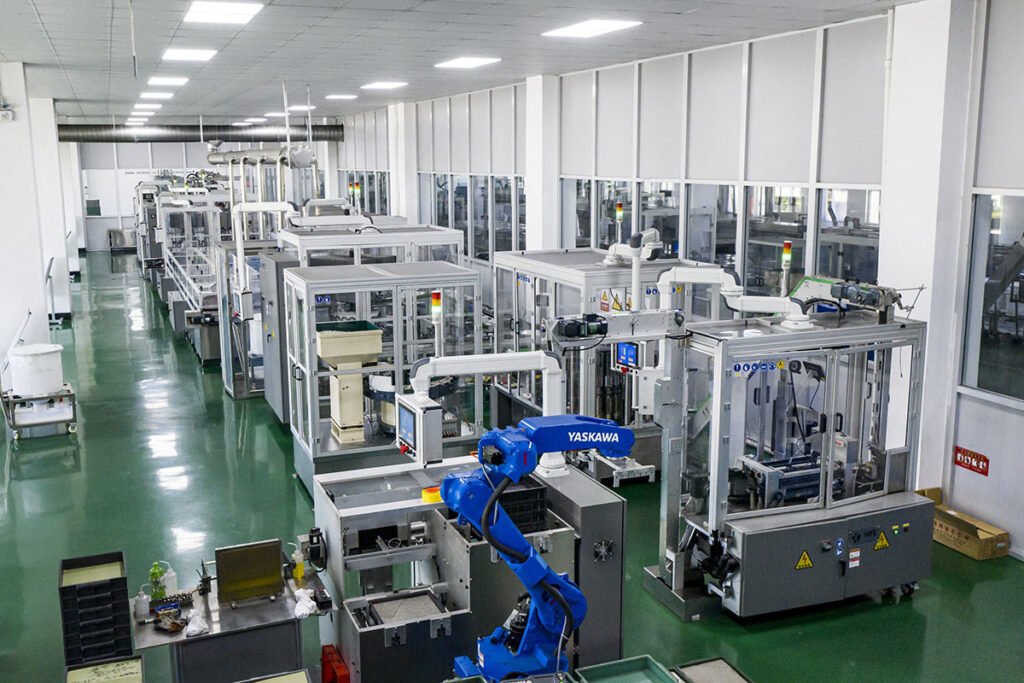
For international distributors and brands, Huatai can also provide OEM and private-label carbon zinc battery manufacturing.
A typical project may include:
Performance requirement → Battery structure → Raw-material selection → Component specification → Prototype/sample → Performance testing → Artwork approval → Mass production → Packaging
This process is particularly important when the customer wants to develop a battery under its own brand.
The customer does not necessarily need to know every production parameter in advance. However, the more clearly the customer can define the intended application and performance target, the more accurately the manufacturer can select the internal structure and material formulation.

Frequently Asked Questions
What are the main components of a carbon zinc battery?
A typical cylindrical carbon zinc battery contains a zinc can, manganese dioxide cathode mixture, ammonium chloride and/or zinc chloride electrolyte components, conductive carbon, carbon rod, separator/slurry paper, bottom paper, metal terminals, sealing components, compression components and an external label.
What is the difference between EMD and natural manganese dioxide?
EMD generally provides higher electrochemical activity and is suitable for higher-performance carbon zinc battery formulations. Natural manganese dioxide is commonly used in more economical formulations and may be blended with EMD depending on the required performance and cost.
What information does Huatai need to customize a carbon zinc battery?
At minimum, Huatai needs the battery model, intended application, target discharge performance, zinc-can dimensions, carbon-rod specifications, environmental requirements, label requirements and packaging specifications. For serious customization projects, the test load and discharge criteria should also be defined.
Why is zinc-can diameter so important?
Because the zinc-can diameter determines or influences many related components, including the metal cap, label size, separator/slurry paper width, bottom paper and compression ring. An inaccurate diameter can therefore cause multiple assembly problems.
What zinc-can information should a customer provide?
The customer should specify the zinc material, thickness, diameter, can weight, dimensions and applicable heavy-metal requirements, particularly lead and cadmium limits for environmentally compliant products.
What material can be used for carbon zinc battery labels?
PVC and aluminum film are common choices, while PET can also be used when required by the customer. The material and dimensions should be confirmed together with the battery diameter and packaging design.

Which sealing compound is better for carbon zinc batteries?
Red resin sealing compound generally provides better sealing performance but costs more. Black asphalt compound is more economical. For higher-quality Huatai-manufactured batteries, resin sealing is commonly preferred because leakage resistance is an important product-quality consideration.
How should a customer specify a carbon rod?
The customer should clearly specify the required carbon rod length and confirm the diameter according to the battery construction. The correct specification should be determined from the battery’s structural design rather than purchased independently based only on the battery model.
Conclusion
A carbon zinc battery may look like a simple disposable battery, but its performance depends on a surprisingly detailed combination of materials, dimensions and manufacturing processes.
Manganese dioxide selection affects electrochemical activity. Zinc-can dimensions influence the entire mechanical assembly. Carbon-rod length affects internal construction. Separator width affects assembly accuracy. Label material and dimensions affect the finished appearance. Sealing material directly influences leakage resistance.
For this reason, successful carbon zinc battery customization should begin with the required battery performance, not simply with the price of individual raw materials.
For customers purchasing finished batteries, Huatai can provide a complete carbon zinc battery OEM and private-label solution. For customers planning their own battery assembly, Huatai can also help clarify the component specifications that need to be defined before raw-material procurement.
The basic technology of the carbon zinc battery is mature. The difference between an ordinary dry cell and a reliable commercial battery lies in material selection, formulation control, dimensional accuracy, sealing quality, manufacturing consistency and testing discipline.
That is also why Huatai’s long manufacturing history—from the roots of the Linyi Battery Factory in 1956 to today’s diversified battery manufacturing operation—remains relevant when developing carbon zinc batteries for demanding international customers.