English
  Spanish
  French
  Arabic
  Portuguese
  Russian
  Chinese
 Alkaline Battery Construction Materials & OEM Service
Explore alkaline battery materials, construction, performance, shelf life and OEM production. Huatai Battery supplies reliable AA, AAA, C, D and 9V alkaline batteries with OEM private-label solutions.
Alkaline batteries are among the most widely used disposable primary batteries for household electronics, toys, flashlights, remote controls, clocks, wireless accessories and many other everyday devices. Compared with conventional carbon zinc batteries, alkaline batteries are designed around a different internal structure and electrolyte system, allowing them to deliver stronger performance for a wider range of applications.
For customers purchasing finished alkaline batteries, developing a private-label product, or considering the purchase of components and materials for their own battery production, the important question is not simply whether the battery is called AA, AAA, C, D or 9V. The actual performance depends on the relationship between the zinc anode, manganese dioxide cathode, potassium hydroxide electrolyte, separator, current collector, steel casing, sealing system and manufacturing tolerances.

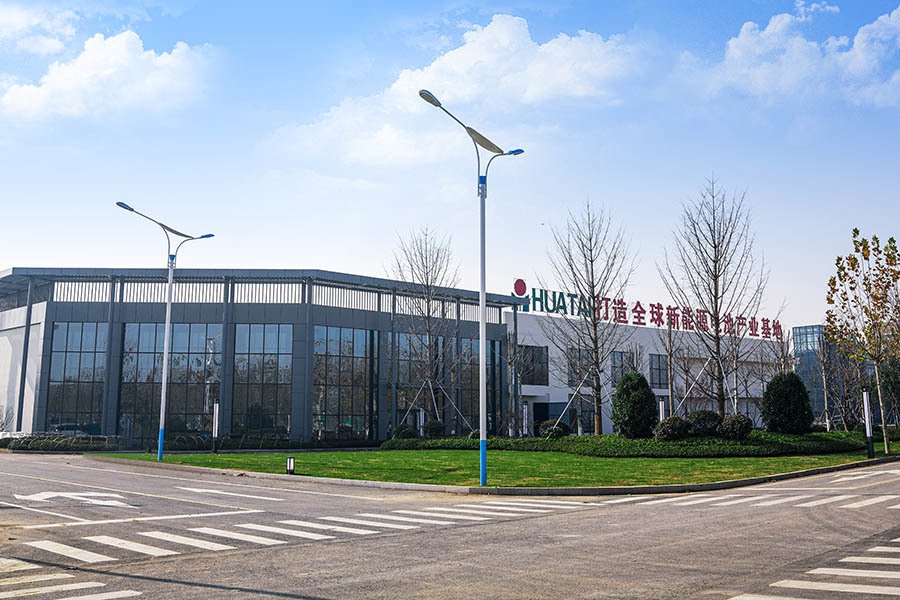
At Shandong Huatai New Energy Battery Co., Ltd., alkaline battery production is supported by long-term dry-cell manufacturing experience, automated production capabilities and a broader product portfolio covering carbon zinc, alkaline, lithium, button and rechargeable battery technologies.
This article explains the main components of an alkaline battery, the materials that influence performance, the dimensional information required for customization, and the practical considerations involved in OEM and private-label alkaline battery production.
What Is an Alkaline Battery?
An alkaline battery is a non-rechargeable primary battery based on the zinc–manganese dioxide electrochemical system, using an alkaline electrolyte, typically potassium hydroxide (KOH).
A conventional cylindrical alkaline battery contains a steel container, manganese dioxide cathode, powdered zinc anode, separator, potassium hydroxide electrolyte and a central current collector.
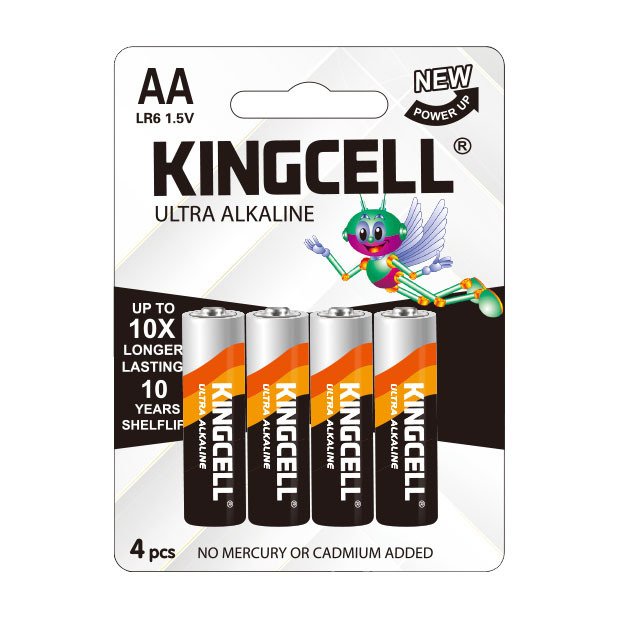
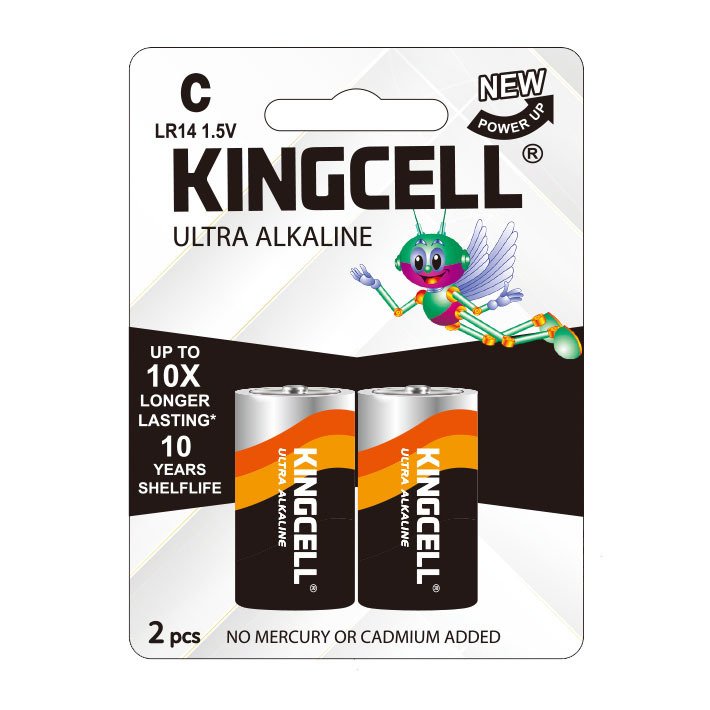
Common cylindrical alkaline battery models include:
- LR20 / D
- LR14 / C
- LR6 / AA
- LR03 / AAA
- 6LR61 / 9V
- Other application-specific primary battery formats
The current IEC 60086-1:2026 and IEC 60086-2-1:2026 standards provide the international framework for primary battery classification, dimensions, discharge testing and performance requirements. The 2026 edition of IEC 60086-2-1 specifically covers primary batteries using aqueous electrolytes and includes physical dimensions, discharge test conditions and performance requirements.
This is particularly relevant when developing alkaline batteries for international markets because the battery should be designed around a defined performance and testing requirement rather than simply a nominal size.

The Main Components of an Alkaline Battery
Although the finished alkaline battery appears simple from the outside, its internal construction is more sophisticated than that of a traditional zinc-carbon battery.
A typical cylindrical alkaline battery includes:
| Component | Main Function |
| Steel can | External container and cathode housing |
| Manganese dioxide | Main cathode active material |
| Zinc powder | Negative electrode / anode |
| Potassium hydroxide | Alkaline electrolyte |
| Conductive material | Improves electrical conductivity |
| Separator | Separates anode and cathode |
| Brass or metal collector | Collects current from the zinc anode |
| Sealing gasket | Prevents electrolyte leakage |
| Negative terminal | External electrical connection |
| Positive cap | External positive terminal |
| Label | Product identification and insulation |
| Bottom components | Insulation and mechanical support |
The exact construction can vary according to battery model, performance grade, manufacturing process and customer requirements.
Cathode Material: High-Density Manganese Dioxide
Manganese dioxide remains one of the key active materials in an alkaline battery.
The cathode generally consists of manganese dioxide combined with conductive material. The cathode is housed against the inside of the steel container, while the zinc anode occupies the central region of the cell.
For alkaline batteries, cathode quality is not simply about the percentage of manganese dioxide.
Important considerations include:
- Electrochemical activity
- Purity
- Particle characteristics
- Density
- Moisture control
- Conductivity
- Consistency between production batches
A higher-quality cathode formulation can support better discharge performance, particularly under higher loads.
This is why customers ordering high-performance alkaline AA batteries or premium alkaline AAA batteries should define the intended application rather than simply asking for the cheapest LR6 or LR03 cell.
Zinc Powder: The Core Anode Material
One of the most important differences between alkaline and conventional carbon zinc batteries is the structure of the negative electrode.
In a typical alkaline battery, the negative electrode uses zinc powder rather than a stamped zinc can acting as the primary anode structure. The powdered zinc provides a large active surface area for the electrochemical reaction.
This makes zinc-powder quality particularly important.
For customers developing or manufacturing alkaline batteries themselves, the following parameters should be considered:
- Zinc purity
- Particle-size distribution
- Particle morphology
- Surface characteristics
- Gas-generation behavior
- Impurity levels
- Heavy-metal content
- Consistency between batches
Zinc powder that is not properly controlled can contribute to increased self-discharge, gas generation or other performance problems.
For international customers, lead-free and cadmium-free battery materials are increasingly important, particularly when products are intended for regulated markets and major retail channels.
Why Zinc Powder Purity Matters
The zinc anode is continuously involved in the electrochemical reaction during battery operation.
However, unwanted impurities or unsuitable particle characteristics can also increase undesirable side reactions.
For this reason, a professional alkaline battery manufacturer needs to control not only the nominal chemical composition but also:
purity + particle characteristics + moisture + consistency + electrochemical behavior.
This is one reason alkaline battery production cannot be treated simply as a low-cost assembly process.
For customers purchasing materials independently, it is important to establish the required zinc powder specification before placing a large-volume order.
Potassium Hydroxide Electrolyte
The electrolyte is another major difference between alkaline batteries and traditional carbon zinc batteries.
Alkaline batteries normally use an aqueous potassium hydroxide (KOH) electrolyte. The electrolyte provides the ionic medium required for the internal electrochemical reaction.
The electrolyte itself must be controlled carefully.
Important parameters include:
- KOH concentration
- Purity
- Water quality
- Additives where applicable
- Electrolyte quantity
- Filling consistency
Too much or too little electrolyte can affect battery performance, internal resistance and leakage behavior.
Therefore, electrolyte filling accuracy is a significant production-control point for cylindrical alkaline battery manufacturing.

Separator: Keeping Zinc and Cathode Properly Isolated
The separator is a critical internal component.
Its basic purpose is to keep the positive and negative materials physically separated while allowing ionic movement through the electrolyte.
A typical alkaline battery uses a specially selected fibrous separator material.
The separator needs to balance several requirements:
- Chemical stability
- Mechanical strength
- Electrolyte absorption
- Ionic permeability
- Resistance to material migration
- Dimensional consistency
If the separator is too thin, mechanical reliability can become a concern.
If it is too thick or has unsuitable electrolyte characteristics, internal resistance and available battery capacity can be affected.
This is why separator selection should be considered as part of the complete battery design rather than as an independent low-cost component.
Steel Can and Internal Mechanical Structure
The steel can provides the outer structure of the alkaline battery and also houses the cathode assembly.
Its dimensional accuracy influences:
- Cathode dimensions
- Battery diameter
- Internal volume
- Label size
- Terminal assembly
- Sealing components
- Overall mechanical strength
For common AA and AAA alkaline batteries, even small dimensional deviations can create problems when high-speed automated assembly is used.
A battery manufacturer therefore needs to control:
steel thickness + diameter + height + dimensional tolerance + surface quality.
For OEM projects, the exact mechanical drawing should be confirmed before tooling and mass production begin.

Current Collector: Small Component, Important Function
The current collector is located inside the battery and provides the electrical connection between the zinc anode and the external negative terminal.
A conventional cylindrical alkaline battery may use a brass collector pin or a similar conductive metal structure.
The collector needs to provide:
- Stable electrical conductivity
- Mechanical strength
- Corrosion resistance
- Consistent contact
- Reliable connection to the external terminal
For a high-volume alkaline battery production line, collector dimensions and insertion accuracy are important because small deviations can influence assembly consistency.
Sealing Technology and Leakage Resistance
For alkaline batteries, sealing is particularly important because the internal electrolyte is an alkaline potassium hydroxide solution.
A good sealing system needs to prevent electrolyte leakage while accommodating the mechanical and chemical conditions inside the battery.
Typical sealing-related components include:
- Sealing gasket
- Metal components
- Collector structure
- Crimping area
- Bottom sealing components
- External insulation
For Huatai, leakage resistance is not treated as a single-material issue.
It depends on the interaction between:
gasket material + sealing geometry + compression + electrolyte control + internal pressure + assembly accuracy.
This is especially important for customers selling alkaline batteries through retail channels, because leakage can damage the customer’s device and create claims that are much more expensive than the original battery.
Battery Label Materials and Dimensions
The external label serves several purposes:
- Brand identification
- Product model
- Battery specifications
- Warning information
- Polarity indication
- Regulatory markings
- Product appearance
- External insulation
Depending on the customer’s requirements, labels can be produced using different film materials.
For OEM alkaline batteries, Huatai can work with customers on:
- PVC labels
- PET labels
- Other specified label structures
- Custom printing
- Private-label artwork
- Packaging design
The label dimensions must match the battery’s final outer diameter and height.
As with carbon zinc batteries, the battery body dimensions should be confirmed before finalizing the label size.
AA and AAA Alkaline Batteries: Why Application Matters
AA and AAA are probably the most familiar alkaline battery formats in the consumer market.
However, a customer asking for:
“AA alkaline battery”
has not yet provided a complete technical specification.
The manufacturer should also know:
- Intended device
- Expected discharge current
- Required operating time
- Storage period
- Operating temperature
- Target market
- Packaging requirements
- Target price
- Required certifications and compliance documentation
For example, a battery intended for a remote control has very different operating conditions from one intended for a flashlight, game controller or motorized toy.
The latest IEC 60086-2-1:2026 includes application-specific discharge tests for battery types including LR6 and LR03, reflecting the fact that battery performance needs to be evaluated according to actual use conditions.
Alkaline Battery Performance: Capacity Is Not the Only Indicator
Customers sometimes compare batteries only by nominal capacity.
That is not enough.
A practical alkaline battery specification may involve:
- Nominal voltage
- Capacity
- Discharge duration
- Internal resistance
- High-drain performance
- Low-drain performance
- Pulse performance
- Shelf life
- Leakage resistance
- Temperature performance
The actual available capacity depends on the discharge conditions.
A battery that performs well under a low-current test may not provide the same duration under a high-drain application.
Therefore, Huatai recommends defining the test load and cutoff voltage whenever a customer requests a specific discharge-time target.
Simply stating:
“I need a 3000 mAh AA alkaline battery”
is not sufficient to describe the actual commercial performance of the battery.

Temperature Performance and Storage Stability
Alkaline batteries are often used in different climatic environments, from cold northern regions to hot tropical and desert markets.
Temperature affects electrochemical reaction rates, internal resistance and available battery performance.
For export customers, it is therefore useful to define:
- Storage temperature
- Operating temperature
- Required shelf life
- Transportation conditions
- High-temperature storage requirements
- Low-temperature discharge requirements
This is particularly important for battery distributors serving Africa, the Middle East, Southeast Asia, Russia and other markets with demanding climatic conditions.
A battery designed for one market should not automatically be assumed to have identical performance under every climate and load condition.
Long Shelf Life and Self-Discharge Control
For distributors, shelf life is often as important as discharge performance.
A battery can remain in a warehouse for months or years before reaching the final consumer.
Therefore, good alkaline battery manufacturing requires control of:
- Zinc purity
- Cathode material quality
- Electrolyte formulation
- Internal moisture
- Separator quality
- Sealing performance
- Manufacturing cleanliness
Reducing unwanted side reactions helps control the self-discharge rate and preserve usable energy during storage.
For customers looking for a long shelf life alkaline battery, the appropriate specification should be confirmed through an agreed storage test rather than relying only on a marketing statement.
Environmental and Compliance Requirements
Environmental compliance has become an increasingly important part of battery procurement.
International customers may require:
- Mercury-free construction
- Cadmium-free materials
- Lead restrictions
- RoHS-related documentation where applicable
- REACH-related compliance where applicable
- Applicable battery-market documentation
- Safety and performance testing
- Third-party inspection or laboratory reports
The current IEC 60086-1:2026 standard specifically incorporates requirements and guidance relevant to general-use primary batteries and identifies applicable tests in support of EU Regulation 2023/1542.
For customers selling alkaline batteries in Europe, compliance should therefore be considered during product development rather than after production.

A Practical Specification Checklist for Custom Alkaline Batteries
Before purchasing materials or starting an OEM project, customers should provide as much of the following information as possible:
| Specification | Information to Confirm |
| Battery model | LR6/AA, LR03/AAA, LR14/C, LR20/D, 6LR61/9V |
| Application | Remote control, toy, flashlight, clock, electronics, etc. |
| Discharge target | Load, current, duration and cutoff voltage |
| Zinc powder | Purity, particle characteristics and applicable limits |
| MnO₂ | Grade, purity and formulation |
| Electrolyte | KOH specification and concentration |
| Separator | Material, thickness and dimensions |
| Steel can | Diameter, height, thickness and tolerance |
| Collector | Material and dimensions |
| Sealing | Gasket and sealing structure |
| Label | PVC, PET or specified material |
| Environmental requirements | Lead/cadmium/mercury restrictions |
| Shelf life | Required storage period |
| Packaging | Blister, shrink film, box, carton, private label |
| Compliance | Applicable market standards and documentation |
This information allows the manufacturer to develop the battery around the customer’s actual requirements instead of trying to modify a standard product after production has already begun.
Huatai Battery: Alkaline Battery Manufacturing and OEM Capability
Shandong Huatai New Energy Battery Co., Ltd. has a long history in primary battery manufacturing, with roots extending back to the Linyi Battery Factory established in 1956.
Today, Huatai’s product portfolio covers:
- Carbon zinc batteries
- Alkaline batteries
- Lithium primary batteries
- Button cells
- Rechargeable batteries
- Lithium battery products
- Other battery and new-energy solutions
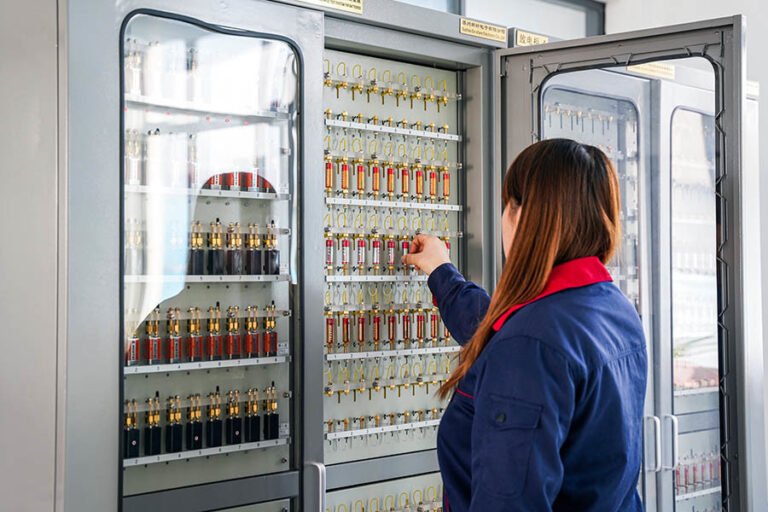
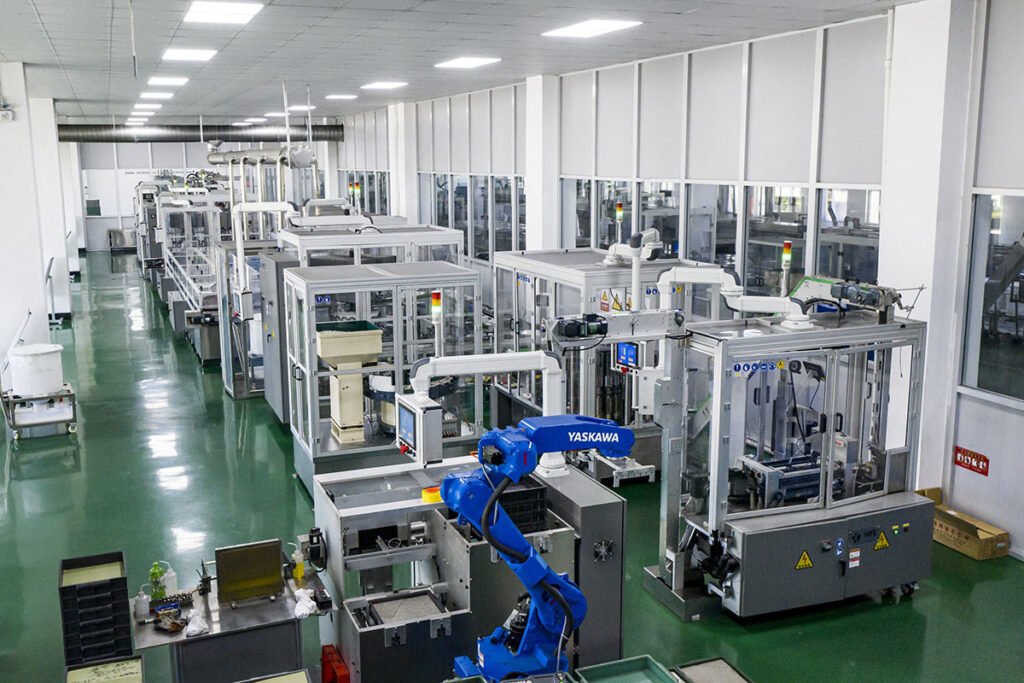
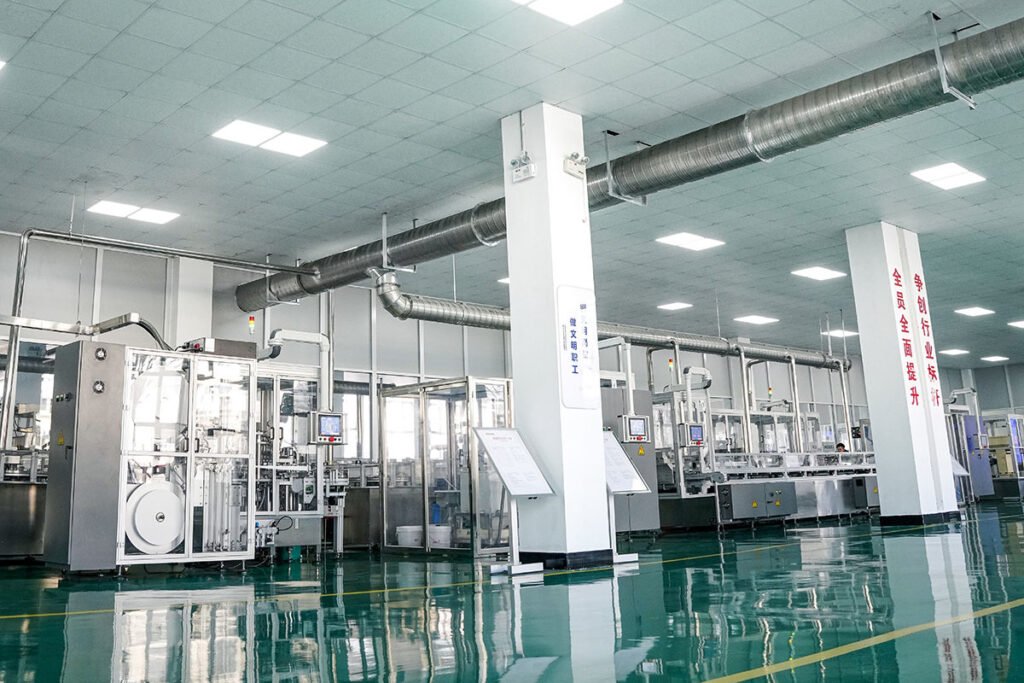
For alkaline battery production, Huatai combines established dry-cell manufacturing experience with automated production and quality-control systems.
The company has developed dedicated alkaline battery production capabilities, including HIBAR automated production lines, supporting consistent high-volume manufacturing.
For international customers, this is particularly relevant when they need:
stable quality + consistent dimensions + large-volume supply + OEM/private-label production.
Alkaline Battery OEM and Private Label Manufacturing
An alkaline battery OEM project normally begins with the customer’s market and application requirements rather than simply an existing battery model.
A practical development process is:
Application → Performance target → Battery structure → Material selection → Sample production → Performance testing → Artwork approval → Compliance confirmation → Mass production → Packaging
Huatai can support customers with private-label alkaline battery programs covering common consumer sizes such as:
- AA alkaline batteries
- AAA alkaline batteries
- C alkaline batteries
- D alkaline batteries
- 9V alkaline batteries
Customers can specify their own brand, label design, packaging and market requirements.
For distributors and brand owners, the advantage of working directly with the manufacturer is that product specifications, packaging and production can be coordinated within one supply chain.

Frequently Asked Questions
What is the main difference between an alkaline battery and a carbon zinc battery?
Both use zinc and manganese dioxide as the main electrochemical materials, but their internal structures and electrolyte systems differ. Alkaline batteries generally use powdered zinc as the anode and potassium hydroxide as the electrolyte, while conventional carbon zinc batteries use a zinc can and an ammonium chloride/zinc chloride electrolyte system. Alkaline batteries are generally better suited to higher-drain applications.
What are the main materials inside an alkaline battery?
The main components include manganese dioxide cathode material, zinc powder anode material, potassium hydroxide electrolyte, separator, conductive material, steel casing, current collector and sealing components.
Why is zinc powder quality important in alkaline batteries?
Zinc powder provides the active negative electrode. Its purity, particle characteristics and consistency can influence electrochemical performance, self-discharge, gas generation and manufacturing stability.
What information does Huatai need for a custom alkaline battery?
Huatai normally needs the battery model, application, required discharge performance, load, cutoff voltage, shelf-life target, operating environment, packaging requirements and applicable compliance requirements.
What is the difference between LR6 and LR03?
LR6 is the IEC designation for the AA-size alkaline battery, while LR03 refers to the AAA-size alkaline battery. Their physical dimensions and electrical test requirements are different, so the internal structure and component specifications must be designed accordingly.
How can customers improve alkaline battery shelf life?
Shelf life depends on several factors, including zinc purity, cathode quality, electrolyte formulation, separator performance, internal cleanliness and sealing quality. A reliable long-shelf-life specification should be verified through controlled storage testing.
Are alkaline batteries suitable for high-drain devices?
Yes. Alkaline batteries are generally better suited to higher-drain applications than conventional carbon zinc batteries. However, the appropriate battery grade should be selected according to the actual current demand and discharge profile of the device.
Can Huatai produce private-label alkaline batteries?
Yes. Huatai can provide OEM and private-label alkaline battery manufacturing for international brands, distributors and wholesalers, including AA, AAA, C, D and 9V battery formats, subject to the customer’s specifications and production requirements.

Conclusion
Alkaline batteries may look like ordinary household products, but reliable alkaline battery manufacturing requires careful control of the entire electrochemical and mechanical system.
Zinc powder affects the anode reaction. Manganese dioxide affects cathode performance. KOH electrolyte provides ionic conductivity. The separator controls the interaction between the electrodes. The steel can determines the mechanical structure. The collector ensures current transfer. The sealing system controls leakage risk.
For this reason, customers should not begin an alkaline battery project by asking only for the lowest material price.
The better starting point is:
What device will use the battery, what discharge performance is required, how long must it operate, and under what storage and temperature conditions?
Once these requirements are defined, the manufacturer can determine the appropriate materials, internal structure and testing conditions.
For international distributors, brand owners and wholesalers, Huatai provides alkaline battery OEM and private-label manufacturing, supported by long-term battery manufacturing experience, automated production capabilities and a broad battery product portfolio.
Whether the requirement is for AA alkaline batteries, AAA alkaline batteries, high-performance alkaline batteries, long shelf life alkaline batteries or private-label alkaline battery products, the most important objective remains the same:
consistent performance, reliable sealing, controlled materials, accurate dimensions and stable mass production.
That is what turns a standard alkaline cell into a dependable commercial battery product.