Arabic
  English
  Spanish
  French
  Portuguese
  Russian
 — From Invention to Modern High-Performance Power Solutions

1. Long Development History of Alkaline Batteries
اليوم, بطاريات قلوية can be seen everywhere in daily life. However, their widespread use is the result of a long and continuous process of technological evolution driven by battery manufacturers, factories, and research institutions worldwide.
في 1868، مهندس فرنسي جورج لوكلانشيه اخترع أول zinc–manganese wet battery, laying the foundation for modern dry batteries. In 1886, غاسنر طور النموذج الأولي لـ بطارية جافة, significantly improving portability and making large-scale industrial production possible. This marked the early stage of battery manufacturing.
As technology and electrical appliances advanced, ordinary zinc-manganese batteries gradually failed to meet growing market demands. More than منذ 100 عام, researchers proposed a new battery system using zinc as the negative electrode, manganese dioxide (MnO₂) as the positive electrode, and potassium hydroxide (KOH) or sodium hydroxide (NaOH) as the electrolyte.
The long research and development process mainly focused on four key technical breakthroughs:
استبدال أقطاب صفائح الزنك الكهربائية بـ أقطاب الزنك المسامية المسحوقة
اعتماد reverse polarity structure
Improving zinc stability through zinc powder amalgamation and ZnO additives
Enhancing sealing structures and sealing materials to prevent leakage
لم يكن الأمر كذلك حتى 1950s that the بطارية قلوية was successfully commercialized based on zinc–manganese dry battery technology. This innovation, now widely adopted by alkaline battery factories and OEM manufacturers, doubled battery performance compared with ordinary dry batteries.
Alkaline batteries feature:
High capacity
Suitability for continuous high-current discharge
أداء ممتاز في درجات الحرارة المنخفضة
Long storage life
Strong leak-proof performance
في أواخر الثمانينيات, growing environmental awareness triggered intensive research into بطاريات قلوية خالية من الزئبق. من خلال منتصف التسعينيات, mercury-free alkaline batteries had fully entered the global market, becoming the industry standard for responsible battery manufacturers.
Looking ahead, with the rapid development of electronic devices, alkaline battery manufacturers are focusing on:
كثافة طاقة أعلى
مدة صلاحية أطول
High-power, heavy-duty discharge performance
2. Introduction to Basic Types of Zinc–Manganese and Alkaline Batteries
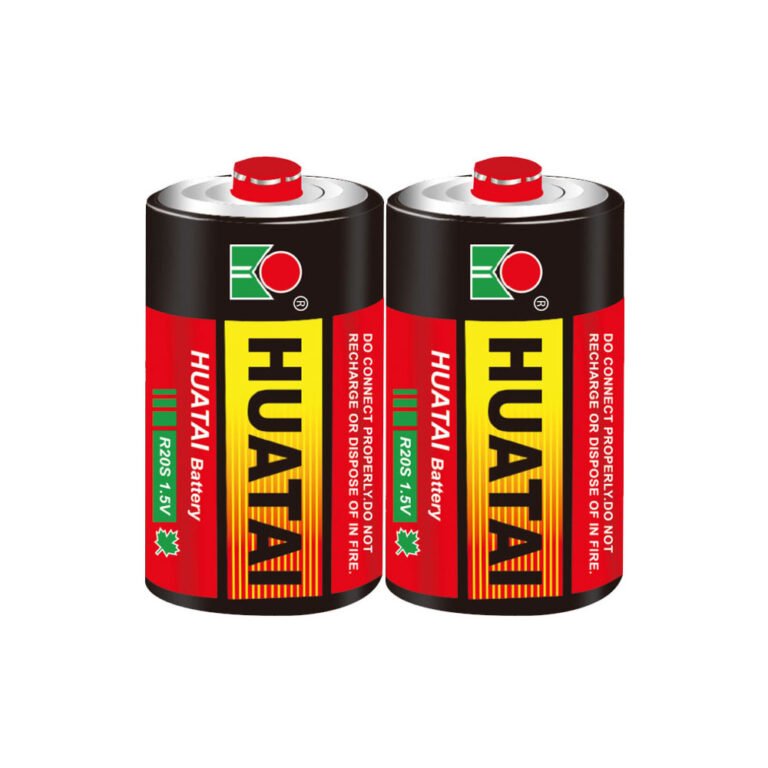
2.1 Zinc–Manganese Paste Batteries (e.g., R20S)
This type of battery uses low-activity manganese dioxide as the cathode material, with a paste layer separator. The zinc cylinder serves both as the container and the negative electrode.
Characteristics:
Low capacity
High risk of leakage at end of life
Low cost
These batteries are mainly produced by low-cost battery factories for basic applications.
2.2 High-Capacity Cardboard Batteries (e.g., R6C, R20C)
These batteries replace the paste layer with paper pulp separators, increasing the amount of active material.
Characteristics:
Higher capacity than paste batteries
Suitable for small-current discharge
Commonly known as C-type or ammonium-type batteries
2.3 High-Power Cardboard Batteries (e.g., R6P, R20P)
These batteries mainly use ثاني أكسيد المنجنيز الإلكتروليتي و zinc chloride electrolyte.
Characteristics:
Much higher capacity than ordinary batteries
Good leakage resistance
Suitable for high-current continuous discharge
Often referred to as P-type or zinc-type batteries
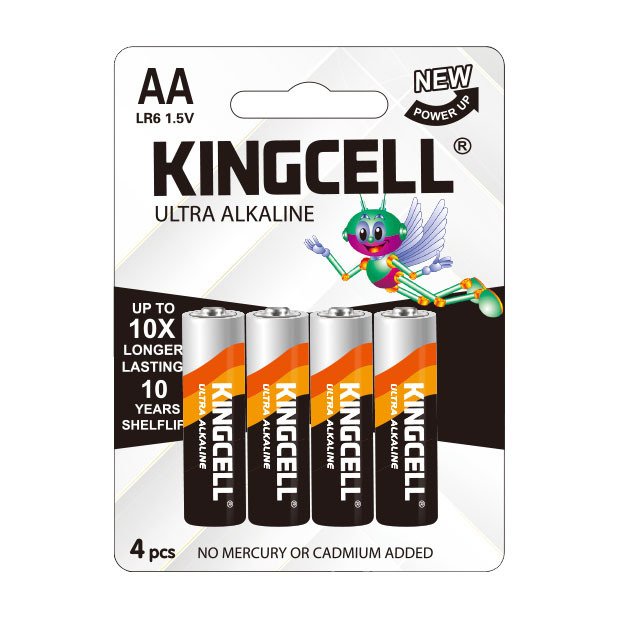
2.4 High-Energy Alkaline Batteries (e.g., LR6, LR03)
High-energy alkaline batteries represent the highest performance level among disposable batteries and are the core products of professional alkaline battery manufacturers and OEM factories.
تشمل الميزات الرئيسية ما يلي:
Electrolytic manganese dioxide cathode
Granular zinc powder anode
Potassium hydroxide electrolyte
Nickel-plated steel shell
The capacity of alkaline batteries is 3–7 times higher than ordinary batteries of the same size. They support continuous high-current discharge and offer excellent leak resistance, making them the preferred choice for modern electronic devices.
3. Shelf Life and Storage Performance of Alkaline Batteries
مدة الصلاحية refers to the period during which a battery is guaranteed to meet performance standards under proper storage conditions. All batteries experience some degree of self-discharge during storage.
According to industry standards followed by battery manufacturers:
After 12 months, alkaline battery capacity loss should not exceed 20%
High-quality alkaline batteries may limit capacity loss to 10% or less
This makes alkaline batteries ideal for long-term storage and global distribution by battery suppliers and exporters.
4. Differences Between Alkaline Batteries and Ordinary Dry Batteries
4.1 Logo Identification
البطاريات القلوية are marked with LR (e.g., LR6 = AA, LR03 = AAA) and clearly labeled “ALKALINE”
Ordinary dry batteries are marked with R (e.g., R6P, R03C)
4.2 Structural Differences
Alkaline batteries feature an annular groove near the positive terminal, while ordinary dry batteries typically do not. This difference comes from distinct sealing technologies used by battery factories.
4.3 Weight Difference
Alkaline batteries are noticeably heavier due to higher material density:
AA alkaline battery: approx. 24 g
AA ordinary battery: approx. 18 g
4.4 Model Code Explanation
R = round battery
L before R = alkaline battery
Numbers (e.g., 03, 6,12,20) = battery size
Final letter:S = standard;P = high power;C = high capacity
5. Consumer Awareness and Market Advice
In daily life, many consumers confuse ordinary dry batteries with alkaline batteries. Because alkaline batteries offer higher capacity and longer service life, they are more expensive. Some small vendors may misleadingly sell ordinary batteries as alkaline batteries.
Consumers are advised to:
Check the LR marking and “ALKALINE” label
Compare weight and structure
Purchase from reliable battery manufacturers, factories, or authorized suppliers

الخاتمة
From early zinc–manganese batteries to today’s high-performance mercury-free alkaline batteries, the industry has undergone more than a century of innovation. Modern alkaline battery manufacturers and factories continue to focus on energy density, durability, safety, and environmental responsibility, ensuring that alkaline batteries remain one of the most reliable disposable power solutions worldwide.