Portuguese
 English
 Spanish
 French
 Arabic
 Russian
 Chinese
Top China Battery Manufacturer for Iraq
Explorar Middle East Iraq’s battery market por Grupo Huatai Battery da China, incluindo zinco-carbono, alcalino, lithium, rechargeable batteries and energy storage, with import data, solar opportunities, electricity demand, OEM potential and China battery supplier considerations.
Shandong Linyi Huatai New Energy Battery Co., Ltd. foi fundada em maio de 1993, mas a história da nossa fábrica remonta ao estabelecimento da fábrica de baterias de Linyi em 1956. líder em produtos ecológicos e Fabricantes de pilhas alcalinas sem mercúrio e fabricantes de baterias de lítio na China e o o maior fabricante e fábrica do mundo de baterias de zinco-carbono para trabalhos pesados. Os nossos produtos são produzidos com HUATAI, Power Flash e KINGCELL marcas e marcas de distribuidor dos clientes, fornecendo 6 mil milhões de euros de produção anual até Linhas de produção automatizadas de alta velocidade HIBAR, oferecendo Soluções de fabrico de baterias primárias secas para OEM para pilhas de zinco-carbono, alcalinas e de lítio em todo o mundo.

Iraque is an important and distinctive battery market in the Middle East, combining strong demand for conventional primary batteries with rapidly developing opportunities in solar power, backup systems and lithium energy storage. The country’s battery demand comes from households, electronics, telecommunications, automotive applications, industrial equipment, security systems and increasingly from solar-plus-storage projects.
The conventional battery market is already substantial. In 2024, Iraq imported approximately US$51.0 million of primary cells and batteries under HS 850619. China supplied about US$21.68 million, or roughly 42.5% of the reported import value, making China the largest individual supplier in that category.
At the same time, Iraq’s electricity system is creating a second and potentially much broader battery opportunity. In July 2026, Iraq’s Ministry of Electricity reported electricity demand of approximately 60,000 MW, compared with current production of only about one-third of that requirement at the time. Parliament also called for wider use of solar systems for households, agriculture and industry.
For Chinese battery manufacturers, Iraq therefore offers two interconnected markets: traditional consumer batteries and emerging energy-storage batteries.
Understanding the Iraq Battery Market
The Iraqi battery market can broadly be divided into several segments:
- Pilhas de zinco-carbono
- Pilhas alcalinas
- Baterias primárias de lítio
- Pilhas de botão
- Rechargeable Ni-MH batteries
- Baterias para automóveis e industriais
- Baterias de iões de lítio
- LFP energy-storage batteries
- Solar backup batteries
- UPS and telecom batteries
These segments do not have the same customers or purchasing logic.
A wholesaler importing AA and AAA batteries is primarily concerned with price, shelf life, leakage resistance and packaging. A solar installer purchasing lithium batteries is more concerned with capacity, cycle life, BMS compatibility, operating temperature and after-sales support.
| Segmento das baterias | Main Iraqi applications | Typical purchasing priorities |
| Zinco-carbono | Clocks, flashlights, radios, remote controls | Low price, shelf life, leakage resistance |
| Alcalino | Electronics, toys, security equipment | Performance, consistency, operating life |
| Pilha primária de lítio | Meters, sensors, electronics | Long life, stability, technical specifications |
| Células de botão | Watches, small electronics, meters | Dimensions, capacity, shelf life |
| Ni-MH | Rechargeable consumer devices | Cycle life, capacity, price |
| Iões de lítio / LFP | Solar, UPS, backup power, mobility | Segurança, vida útil, BMS |
| ESS | Solar farms, commercial and industrial backup | System integration, reliability, lifecycle |
This segmentation is essential for any company looking for a battery supplier in Iraq.
China Already Has a Strong Position in Iraq’s Primary Battery Market
Iraq’s import data provide a useful indication of China’s existing position.
In 2024, Iraq imported approximately US$51.0 million of primary cells and batteries under HS 850619. China accounted for about US$21.68 million, followed by South Korea at approximately US$13.12 million, Malaysia at US$4.55 million, Turkey at US$2.65 million and India at US$2.56 million.
China therefore represented the largest reported source among individual supplier countries.
This is important for a Chinese battery manufacturer because it demonstrates that Iraqi buyers are already familiar with Chinese battery products and supply chains.
The China-Iraq battery relationship also extends beyond finished batteries. In 2024, Iraq imported approximately US$8.59 million of parts of primary cells and primary batteries under HS 850690, of which China supplied approximately US$6.77 million, or nearly 79% of the reported total.
That suggests potential opportunities in both:
Finished battery supply
e
Battery component supply.
For manufacturers offering OEM, private-label and component sourcing, this creates a broader commercial proposition than simply selling generic AA batteries.
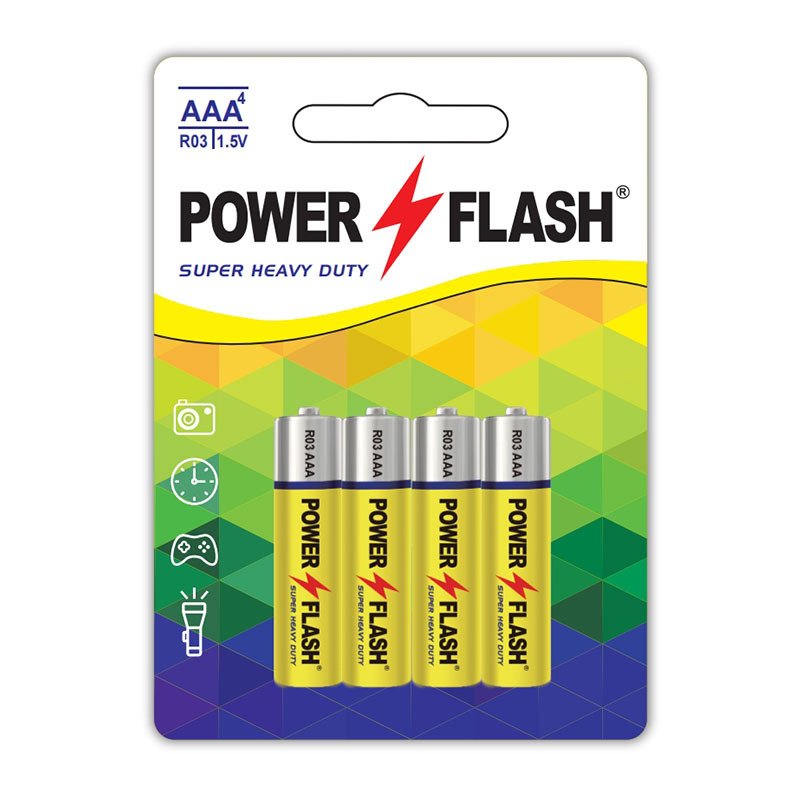
Carbon Zinc Batteries Remain Relevant in Iraq
Carbon zinc batteries continue to have an important role in cost-sensitive consumer markets.
Typical applications in Iraq include:
- Relógios de parede
- Controlos remotos
- Lanternas
- Rádios
- Brinquedos
- Iluminação de emergência
- Basic electronic devices
- Equipamento doméstico de baixa drenagem
The main advantage of carbon zinc batteries is their cost efficiency.
For Iraqi distributors, a competitively priced R6P/AA or R03P/AAA battery can be attractive when the end application does not require the higher energy density of alkaline technology.
However, quality remains important.
Um profissional carbon zinc battery manufacturer for Iraq should control:
- Dimensões da lata de zinco
- Qualidade das varas de carbono
- Positive-electrode formulation
- Electrolyte consistency
- Resistência interna
- Vedação
- Resistência a fugas
- Desempenho de descarga
- Prazo de validade
- Teor de metais pesados
For a distributor, the most damaging problem is often not a slightly higher purchase price but a batch of batteries that leaks during storage or performs inconsistently in the field.
Carbon Zinc vs. Alkaline Batteries for Iraq
Alkaline batteries generally provide better energy density and higher-drain performance than carbon zinc batteries.
This makes alkaline technology more appropriate for products such as toys, electronic devices, security equipment and other applications with higher current requirements.
| Requisito | Carbono Zinco | Alcalino |
| Custo de aquisição | Inferior | Mais alto |
| Densidade energética | Inferior | Mais alto |
| Dispositivos de baixa drenagem | Muito adequado | Adequado |
| Dispositivos de alta drenagem | Limitada | Mais adequado |
| Posicionamento típico | Economia | Convencional/premium |
| Oportunidade OEM | Elevado | Elevado |
| Key advantage | Relação custo-eficácia | Longer operating performance |
For Iraqi wholesalers, both chemistries can therefore coexist.
Carbon zinc can address the economy segment, while alkaline can serve customers who require longer operating time and stronger performance.
A supplier that can provide both products may offer a more useful sourcing solution than a factory specializing in only one chemistry.
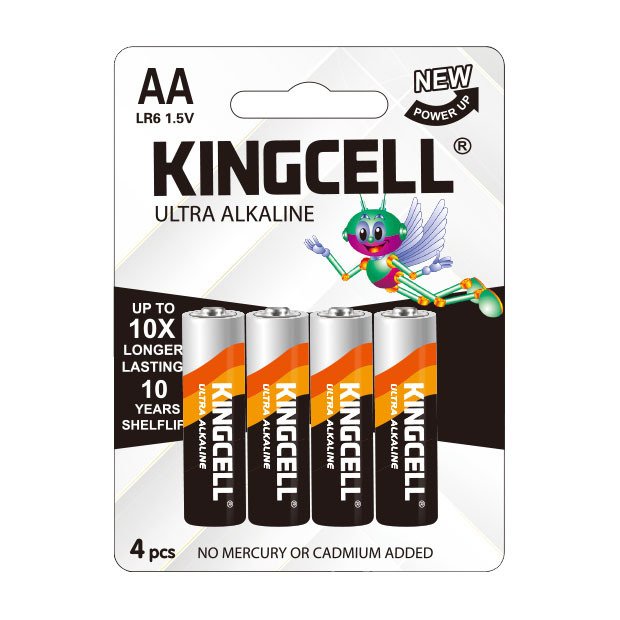
Alkaline Batteries Have a Broad Consumer Market
AA and AAA alkaline batteries are among the most commercially versatile battery products for the Iraqi market.
As possíveis aplicações incluem:
- Eletrónica de consumo
- Brinquedos
- Acessórios sem fios
- Equipamento de segurança
- Lanternas
- Dispositivos de medição
- Electrodomésticos
- Controlos remotos
- Instrumentos industriais
For OEM and private-label customers, the opportunity can extend beyond the battery itself.
A Chinese factory may provide:
- Etiquetas personalizadas para baterias
- Arabic/English packaging
- Embalagens em blister
- Caixas de retalho
- Diferentes quantidades por embalagem
- Caixas personalizadas
- Distributor-exclusive brands
- Different battery colors and designs
This is particularly relevant for Iraqi importers that already operate local distribution networks.
Iraq’s Electricity Situation Is Creating a New Battery Market
The biggest structural opportunity in Iraq is not necessarily traditional dry batteries.
It is energy storage.
In July 2026, Iraq’s Parliament discussed the country’s deteriorating electricity situation with the Minister of Electricity. The ministry reported demand of approximately 60,000 MW while available production had fallen to around 22,000 MW at that time. Parliament’s recommendations included expanding solar-energy systems for homes, agriculture and industry and facilitating financing for citizens who install solar systems.
This creates a direct connection between electricity reliability and battery demand.
When grid electricity is insufficient or unreliable, customers may require:
Solar PV + inverter + battery + backup load
ou:
Grid + inverter/charger + battery + critical load
The battery becomes an energy-management component rather than simply a disposable consumer product.

Solar Energy Is Becoming a Strategic Battery Opportunity
Iraq has significant solar potential, and the government is moving toward a more diversified electricity system.
In 2026, Iraq’s National Investment Commission invited local, regional and international independent power producers to submit expressions of interest for seven utility-scale solar PV projects with a combined potential capacity of 755 MWp.
The broader project pipeline is much larger.
The U.S. Energy Information Administration identifies major solar projects involving TotalEnergies and QatarEnergy, Masdar, ACWA Power, PowerChina and other developers. The listed projects include 1,250 MW from TotalEnergies and QatarEnergy, 1,000 MW from Masdar, 1,000 MW from ACWA Power and 750 MW from PowerChina.
A 750 MW solar project in Muthanna involving PowerChina also moved forward in August 2026, with 250 MW expected to be brought into service before summer 2027 according to the Iraqi Ministry of Electricity.
Large solar development does not automatically mean that every project will include batteries. However, the growth of solar generation increases the importance of flexible generation, grid management and storage technologies.
Battery Energy Storage Is Already Being Used in Iraq
Battery storage is not merely a future concept in Iraq.
A 2026 project by North Power Company combined 2.22 MWp of solar PV with a 3.379 MWh BESS across seven hybrid solar sites serving UN-related facilities in Baghdad, Erbil and Kirkuk. The system combines solar PV, BESS, diesel generation and the national grid under an integrated energy-management system.
This type of hybrid system is particularly relevant to Iraq.
Instead of depending on one electricity source, the system can coordinate:
- Energia solar
- Battery storage
- Diesel generation
- Grid electricity
- Real-time load demand
For battery manufacturers, this opens opportunities beyond utility-scale projects.
Commercial and industrial customers may also require smaller systems for:
- Offices
- Hotels
- Hospitais
- Factories
- Shopping centers
- Estações de telecomunicações
- Remote facilities
- Security installations
- Atividades agrícolas
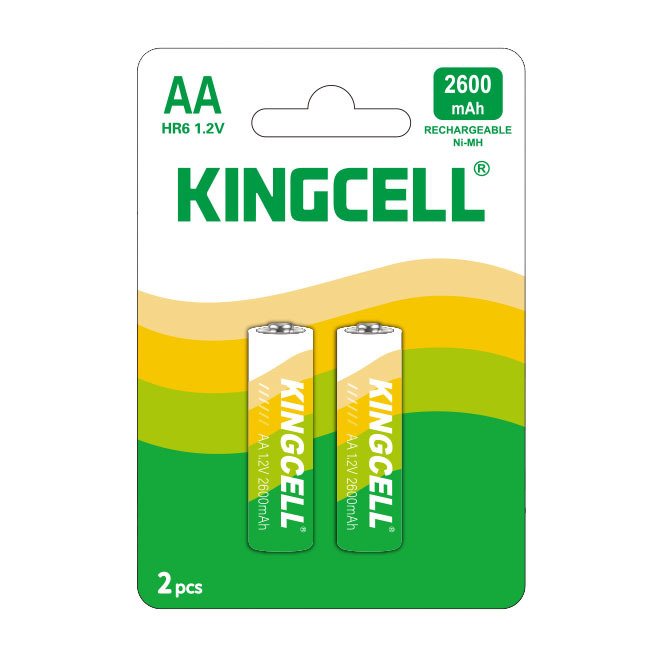
LFP Batteries Can Fit Iraq’s Solar and Backup Applications
Lithium iron phosphate, or LFP, is particularly relevant to stationary storage applications.
Compared with traditional lead-acid systems, LFP can offer advantages such as:
- Ciclo de vida mais longo
- Higher usable energy
- Lower weight
- Carregamento mais rápido
- Better suitability for frequent cycling
- Integrated battery-management systems
However, an LFP battery should not be selected simply because it has a higher nominal capacity.
An Iraqi solar customer should evaluate:
- Capacidade útil
- Depth of discharge
- Vida útil
- BMS
- Inverter compatibility
- Charging voltage
- Discharge current
- Temperatura de funcionamento
- Protocolo de comunicação
- Fire and safety protection
- Garantia
- Local service capability
For Chinese lithium battery manufacturers, the ability to provide an integrated technical solution can therefore be more valuable than simply offering the lowest price per kWh.
Iraq’s Renewable-Energy Regulatory Framework Is Developing
Iraq’s renewable-energy policy environment is also evolving.
In August 2026, the Iraqi Parliament completed the first reading of a draft Renewable Energy Regulation Law, designed to establish a legal framework for renewable energy, encourage public and private adoption and support sustainable development.
In July 2026, Iraq’s Ministry of Planning also worked with GIZ on a proposed strategic project for electricity and renewable-energy transition. The proposed framework included renewable-energy integration into transmission and distribution networks, off-grid systems, technical standards and competitive procurement mechanisms.
For battery suppliers, these developments matter because the regulatory environment around solar, distributed generation and storage can influence future project structures.
The exact requirements for a battery product or energy-storage system should still be confirmed with the Iraqi importer and relevant authorities before shipment.

High Temperatures Make Battery Quality Important in Iraq
Iraq’s climate creates another important technical consideration.
Summer temperatures can be extremely high, particularly in central and southern regions. Batteries may be exposed to high temperatures during:
- Transporte marítimo
- Container storage
- Desembaraço aduaneiro
- Armazenagem
- Distribuição a retalho
- Outdoor equipment operation
This makes temperature performance and sealing quality particularly important.
For primary batteries, buyers should examine:
- Resistência a fugas
- High-temperature storage
- Prazo de validade
- Internal pressure
- Tecnologia de vedação
- Discharge stability
For lithium batteries, the technical requirements are more extensive:
- Cell thermal characteristics
- BMS protection
- Proteção contra sobrecarga
- Proteção contra descarga excessiva
- Gestão térmica
- Operating-temperature range
- Fire protection
- Segurança nos transportes
A battery that is technically acceptable in a mild climate may require additional evaluation for Iraq’s operating environment.
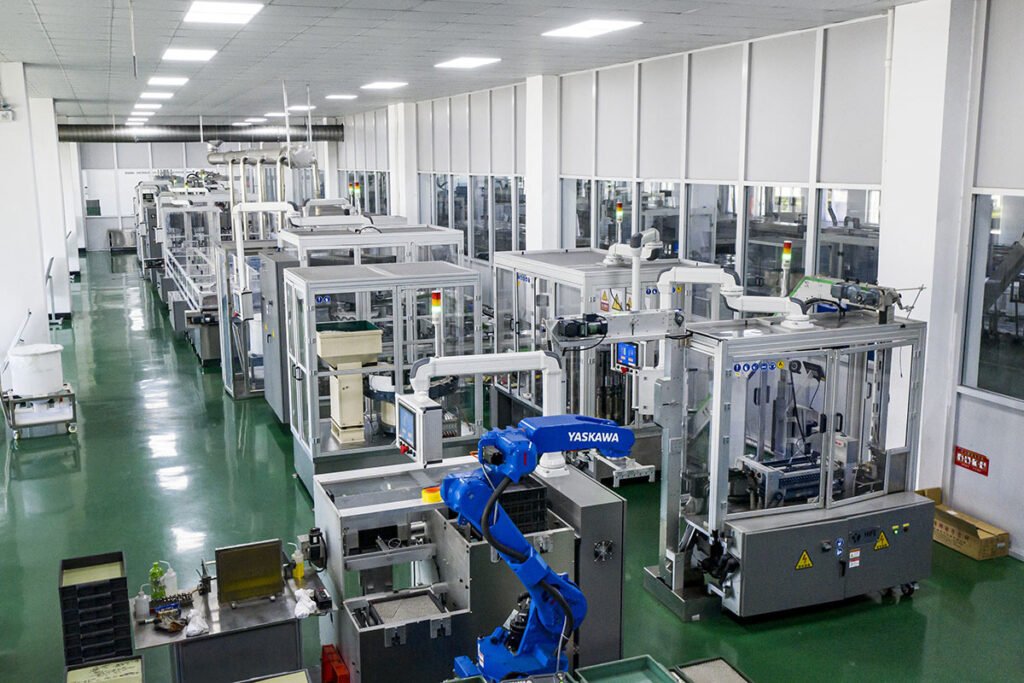
Lithium Primary Batteries Serve Specialized Applications
Lithium primary batteries can serve applications where long operating life and low self-discharge are important.
Potential Iraqi applications include:
- Electricity meters
- Gas meters
- Water meters
- Sistemas de segurança
- Sensores
- Industrial monitoring
- Remote-control equipment
- Telecomunicações
- Eletrónica especializada
Button lithium batteries such as CR2032, CR2025 and CR2016 can also serve small electronic products.
These products are generally more specification-sensitive than ordinary carbon zinc batteries. Buyers may require precise dimensions, voltage curves, capacity data, shelf-life information and transportation documentation.
Rechargeable Batteries and Backup Power Are Important
Iraq’s electricity environment creates demand for rechargeable backup systems.
As possíveis aplicações incluem:
| Aplicação | Potential battery solution |
| Sistema de reserva de telecomunicações | LFP or other rechargeable systems |
| Home solar | LFP energy-storage battery |
| Cópias de segurança para pequenas empresas | Lithium battery + inverter |
| Industrial UPS | Lithium or traditional rechargeable battery |
| Security system | Bateria recarregável |
| Iluminação pública solar | Lithium/LFP battery |
| Remote facility | Solar + LFP + inverter |
| Data/communications equipment | High-reliability backup battery |
This market is different from the disposable-battery business.
A primary-battery importer may purchase by carton or container.
A lithium-storage customer may purchase by project, requiring technical design, commissioning and after-sales service.

OEM and Private-Label Batteries Have Potential in Iraq
The existing import market and strong Chinese supply position make OEM/private-label products a practical area to examine.
For disposable batteries, Iraqi buyers may want:
- Local brand names
- Arabic packaging
- Embalagem em inglês
- Cartões blister personalizados
- Customized retail boxes
- Produtos exclusivos para distribuidores
- Different battery capacities
- Diferentes quantidades por embalagem
For rechargeable and lithium batteries, OEM customization can include:
- Capacidade
- Tensão
- Química celular
- Dimensões da bateria
- Conector
- BMS
- Habitação
- Interface de comunicação
- Etiqueta
- Embalagem
However, lithium OEM projects require considerably more technical information than ordinary primary batteries.
What Battery Products Have the Best Commercial Fit in Iraq?
The Iraqi market should be divided by customer type.
| Iraqi buyer | Produtos potenciais | Principais prioridades de aquisição |
| Battery wholesaler | Carbon zinc, alkaline | Preço, prazo de validade, embalagem |
| Retail distributor | AA, AAA, C, D, 9V | Brand, packaging, consistency |
| Distribuidor de produtos eletrónicos | Alkaline, lithium primary, button | Desempenho e dimensões |
| Instalador de sistemas solares | LFP batteries, ESS | Capacity, cycle life, BMS |
| Empresa de telecomunicações | Rechargeable, LFP | Fiabilidade, duração do backup |
| Cliente industrial | Baterias de lítio primárias e recarregáveis | Documentação técnica |
| Marca OEM/marca própria | Carbono-zinco, alcalinas, lítio | MOQ, packaging, consistency |
| Energy project developer | LFP/ESS | Safety, lifecycle, integration |
This means a Chinese manufacturer should not use the same sales strategy for every Iraqi customer.

Por que é que a Huatai Battery é mais do que um fabricante de pilhas de carbono-zinco
A Shandong Huatai New Energy Battery Co., Ltd. tem as suas raízes industriais que remontam à fundação da Fábrica de Baterias de Linyi, em 1956, tendo sido formalmente constituída em 1993.
Today, Huatai has developed beyond traditional carbon zinc batteries and offers a broader portfolio covering alkaline, button, rechargeable, lithium and other new-energy battery products.
The company operates more than 40 production lines and seven component workshops, including high-speed HIBAR alkaline production lines. Huatai states that its annual battery output exceeds 6 billion pieces and that it exports to more than 80 countries.
For Iraq, this broader product portfolio can support different customer segments:
- R6P / AA carbono-zinco
- R03P / Pilha de carbono-zinco AAA
- LR6 / pilhas alcalinas AA
- LR03 / pilha alcalina AAA
- Pilhas C e D
- Baterias de 9V
- Células de botão
- Baterias primárias de lítio
- Pilhas recarregáveis Ni-MH
- Baterias de iões de lítio
- LFP energy-storage batteries
- Baterias OEM/de marca própria
This multi-category approach is particularly relevant to Iraq because the country’s battery market combines traditional consumer demand with an emerging solar-storage industry.
What Should Iraqi Buyers Look for in a China Battery Supplier?
A professional Iraqi importer should evaluate a supplier across several dimensions.
Entre as questões importantes contam-se:
- A fábrica produz ela própria as baterias?
- Que tipos de composição química das baterias são produzidos internamente?
- Can the supplier provide product specifications and test reports?
- What certifications and environmental documents are available?
- O fornecedor pode disponibilizar amostras antes do início da produção em série?
- Qual é a quantidade mínima de encomenda (MOQ) para baterias OEM e de marca própria?
- Can the supplier provide Arabic/English packaging?
- How is leakage resistance tested?
- How are high-temperature storage conditions evaluated?
- For lithium batteries, can the supplier provide UN38.3 and relevant transportation documents?
- Can the supplier support inverter and BMS compatibility for ESS projects?
- Can the factory maintain stable quality across repeat container shipments?
For larger solar and storage projects, the buyer should also evaluate warranty terms, degradation assumptions, commissioning support, spare parts and local technical service.
FAQs About the Iraq Battery Market
1. Is Iraq a good market for Chinese battery manufacturers?
Iraq has substantial demand for both conventional and advanced batteries. In 2024, China supplied approximately US$21.68 million of Iraq’s reported HS 850619 primary-cell imports, making China the largest individual supplier in that category.
2. Are carbon zinc batteries still used in Iraq?
Yes. Carbon zinc batteries remain suitable for low-drain consumer products such as clocks, flashlights, radios and remote controls, particularly where low purchase price is important.
3. Does Iraq import batteries from China?
Yes. China was Iraq’s largest reported supplier of HS 850619 primary cells and batteries in 2024, with approximately US$21.68 million in imports. China also supplied approximately US$6.77 million of primary-battery parts under HS 850690.
4. Why is battery storage becoming more important in Iraq?
Iraq’s electricity demand substantially exceeds available generation capacity during periods of system stress. Solar power and battery storage can help provide backup, shift renewable electricity and support distributed power systems. Iraq’s Parliament has also called for broader deployment of solar systems for households and economic sectors.
5. Is LFP suitable for the Iraqi solar market?
LFP can be suitable for residential, commercial, industrial and remote solar-storage systems, provided that the battery is correctly matched with the inverter, BMS, load profile, operating temperature and safety requirements.
6. Is Iraq developing large-scale solar projects?
Yes. Iraq is developing multiple large solar projects, including a proposed 755 MWp group of seven IPP projects. Major projects involving TotalEnergies, Masdar, ACWA Power and PowerChina are also in the pipeline.
7. Can Chinese manufacturers provide OEM batteries for Iraqi brands?
Yes, technically this can include carbon zinc, alkaline, button, lithium primary and selected rechargeable products. OEM requirements should be defined around chemistry, size, capacity, packaging, MOQ and applicable compliance requirements.
8. What is the biggest challenge when selling lithium batteries to Iraq?
For lithium products, the challenge is usually broader than price. Product safety, BMS design, transportation classification, certification, operating temperature, warranty, inverter compatibility and after-sales support all need to be considered.

Conclusion: Iraq Is Moving from a Conventional Battery Market toward Solar and Energy Storage
Middle East Iraq’s battery market has a strong existing foundation in conventional primary batteries. The 2024 import data demonstrate substantial demand, with China already supplying a significant share of Iraq’s primary-cell imports.
Zinco-carbono e pilhas alcalinas will continue to serve household, retail, electronics and industrial applications. Lithium primary and button batteries can address more specialized equipment.
But the larger structural opportunity is developing around electricity.
Iraq’s electricity demand remains far above available generation during periods of system stress, while the government is pursuing solar projects and a broader renewable-energy framework. Utility-scale solar projects, distributed solar systems and hybrid microgrids are creating new applications for rechargeable batteries and BESS. A 3.379 MWh BESS has already been deployed as part of a hybrid solar project serving facilities in Baghdad, Erbil and Kirkuk.
For Chinese manufacturers, this creates several distinct commercial paths:
Carbon zinc and alkaline → consumer and retail market
Lithium primary and button cells → electronics and specialized equipment
Rechargeable batteries → backup and industrial applications
LFP and BESS → solar, commercial, industrial and grid-related energy storage
Para um Top China battery manufacturer for Iraq, the strongest proposition is therefore not simply low-cost battery production. It is the ability to combine large-scale manufacturing, multiple battery chemistries, OEM/private-label capability, technical documentation, high-temperature reliability and increasingly sophisticated lithium-energy-storage solutions.
Huatai Battery’s manufacturing history dating back to 1956, broad primary-battery portfolio and expansion into rechargeable and lithium battery products provide a foundation for serving these different layers of the Iraqi market.
The Iraqi market is evolving from a traditional battery-import market into a broader battery-and-energy-storage market. For Chinese suppliers, that means the opportunity is no longer limited to selling another container of AA or AAA batteries; it can extend from everyday consumer batteries to the energy-storage systems supporting Iraq’s next generation of solar and power infrastructure.