English
  Spanish
  French
  Arabic
  Portuguese
  Russian
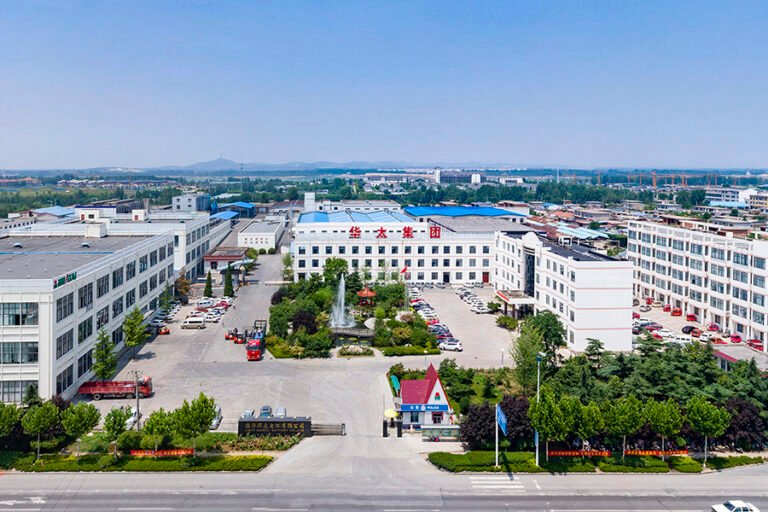
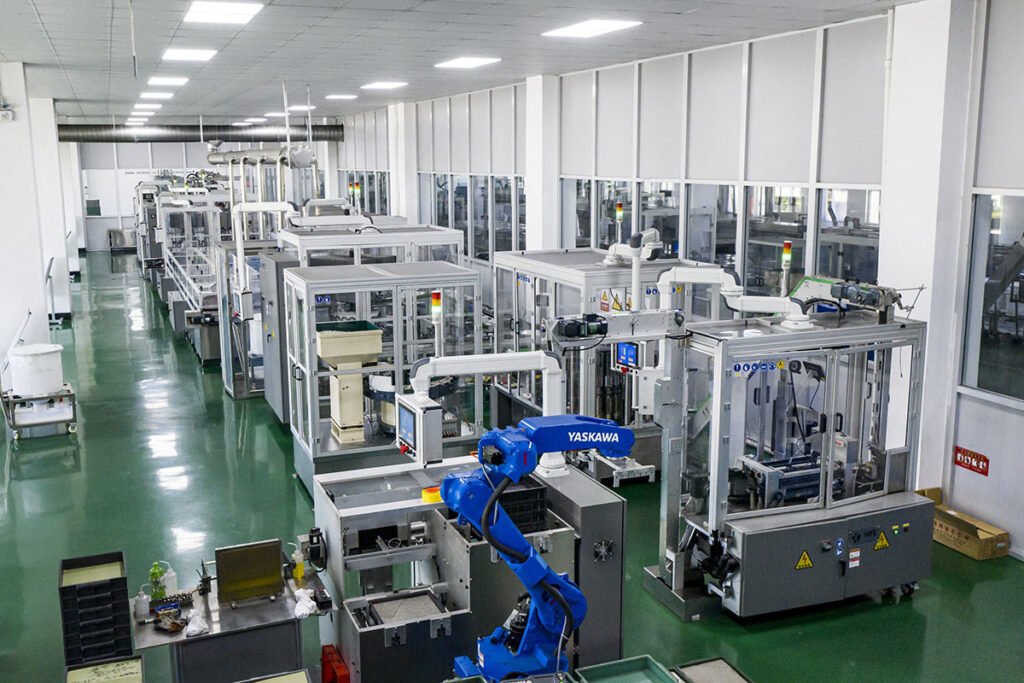
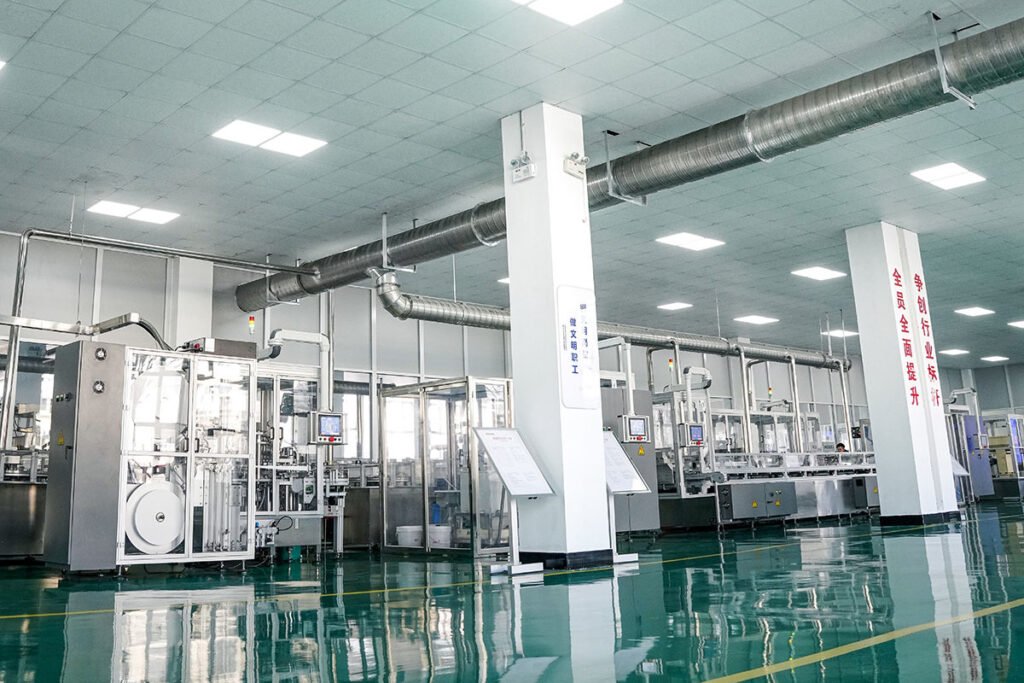
 In 2026, walking through the modernized smart workshops of Shandong Huatai New Energy Battery Co., Ltd., the air is no longer filled with the noise of thousands of workers, but rather the precise, rhythmic hum of the Canadian Hibar high-speed battery production lines.
As a pioneer in the Chinese energy sector,Linyi Huatai Battery has witnessed a dramatic shift from “labor-intensive tactics” to “intelligent unmanned manufacturing.” While production efficiency soars and economic benefits reach new heights, a profound sociological question faces every manufacturer: As Artificial Intelligence (AI) and robotic arms replace repetitive labor, how do we define the ultimate purpose of industrial production?
1. The Cost of Efficiency: The Evolution from 4,000 to 1,000 Employees
In the past, manufacturing a high-quality Alkaline AA battery (LR6) or a Super heavy duty carbon zinc battery (R6P) required dozens of manual stages. Today, with the integration of AI visual inspection and fully automated assembly lines, Huatai’s workforce has transitioned from a peak of over 4,000 employees to a specialized team of 1,000 technical experts.
This reduction is not a mere “elimination” of people, but a strategic upgrade to remove human error. For instance, in the precision assembly of a 3V Lithium button cell (CR2032) or a High voltage 23A/27A alkaline battery, micron-level accuracy is required—something beyond the limits of human fatigue. While simple repetitive roles are vanishing, this shift forces the labor force to evolve toward high-value technical maintenance and smart system management.
2. Manufacturing Reshoring: Can AI Erase the Regional Cost Gap?
The global shift of manufacturing to Southeast Asia was driven by low labor costs. However, as AI makes “labor cost marginalization” a reality, the focus for Shandong Linyi Huatai lithium Battery shifts toward supply chain depth and delivery speed.
Cost Equalization: When production no longer relies on thousands of low-wage workers but on efficient energy and AI maintenance, the geographical advantage of cheap labor diminishes.
U.S. Manufacturing Reshoring: The U.S. is leveraging AI to combat “industrial hollowing.” When a factory no longer needs a massive blue-collar workforce, brand owners may bring production back home.
The Huatai Defense: At Shandong Huatai, we believe the competition of the future is about “Total Supply Chain Intelligence.” Even if labor cost advantages fade, our ability to self-supply 100% of core components—from zinc cans and steel shells to battery caps—remains a barrier that overseas competitors cannot easily replicate.
3. The “Boomerang Effect”: The Paradox of the Unmanned Factory
A critical concern arises: If the majority of the population loses their jobs and income, who will purchase the industrial goods produced by these factories?
If global consumption shrinks due to employment contraction, even the most advanced factory producing Eco-friendly LR03 AAA alkaline batteries will face stagnation. This is a “composition fallacy”—what benefits the individual factory in efficiency may damage the collective market’s purchasing power.
Huatai’s Philosophy: AI should be an extension of human will, not a replacement for human existence. If the fruits of AI productivity are not matched by a shift in social value distribution, the “boomerang” will eventually strike the producers themselves.
4. Huatai’s Vision: Dynamic Coexistence of AI and Humanity
Facing the tide of reform, Shandong Huatai New Energy Battery Co., Ltd. chooses a path of proactive adoption balanced with social responsibility:
Tools, Not Rivals: We position AI as a tool to enhance primary battery safety and performance, not a blade to sever livelihoods.
Upgrading Roles: We encourage our staff to transition from manual assemblers to “Smart Line Architects” and “Data Maintenance Engineers.”
Innovating for the Future: Huatai is actively developing next-generation Sodium-ion batteries and high-capacity Rechargeable Li-ion batteries. By creating new energy scenarios, we aim to generate new downstream service jobs that never existed before.
❓ Frequently Asked Questions: AI, Efficiency, and the Future of Battery Sourcing
Q1: How does Shandong Huatai’s automated Hibar line benefit global distributors? A: Our investment in Canadian Hibar high-speed lines ensures that every Alkaline AA and AAA battery reaches a 99.9% consistency rate. For distributors, this means fewer customer complaints, zero leakage risks, and a significantly more stable supply chain compared to factories relying on manual labor.
Q2: With reduced staff, can Linyi Huatai still handle high-volume OEM/ODM orders? A: Absolutely. While our workforce has transitioned from 4,000 to 1,000, our production capacity has actually tripled. Our automated systems are designed for 24/7 operation, allowing us to fulfill large-scale orders for Super heavy duty carbon zinc batteries and Lithium button cells with shorter lead times than ever before.
Q3: Does AI-driven manufacturing lower the cost of high-voltage batteries? A: Yes. By minimizing manual handling and material waste, our AI-optimized production for 23A/27A high voltage batteries reduces the marginal cost of production. This allows Shandong Huatai to offer factory-direct pricing that remains competitive even as global raw material costs fluctuate.
Q4: Is an automated factory more environmentally friendly? A: Automation allows for much tighter control over chemical waste and energy consumption. Our smart systems monitor the environmental footprint of every Eco-friendly LR03 battery produced, ensuring compliance with global standards like RoHS and REACH while reducing carbon emissions per cell.
Q5: Why choose a “Smart Factory” partner like Huatai over low-cost labor regions? A: Labor-intensive factories are prone to instability due to rising wages and high staff turnover. By partnering with Linyi Huatai Battery, you are investing in a technology-first supplier where quality is controlled by precision algorithms, ensuring that the primary batteries you receive today will be of the same elite quality five years from now.

Conclusion
How will AI and humanity coexist in harmony? The answer lies in the future. However, Linyi Huatai Battery remains firm in its belief: Industrial production should make life better, not harder. We pursue automation to liberate humans from hazardous and repetitive toil, allowing them to engage in creative and dignified work.
In this era of rapid change, Huatai will hold the line on “Human-Centric Technology,” striving for the pinnacle of the global battery industry while never losing sight of the human warmth behind every workstation.