English
 Spanish
 French
 Arabic
 Portuguese
 Russian
 Chinese
Top China Battery Manufacturer for North Korea
Explore Asia North Korea’s battery market by China Huatai Battery Group, including carbon zinc, alkaline, lithium and rechargeable batteries, China supply chains, solar power, electric mobility, battery assembly and the regulatory challenges of supplying the DPRK.
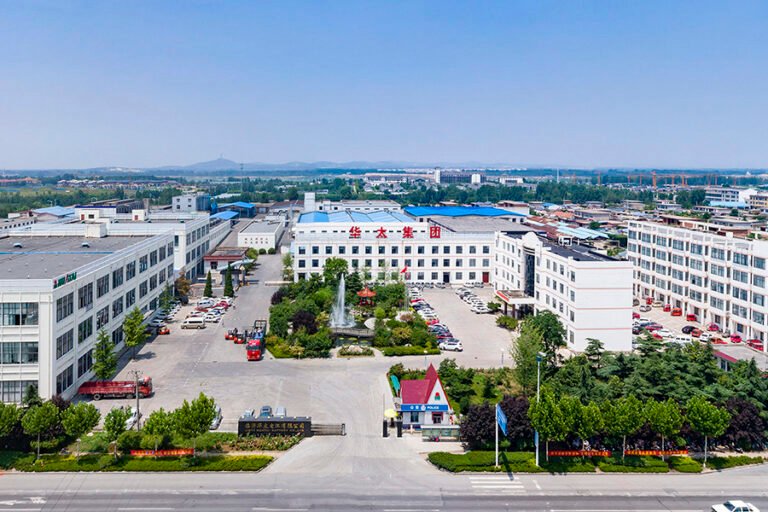
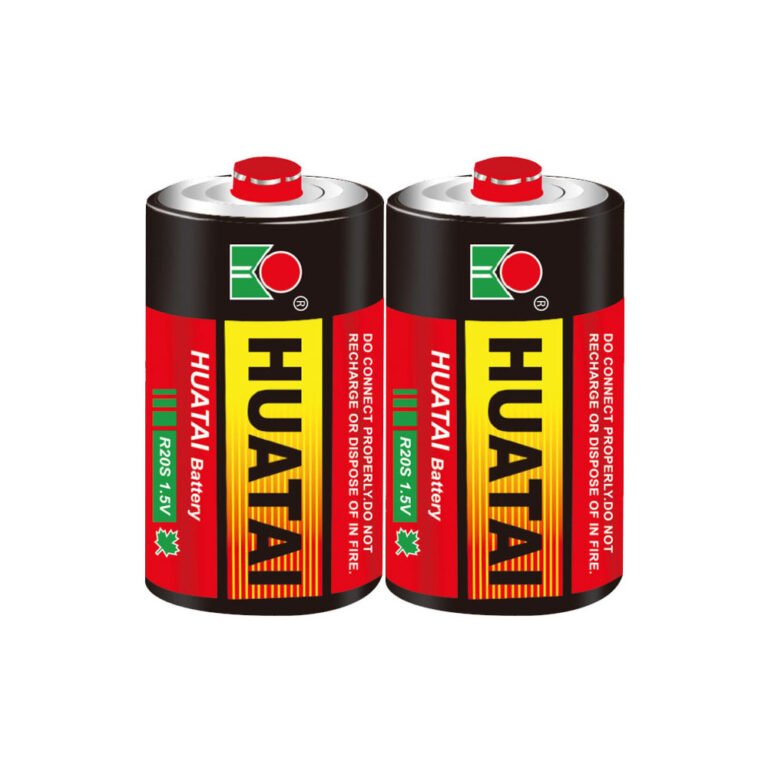
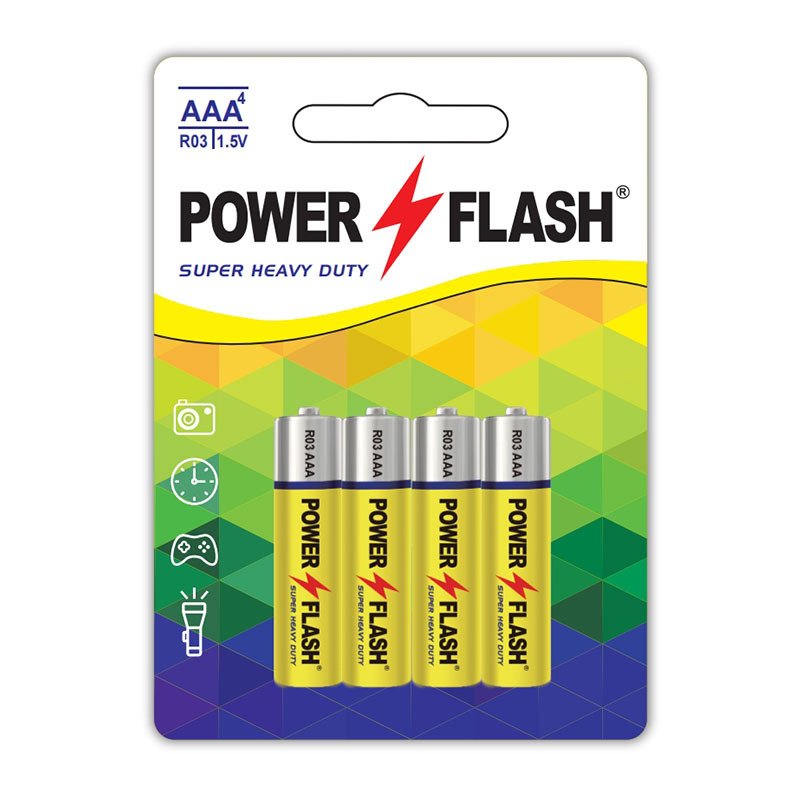
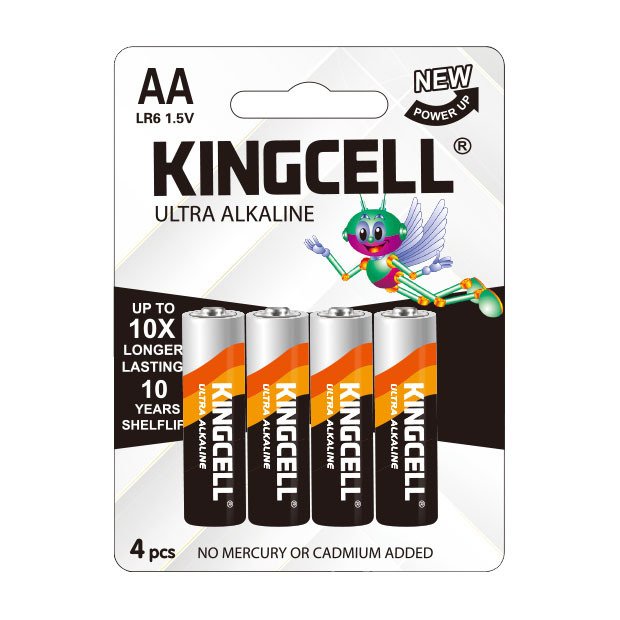
Shandong Linyi Huatai New Energy Battery Co., Ltd. was established in May 1993,but our factory’s history can date back to the establishment of the Linyi Battery Plant in 1956.We are currently one of the leading Eco-friendly & Mercury-free alkaline battery manufacturers and lithium battery manufacturers in China and the world’s largest heavy duty zinc-carbon batteries manufacturer & factory. Our products are produced with HUATAI, Power Flash and KINGCELL brands and customer’s private label, supplied 6 billion annual output by HIBAR high-speed automated production lines, offering OEM dry primary battery manufacturing solutions for zinc carbon, alkaline, and lithium batteries worldwide.For more insights, please stay tuned to our News section, which covers the latest Company News and Industry News.We also supply one-stop Product Catalog service for our customers.

North Korea, officially the Democratic People’s Republic of Korea (DPRK), is a highly unusual battery market in Asia. Unlike most consumer markets, reliable public statistics on battery consumption, imports and end-user demand are extremely limited. International sanctions, strict state control over foreign trade and restrictions on electrical equipment make ordinary market analysis difficult. At the same time, available evidence indicates growing demand for batteries used in electric bicycles, motorcycles, household solar systems and small-scale energy storage.
Recent reporting from China indicates that North Korean trading companies significantly increased orders for small and medium-sized batteries in the 12–30 Ah range in 2026, driven by electric bicycles, electric motorcycles and household or business solar-power storage.
China is particularly important to this market. The Korea Development Institute estimates that China accounted for roughly 95% of North Korea’s total trade in 2025, highlighting the structural importance of China-North Korea trade. However, any company considering supplying batteries to North Korea must conduct product-specific sanctions screening before discussing a commercial transaction. UN Security Council measures prohibit the supply of various categories of industrial machinery and electrical equipment to the DPRK, and additional restrictions apply to dual-use and proliferation-sensitive items.
Therefore, the North Korean battery market should be approached differently from ordinary Latin American or Southeast Asian battery markets. Market demand exists, but commercial feasibility depends first on sanctions, product classification, end use, counterparties, payment and logistics compliance.
Understanding the North Korea Battery Market
North Korea does not publish the type of detailed battery-import statistics available for countries such as Japan, South Korea or many Latin American markets. Analysts consequently rely on Chinese customs data, third-party reporting and other indirect sources.
The KDI notes that North Korea’s economic statistics are highly limited and that analysts frequently have to rely on trade data from partner countries.
This creates an important distinction between observed demand and measurable market size.
Available evidence points to several battery-demand segments:
| Battery segment | Reported or potential application | Market characteristics |
| Carbon zinc | Household electronics, flashlights, radios and low-drain devices | Traditional consumer demand |
| Alkaline | Higher-performance household devices | More expensive, longer-runtime option |
| Small lithium/rechargeable packs | Electric bicycles and motorcycles | Growing demand reported in 2026 |
| Solar-storage batteries | Household and business solar systems | Increasing importance |
| Larger rechargeable batteries | Backup and small energy systems | Application-specific |
| Battery assembly | EV, renewable-energy and storage applications | Local investment opportunity |
The lack of official market statistics means that suppliers should avoid presenting speculative market-size figures as established facts.
Carbon Zinc Batteries Still Have a Role in North Korea
Carbon-zinc batteries remain relevant where price is more important than maximum energy density.
AA, AAA, C, D and 9V formats can serve traditional low-drain applications such as:
- Radios
- Flashlights
- Clocks
- Remote controls
- Toys
- Basic electronic equipment
For cost-sensitive markets, carbon-zinc batteries can provide a lower-priced alternative to alkaline batteries.
However, a battery manufacturer should still pay attention to construction quality. Manganese dioxide activity, zinc-can specifications, carbon-rod quality, electrolyte formulation, sealing and label construction all influence practical performance.
For Chinese factories, supplying carbon-zinc batteries to any restricted market also requires a separate compliance review. Product classification and end use should be established before treating an inquiry as an ordinary export order.
Carbon Zinc vs. Alkaline Batteries for North Korea
The choice between carbon-zinc and alkaline batteries depends on the application and purchasing power of the target customer.
| Factor | Carbon Zinc | Alkaline |
| Unit cost | Lower | Higher |
| Energy performance | Standard | Higher |
| Low-drain devices | Suitable | Suitable |
| Higher-drain applications | More limited | More suitable |
| Retail positioning | Economy | Mainstream/premium |
| Shelf-life potential | Good | Generally longer |
| Commercial focus | Cost-sensitive applications | Performance-oriented applications |
For ordinary consumer markets, a supplier could develop both product levels. For North Korea, however, the regulatory status of the specific product must be established before any supply decision.
China Is the Critical External Trade Partner
China’s importance to the North Korean economy makes China-based battery supply chains particularly relevant.
KDI’s 2025 assessment states that China accounted for approximately 95% of North Korea’s total trade and that North Korea remains structurally dependent on imported industrial inputs, machinery and electronic components.
The reopening and gradual normalization of cross-border trade have also affected the battery market. Recent reporting indicates that customs clearance between China and North Korea has enabled North Korean trading companies to increase battery orders.
This does not, however, mean that every battery product can legally be exported.
UN sanctions include restrictions on the supply, sale or transfer to the DPRK of industrial machinery and electrical equipment, while dual-use items relevant to prohibited nuclear, ballistic-missile or other weapons-of-mass-destruction programs are also subject to controls.
A battery supplier should therefore distinguish between:
- Evidence of commercial demand
- Product-specific export eligibility
- End-user eligibility
- End-use eligibility
- Payment eligibility
- Transportation eligibility
These are separate questions.
North Korea’s Battery Market Is Closely Connected to Solar Power
One of the most interesting battery applications in North Korea is small-scale solar energy.
Recent reporting indicates that households and businesses are purchasing batteries to store electricity generated by solar systems. This demand exists alongside the growth of electric bicycles and motorcycles.
Solar-plus-battery systems can provide electricity when solar generation is unavailable and can help users operate essential electrical devices.
Potential battery applications include:
- Household solar storage
- Small commercial solar systems
- Lighting backup
- Communications equipment
- Small appliances
- Emergency power
- Off-grid or weak-grid applications
This is different from the utility-scale energy-storage market developing in countries such as China, the United States and Australia.
The available evidence points more strongly toward distributed and small-scale storage applications.
Small and Medium Rechargeable Batteries Are a Growing Segment
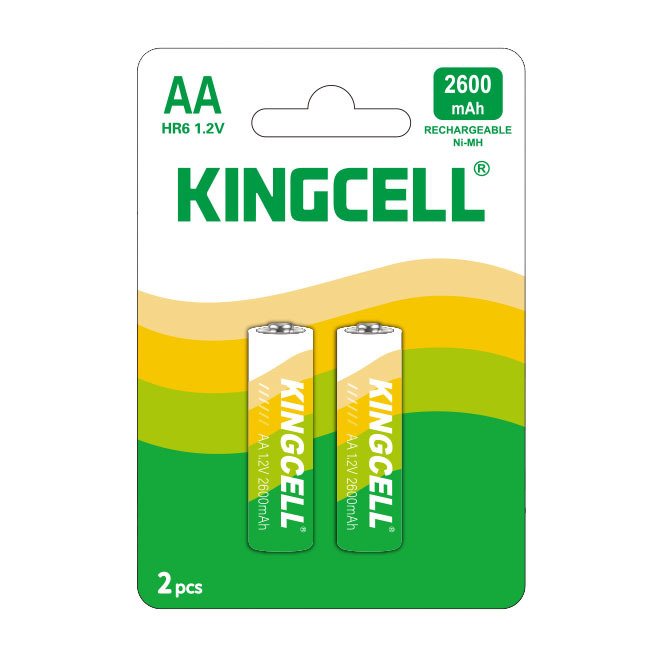
The most specific recent market signal concerns rechargeable batteries in the 12–30 Ah range.
According to September 2026 reporting, Chinese sources said North Korean trading companies had sharply increased orders for small and medium-sized batteries in this range. The batteries were reportedly used mainly in electric bicycles and motorcycles, as well as solar-energy storage.
This is commercially important because it suggests that North Korea’s rechargeable-battery demand is not limited to conventional lead-acid batteries.
Lithium battery packs can offer advantages in applications where weight and energy density matter, particularly electric mobility.
However, the chemistry, voltage, capacity, BMS configuration and intended application must be clearly identified before any transaction.
Electric Bicycles and Motorcycles Are Important Battery Applications
Electric bicycles and motorcycles appear to be among the clearest emerging battery applications in North Korea.
The recent increase in reported battery orders has been linked to the growing popularity of electric bicycles and motorcycles.
For an ordinary commercial market, the relevant battery specifications would include:
- Nominal voltage
- Rated capacity
- Cell chemistry
- Maximum charging voltage
- Continuous discharge current
- Peak discharge current
- Battery-management system
- Overcharge protection
- Over-discharge protection
- Short-circuit protection
- Operating temperature
- Cycle-life performance
For lithium packs, transportation documentation and safety testing would also be important.
But in the DPRK context, technical suitability is only one part of the analysis. The legality of the transaction must be determined first.
North Korea Has an Existing Battery-Assembly Investment Concept
North Korea’s own foreign-trade investment materials demonstrate that battery manufacturing and assembly are considered strategic industrial opportunities.
The DPRK’s official foreign-trade investment platform lists a Battery Assembly Factory project in Nampho City. The project is intended to assemble various batteries, including batteries for electric vehicles, with the stated objective of meeting domestic demand and potentially exporting batteries. It specifically identifies renewable energy as one of the intended application areas.
The project calls for approximately US$1 million of investment in equipment, tools, technical processes, production materials and technical data. The proposal also states that imported raw materials would initially be used, with possible substitution by locally available materials.
This provides an important insight into how North Korea itself views the battery sector: not simply as a consumer-goods category, but as part of electric mobility, renewable energy and domestic industrial production.

Local Battery Assembly Could Be More Important Than Finished-Battery Imports
The battery-assembly project also suggests another possible structure for the market.
Instead of importing finished batteries, a local or joint-venture project could theoretically involve imported equipment, components, cells or production technology followed by domestic assembly.
However, this is precisely where sanctions compliance becomes especially important.
UN Security Council measures prohibit Member States from supplying certain industrial machinery and electrical equipment to the DPRK, and prohibit joint ventures or cooperative entities with DPRK entities except under specified exemptions or approvals.
Therefore, a battery manufacturer should not assume that a proposed assembly project is permissible simply because it appears in a DPRK investment-promotion document.
Any proposed equipment, technology transfer, technical assistance, investment structure or joint venture requires independent legal and sanctions review.
Lithium Batteries Need the Highest Level of Compliance Attention
Lithium batteries are commercially attractive because they can support electric mobility and solar storage, but they also require greater technical and regulatory scrutiny.
For a normal export market, a lithium battery supplier would typically prepare:
- Battery specification sheet
- Cell information
- BMS specification
- Safety test reports
- UN38.3 transportation test documentation
- Packaging specifications
- MSDS/SDS where applicable
- Charging instructions
- Installation instructions
For a North Korean transaction, these technical documents are necessary but may not be sufficient.
The exporter should additionally establish whether the battery, battery system, related equipment or technology is covered by any applicable sanctions or export-control restriction and whether the customer, end user and end use are permissible.
The UN 1718 Committee maintains prohibited-item information covering relevant sanctions measures and lists of controlled items.
North Korea Is Not an Ordinary Export Market
This is the most important difference between North Korea and the other country-market articles in this series.
For countries such as Guatemala, Costa Rica or Panama, an importer normally evaluates tariff classification, technical standards, taxes, product demand and logistics.
For North Korea, the sequence is different.
A supplier should first establish:
Is the product legally exportable?
Then:
Is the customer legally eligible?
Then:
Is the stated end use permissible?
Then:
Can the payment and logistics be completed compliantly?
Only after these questions are answered should the supplier evaluate price, MOQ and commercial profitability.
The UN sanctions regime also requires vigilance regarding sanctions evasion and designated persons or entities. The current UN 1718 sanctions list contains 80 individuals and 75 entities, according to the Security Council’s published materials.
What Battery Products Have Commercial Relevance in North Korea?
From a purely market-demand perspective, the available evidence points toward a mixture of traditional and rechargeable batteries.
| Product | Potential application | Market signal |
| Carbon zinc AA/AAA | Household electronics | Traditional demand |
| Carbon zinc C/D/9V | Flashlights, radios and equipment | Traditional demand |
| Alkaline AA/AAA | Higher-performance consumer devices | Potential mainstream demand |
| 12–30 Ah rechargeable packs | Electric bicycles and motorcycles | Recent reported demand |
| Lithium battery packs | Mobility and energy storage | Emerging |
| Solar-storage batteries | Household/business solar systems | Recent reported demand |
| Battery components | Local assembly | Official investment proposal |
| Battery assembly equipment | EV/renewable applications | Subject to strict sanctions review |
The table describes market relevance, not permission to export.
This distinction is essential when discussing the DPRK battery market.

Why Huatai Battery Is More Than a Carbon Zinc Battery Manufacturer
Shandong Huatai New Energy Battery Co., Ltd. has battery-manufacturing roots dating back to the Linyi Battery Factory established in 1956.
Today, Huatai’s manufacturing scope extends beyond traditional carbon-zinc batteries to include alkaline, lithium, rechargeable and new-energy battery products.
The company has more than 40 production lines and seven component workshops, with large-scale production capabilities covering multiple battery categories.
From a product-development perspective, this broad portfolio is relevant to markets where battery demand is divided between traditional primary cells and newer rechargeable technologies.
For North Korea specifically, however, Huatai or any other manufacturer should treat a DPRK inquiry as a compliance-first project, not as an ordinary export inquiry.
The existence of manufacturing capability does not by itself establish that a particular product, customer, transaction structure or end use can legally be supplied.
What Should a China Battery Supplier Check Before a North Korea Inquiry?
A compliance-oriented screening process should include at least the following:
| Screening area | What should be checked |
| Product | Exact chemistry, capacity, voltage and HS classification |
| Customer | Legal entity, ownership and sanctions status |
| End user | Final recipient and beneficial ownership |
| End use | Consumer, mobility, solar, industrial or other application |
| Technology | Whether equipment/software/technical assistance is involved |
| Payment | Financial institution and payment route |
| Logistics | Carrier, route and transshipment points |
| Sanctions | UN and applicable national sanctions |
| Export control | Applicable Chinese and other export-control rules |
| Documentation | Contracts, invoices, end-use statements and permits |
A supplier should not accept vague explanations such as “general batteries” when the order involves large rechargeable packs, production equipment or technical assistance.
Likewise, a request to disguise the end user, alter the product description or route a transaction through an unrelated intermediary should be treated as a major compliance warning.

Frequently Asked Questions About the North Korea Battery Market
1. Is there demand for batteries in North Korea?
Yes. Recent reporting indicates increased demand for batteries used in electric bicycles, motorcycles and solar-power storage. However, reliable official market-size statistics are not publicly available.
2. Which batteries are reportedly in demand in North Korea?
Recent reporting specifically identified small and medium-sized batteries in the 12–30 Ah range for electric bicycles, motorcycles and solar-storage applications. Traditional primary batteries also have household and commercial applications.
3. Is China important to the North Korean battery market?
China is North Korea’s dominant external trading partner. KDI estimated that China accounted for roughly 95% of North Korea’s total trade in 2025, although the precise structure of unofficial trade remains difficult to measure.
4. Can a Chinese battery manufacturer freely export batteries to North Korea?
No general assumption of free export should be made. UN sanctions restrict the supply of certain industrial machinery and electrical equipment and impose additional controls on dual-use and proliferation-sensitive items. Product-specific and transaction-specific sanctions and export-control screening are necessary.
5. Is there a battery manufacturing opportunity inside North Korea?
North Korea’s official foreign-trade investment platform lists a proposed battery assembly factory in Nampho City, intended to produce various batteries including electric-vehicle batteries and support renewable-energy applications.
6. Are lithium batteries relevant to North Korea?
Yes. Available reporting links rechargeable battery demand to electric bicycles, motorcycles and solar storage. Lithium technology may therefore have applications, although the legality of supplying a particular lithium battery or related technology must be determined independently.
7. Is North Korea a normal OEM/private-label battery market?
Not in the same sense as conventional export markets. While there may be demand for customized or assembled products, any OEM arrangement involving a DPRK entity must be reviewed for sanctions, joint-venture, technology-transfer and end-use restrictions before commercial negotiations proceed.
8. What is the most important issue when selling batteries to North Korea?
Compliance comes before price, MOQ or logistics. A supplier should verify the exact product, customer, end user, end use, payment route, logistics route and applicable UN and national export-control requirements before accepting an order.

Conclusion
The North Korean battery market is commercially unusual but increasingly visible.
Recent reporting points to stronger demand for 12–30 Ah rechargeable batteries used in electric bicycles, motorcycles and solar-power storage, while North Korea’s own investment-promotion materials identify battery assembly for electric vehicles and renewable energy as an industrial opportunity.
At the same time, North Korea remains subject to an extensive UN sanctions regime. The Security Council prohibits the supply of certain industrial machinery and electrical equipment to the DPRK and maintains additional controls covering dual-use and proliferation-sensitive goods.
Therefore, the North Korea battery market should not be evaluated solely through conventional SEO concepts such as market size, product price or consumer demand. For a Top China battery manufacturer for North Korea, the critical commercial logic is:
Demand identification → product classification → customer screening → end-use screening → sanctions/export-control review → payment review → logistics review → commercial evaluation.
Only after all compliance requirements are satisfied should a supplier proceed with quotation, production or shipment.
For Huatai Battery, its long manufacturing history dating back to 1956 and broad portfolio covering carbon-zinc, alkaline, lithium, rechargeable and new-energy batteries provide the technical foundation to address different battery applications. But for DPRK-related business, technical capability and market demand do not replace transaction-specific compliance review. A compliant, documented and independently reviewed transaction is the necessary starting point for any potential battery business involving North Korea.