English
 Spanish
 French
 Arabic
 Portuguese
 Russian
 Chinese
Top China Battery Manufacturer for Panama
Explore Latin America Panama’s battery market from China Huatai Battery Group, including carbon zinc, alkaline, lithium and rechargeable batteries, China battery imports, renewable energy, battery storage, electric mobility, environmental regulations and OEM opportunities.
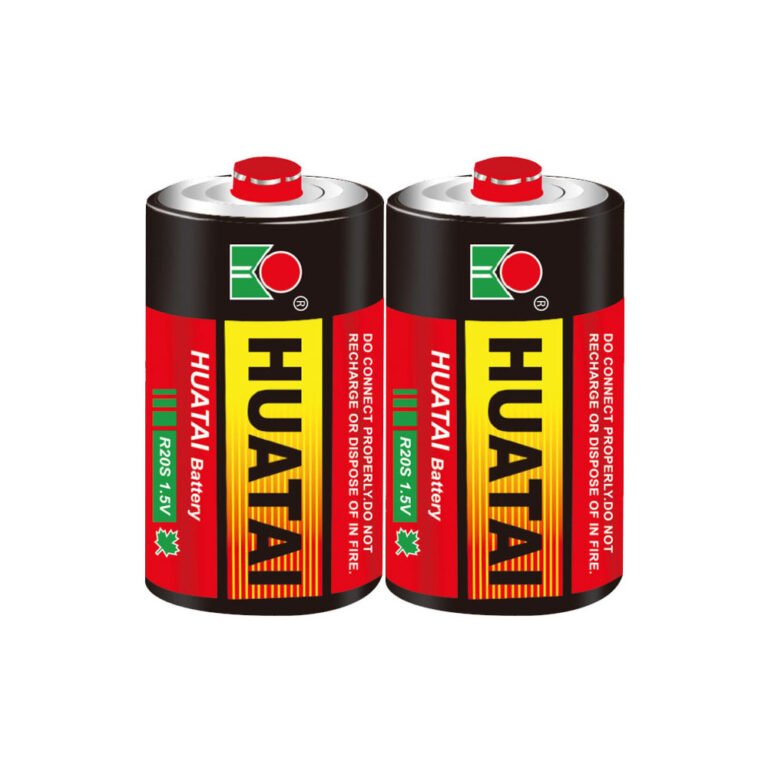
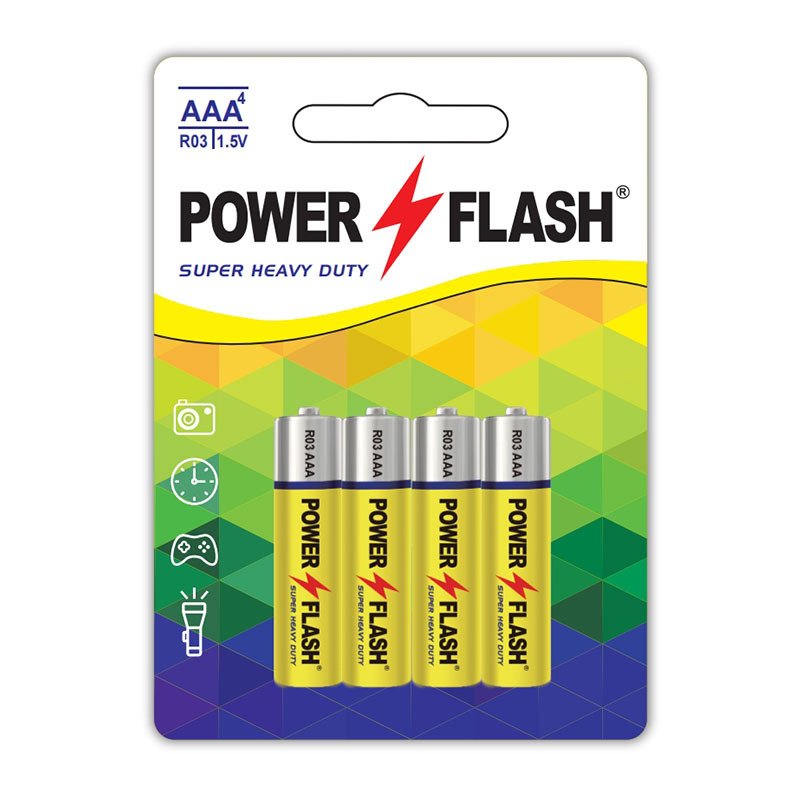
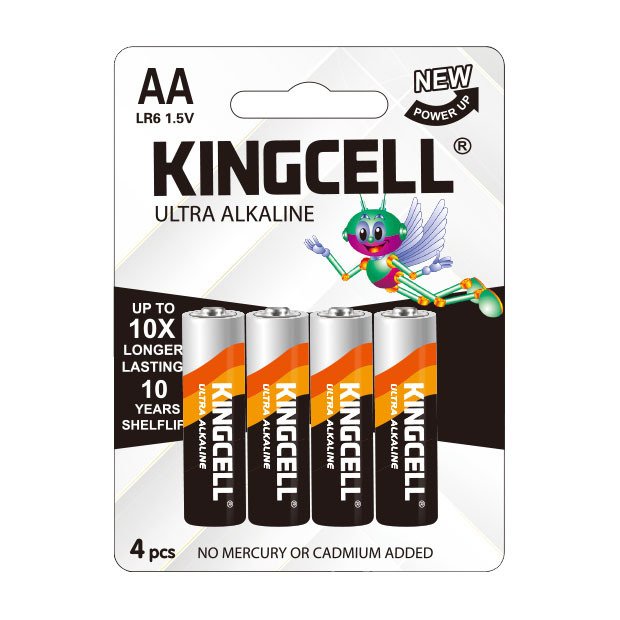
Shandong Linyi Huatai New Energy Battery Co., Ltd. was established in May 1993,but our factory’s history can date back to the establishment of the Linyi Battery Plant in 1956.We are currently one of the leading Eco-friendly & Mercury-free alkaline battery manufacturers and lithium battery manufacturers in China and the world’s largest heavy duty zinc-carbon batteries manufacturer & factory. Our products are produced with HUATAI, Power Flash and KINGCELL brands and customer’s private label, supplied 6 billion annual output by HIBAR high-speed automated production lines, offering OEM dry primary battery manufacturing solutions for zinc carbon, alkaline, and lithium batteries worldwide.

Panama is one of the most strategically positioned battery markets in Central America. Its role as a logistics and trade hub, relatively developed electricity infrastructure, growing renewable-energy capacity and expanding electric-mobility policy create opportunities across both traditional primary batteries and newer rechargeable technologies. For importers looking for a China battery manufacturer for Panama, the market is therefore broader than household AA and AAA batteries. Carbon-zinc and alkaline batteries remain important for consumer applications, while lithium and LiFePO4 batteries are becoming increasingly relevant to solar energy, backup power, electric mobility and energy storage.
China already has a strong position in Panama’s primary battery supply chain. In 2024, Panama imported approximately US$3.62 million of primary cells and primary batteries under HS 850619, of which about US$2.45 million came from China. China therefore represented the largest reported source among Panama’s suppliers in this category.
At the same time, Panama is moving toward a more sophisticated energy-storage market. The country’s climate targets include a goal of incorporating energy-storage capacity equivalent to at least 5% of projected electricity demand by 2030, while ASEP has already approved procedures for incorporating battery-storage systems for customers with critical loads.
These developments make Panama particularly interesting for battery suppliers that can provide both high-volume primary batteries and higher-value rechargeable energy solutions.
Understanding the Panama Battery Market
Panama’s battery market can be divided into several distinct segments.
The first is the conventional consumer battery market. Carbon-zinc batteries remain suitable for low-drain devices such as clocks, remote controls, toys, radios and basic flashlights. Alkaline batteries provide a higher-performance option for applications requiring longer runtime or greater discharge capability.
The second segment consists of specialty primary batteries, including button cells, lithium primary batteries and zinc-air batteries for electronics, instruments and other specialized equipment.
The third segment is rechargeable. NiMH batteries continue to serve reusable consumer products, while lithium-ion and LiFePO4 batteries are increasingly connected with solar systems, backup power, electric mobility and stationary energy storage.
| Battery segment | Typical Panama applications | Key purchasing priorities |
| Carbon zinc | Clocks, remotes, toys, radios, flashlights | Price, stability, leakage resistance |
| Alkaline | Consumer electronics, toys, lighting, equipment | Runtime, shelf life, reliability |
| Button batteries | Watches, meters, electronics | Chemistry, dimensions, voltage |
| Lithium primary | Cameras, meters, electronics | Energy density, shelf life |
| NiMH rechargeable | Reusable consumer devices | Capacity, cycle life |
| Li-ion / LiFePO4 | Solar, backup, mobility, storage | Safety, cycle life, BMS |
| OEM/private label | Retail and distribution | Packaging, MOQ, consistency |
This diversified demand favors a supplier that can provide several battery chemistries instead of forcing an importer to source each category from a different factory.
Carbon Zinc Batteries Remain Relevant in Panama
Panama’s modern logistics and energy infrastructure do not eliminate the need for inexpensive disposable batteries.
AA and AAA batteries are widely applicable to household electronics, remote controls, clocks, toys and small lighting devices. C and D batteries can serve larger flashlights, radios and equipment, while 9V batteries remain relevant to smoke alarms, meters and other devices.
For these applications, carbon-zinc batteries can remain commercially attractive because they provide a lower-cost option for products with modest energy requirements.
However, importers should not evaluate carbon-zinc batteries only by unit price.
Battery construction, manganese dioxide quality, zinc-can weight, carbon-rod quality, electrolyte formulation, sealing and production consistency all affect actual performance. Two batteries with the same nominal voltage can deliver very different operating times in practical use.
For OEM customers, it is therefore useful to define the intended application and discharge requirement before selecting the battery specification.
Carbon Zinc vs. Alkaline Batteries for Panama
The choice between carbon-zinc and alkaline batteries should depend on the target application and market positioning.
| Factor | Carbon Zinc | Alkaline |
| Unit price | Lower | Higher |
| Energy performance | Standard | Higher |
| Low-drain devices | Suitable | Suitable |
| Higher-drain devices | More limited | More suitable |
| Retail positioning | Economy/value | Mainstream/premium |
| Shelf-life expectations | Good | Generally longer |
| OEM opportunity | High | High |
For a Panamanian distributor, carrying both categories can be more effective than choosing one exclusively.
Carbon-zinc batteries can address price-sensitive retail channels, while alkaline batteries can target customers who are willing to pay more for longer operating time and stronger performance.
China Is Already a Major Battery Supplier to Panama
Trade data provide particularly useful evidence when evaluating Panama as an export market.
In 2024, Panama imported approximately US$3.616 million of primary cells and primary batteries classified under HS 850619. China supplied approximately US$2.453 million, compared with about US$523,000 from the United States and smaller amounts from Malaysia, Mexico and Indonesia.
This means China accounted for roughly two-thirds of the reported import value in this specific primary-battery category.
The figure should not be interpreted as the complete size of Panama’s battery industry because HS 850619 covers only a specific group of primary batteries and does not represent rechargeable batteries, automotive batteries, all lithium products or energy-storage systems.
Nevertheless, it demonstrates an important commercial fact: Chinese battery manufacturers already have a strong supply position in Panama’s primary-battery market.
For a new supplier, the opportunity is therefore not simply to introduce Chinese batteries into Panama, but to compete through product consistency, OEM service, technical support, product range and supply-chain reliability.
Panama’s Logistics Position Creates Sourcing Opportunities
Panama’s geographic position between North and South America makes logistics one of the country’s most important commercial advantages.
The Panama Canal and the country’s established maritime, port and logistics infrastructure support international distribution and make Panama different from many smaller Central American markets.
For battery importers, this can have several implications.
A distributor may purchase batteries for the domestic Panamanian market, while larger trading companies may also use Panama as part of a broader regional distribution strategy.
This makes packaging and container planning important. A Chinese factory should be able to discuss:
- Full-container loading
- Mixed-SKU orders
- Master-carton dimensions
- Pallet configuration
- Retail packaging
- Shipping marks
- FOB/CIF terms
- Production lead time
- Lithium-battery transportation requirements
For primary batteries, efficient container utilization can materially affect landed cost because the products are relatively compact and suitable for high-volume shipment.
Panama’s Renewable-Energy Market Is Creating New Battery Demand
Panama’s electricity market is undergoing an important transition.
In 2026, ASEP reported that more than 74% of electricity generation in the country came from renewable sources, including approximately 58% hydroelectric, 10% solar and 6% wind generation. ASEP also reported more than 200 MW of installed self-consumption systems.
This creates a different battery opportunity from markets where batteries are mainly used because grid electricity is unavailable.
In Panama, energy storage can instead help:
- Improve system flexibility
- Integrate solar generation
- Support self-consumption
- Provide backup power
- Improve power quality
- Manage critical loads
- Shift electricity use
- Support distributed generation
This is particularly relevant to commercial buildings, logistics facilities, telecommunications infrastructure, hotels, offices and industrial users.

Battery Energy Storage Is Becoming a Strategic Market
Panama’s energy-storage policy provides one of the clearest signals of future battery demand.
The country’s 2024–2028 climate-change targets include incorporating at least 5% of projected electricity demand in energy-storage capacity by 2030. The policy framework also calls for a roadmap for the import and installation of batteries and other energy-storage systems.
ASEP had already approved a procedure in 2024 for incorporating battery-storage systems for customers with critical loads.
In 2026, ASEP also reported that the country was preparing to announce two new battery-storage projects intended to improve the stability and flexibility of the national electricity system.
For Chinese battery manufacturers, these developments create potential opportunities in:
- Residential energy storage
- Commercial ESS
- Industrial backup systems
- Solar-plus-storage systems
- Telecom backup
- Critical-load applications
- Distributed-energy storage
- Utility-scale BESS
LiFePO4 Batteries Have Strong Potential for Stationary Storage
For stationary energy storage, LiFePO4 is one of the most relevant lithium chemistries to evaluate.
Its combination of cycle life, thermal characteristics and suitability for repeated charging and discharging makes it widely used in residential and commercial energy-storage systems.
However, a professional battery quotation should provide much more information than “48V 100Ah lithium battery.”
A serious Panamanian buyer should request:
- Cell chemistry
- Cell configuration
- Nominal voltage
- Rated capacity
- Usable capacity
- Maximum charging current
- Continuous discharge current
- Peak discharge current
- Cycle-life conditions
- Operating temperature
- BMS functions
- Protection functions
- Communication interface
- Enclosure information
- Transportation documentation
The supplier should also explain whether the quoted capacity is based on nominal or usable energy.
This level of technical information becomes increasingly important as the order moves from consumer batteries to commercial energy-storage systems.

Panama’s Electric-Mobility Policy Adds Another Battery Opportunity
Panama has also established a legal framework supporting electric mobility.
Law 295 of April 25, 2022 promotes electric mobility in terrestrial transportation, and the country’s regulatory framework addresses electric vehicles, charging stations, conversion of conventional vehicles and the treatment of batteries when they reach the end of their useful life. Panama’s energy-information system identifies these requirements within the country’s current energy regulatory framework.
For battery manufacturers, this creates potential demand beyond conventional dry batteries.
Relevant applications can include:
- Electric bicycles
- Electric motorcycles
- Electric tricycles
- Small commercial EVs
- Fleet vehicles
- Auxiliary battery systems
- Replacement lithium battery packs
- Charging infrastructure
- EV-related energy storage
Panama’s electric-mobility market should therefore be considered separately from its consumer dry-battery market.
Battery End-of-Life Management Is Becoming More Important
Environmental management is another area where Panama’s battery market is becoming more sophisticated.
MiAMBIENTE has identified batteries as potentially problematic waste because of their environmental and health impacts. Panama has also implemented projects addressing hazardous waste containing mercury and other persistent pollutants.
A particularly useful practical example is Panama City’s Ecospot recycling initiative, which explicitly accepted alkaline and lithium batteries alongside electronic waste and other recyclable materials.
The country’s environmental direction is also changing at a broader policy level. In March 2026, MiAMBIENTE began coordinating the regulatory development of Law 502 of November 25, 2025, which establishes a circular-economy strategy for Panama.
For battery importers, this means product composition and end-of-life management should increasingly be considered when developing a long-term product portfolio.
Lithium-EV Batteries Require More Attention to End-of-Life Management
Panama’s national electric-mobility strategy has already identified the need to address EV battery disposal, reuse and recycling.
The strategy specifically calls for work on how electric-vehicle battery components should be managed environmentally and proposes an integrated management plan for batteries that no longer meet the operating requirements of electric vehicles.
This creates a future opportunity for second-life applications.
An EV battery that is no longer suitable for vehicle use may potentially have applications in stationary backup or energy storage, depending on its remaining capacity, safety condition, battery-management system and applicable regulations.
For manufacturers and importers, this reinforces the importance of traceability and technical documentation throughout the battery life cycle.
What Battery Products Have the Best Commercial Fit in Panama?
A diversified product portfolio is likely to serve the Panamanian market better than a single-chemistry strategy.
| Market segment | Recommended products | Main commercial opportunity |
| Economy retail | Carbon zinc AA/AAA/C/D/9V | High-volume consumer demand |
| Mainstream retail | Alkaline AA/AAA/C/D/9V | Higher-performance consumer products |
| Specialty | Button, zinc-air, lithium primary | Electronics and instruments |
| Rechargeable consumer | NiMH AA/AAA/C/D/9V | Reusable consumer devices |
| Mobility | Li-ion / LiFePO4 packs | E-bikes, motorcycles, EV applications |
| Backup power | LiFePO4 battery packs | Telecom, commercial and critical loads |
| Energy storage | Residential/commercial ESS | Solar and distributed energy |
| OEM/private label | Customized primary and rechargeable batteries | Local brands and distributors |
The traditional dry-battery market can provide volume, while lithium and energy-storage products offer a path toward higher-value technical applications.
OEM and Private Label Battery Opportunities in Panama
Panamanian distributors do not necessarily need to sell batteries under a Chinese factory’s own brand.
OEM and private-label production can support:
- Supermarket private labels
- Hardware-store brands
- Electronics distributors
- Wholesale battery brands
- Promotional products
- Industrial distributors
- Regional Central American distribution
A Chinese factory can customize:
- Battery labels
- Colors
- Blister cards
- Shrink packaging
- Cartons
- Case quantities
- Retail artwork
- Mixed-SKU packaging
- Product grades
For a distributor, private labeling can create greater control over pricing and channel strategy.
However, the factory must maintain consistent specifications between batches. A private-label brand can suffer significant commercial damage if one shipment has substantially different capacity, leakage resistance or appearance from the previous shipment.

Why Huatai Battery Is More Than a Carbon Zinc Battery Manufacturer
Shandong Huatai New Energy Battery Co., Ltd. has battery-manufacturing roots dating back to the Linyi Battery Factory established in 1956.
Today, Huatai should be positioned as a comprehensive battery manufacturer rather than simply a carbon-zinc battery factory. Its portfolio covers carbon-zinc, alkaline, lithium, rechargeable and new-energy battery products.
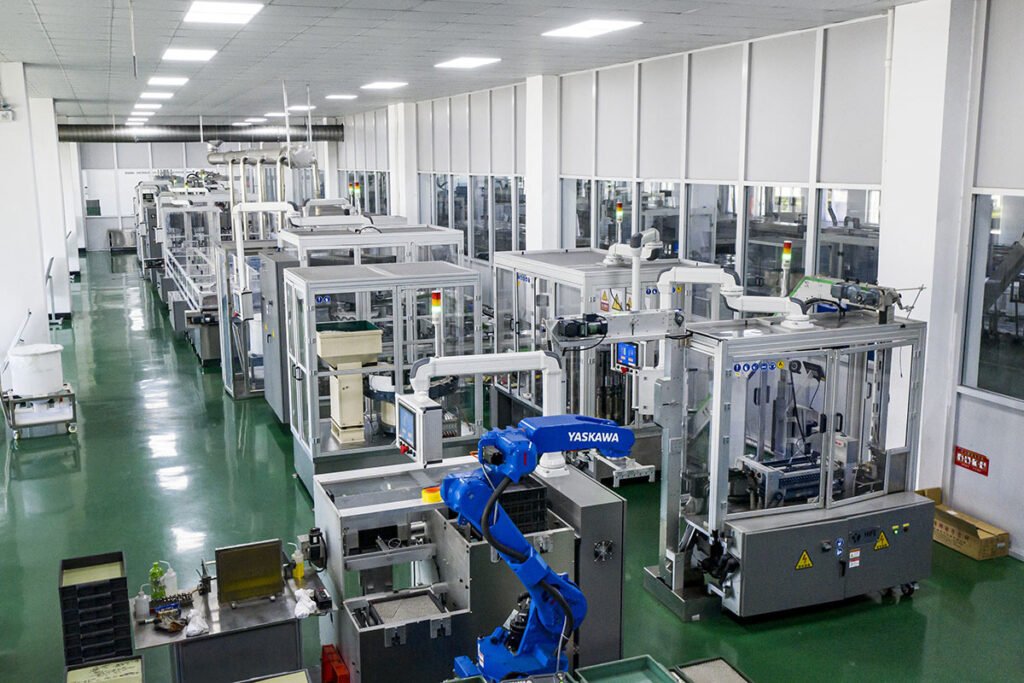
The company has more than 40 production lines and seven component workshops, including high-speed alkaline production capabilities.
For a Panamanian importer, this broad product structure can be useful because the supplier relationship can develop together with the market.
A distributor might initially purchase carbon-zinc and alkaline AA/AAA batteries, then add button cells, rechargeable batteries or lithium products. Commercial and industrial customers can subsequently create opportunities for LiFePO4 backup and energy-storage systems.
This makes the sourcing relationship more flexible than working with a factory that produces only one battery chemistry.
What Should Panamanian Importers Look for in a China Battery Supplier?
A supplier evaluation should cover both product quality and supply-chain capability.
For primary batteries, buyers should verify:
- Battery dimensions
- Nominal voltage
- Discharge performance
- Leakage resistance
- Shelf life
- Zinc-can specifications
- Packaging
- Batch consistency
For rechargeable batteries, buyers should additionally check:
- Actual capacity
- Cycle-life testing
- Cell configuration
- Charging parameters
- BMS
- Protection functions
For lithium battery packs and ESS products, buyers should request detailed technical documentation and transportation-related information before shipment.
| Supplier evaluation | What to verify |
| Factory capability | Production lines and product range |
| Primary battery quality | Capacity, discharge and leakage |
| Alkaline performance | Runtime, shelf life and sealing |
| Rechargeables | Capacity and cycle life |
| Lithium | Cells, BMS and protection |
| ESS | Usable energy, communication and system design |
| OEM | MOQ, artwork and packaging |
| Compliance | Product-specific documents |
| Logistics | Container loading and shipping requirements |
| After-sales | Warranty and technical support |
The objective should be to calculate the total landed cost and total supply risk, rather than selecting a factory solely because its FOB quotation is the lowest.

Frequently Asked Questions About the Panama Battery Market
1. What types of batteries are commonly used in Panama?
Carbon-zinc and alkaline AA, AAA, C, D and 9V batteries remain relevant to consumer applications. Button batteries, lithium primary cells, rechargeable batteries and lithium-ion/LiFePO4 products serve more specialized markets.
2. Does Panama import batteries from China?
Yes. In 2024, Panama imported approximately US$3.62 million of primary cells and primary batteries under HS 850619, with approximately US$2.45 million supplied by China.
3. Is carbon-zinc battery demand still relevant in Panama?
Yes. Carbon-zinc batteries remain appropriate for many low-drain and cost-sensitive applications. They can be used as an economy product alongside alkaline batteries.
4. Is battery energy storage developing in Panama?
Yes. Panama’s climate targets include an energy-storage target equivalent to at least 5% of projected electricity demand by 2030. ASEP has also approved procedures for battery-storage systems serving customers with critical loads.
5. Is LiFePO4 suitable for Panama solar and backup applications?
LiFePO4 can be suitable for stationary storage because of its cycle-life and safety characteristics. The final configuration should be determined according to the load profile, solar system, operating conditions, BMS and applicable technical requirements.
6. Does Panama have policies supporting electric mobility?
Yes. Law 295 of 2022 establishes incentives and a framework for electric mobility, while subsequent regulations address areas including charging infrastructure and the treatment of vehicle batteries at the end of their useful life.
7. Are battery recycling and environmental management becoming more important in Panama?
Yes. Panama has initiatives covering battery and electronic-waste collection, hazardous-waste management and broader circular-economy development. In 2026, MiAMBIENTE began work on regulations for Law 502 of 2025 on the circular economy.
8. What should a Panamanian importer look for in a China battery manufacturer?
The importer should evaluate factory capability, product consistency, leakage resistance, shelf life, OEM support, technical documentation, lithium-battery safety information, packaging, shipping capability and after-sales support. For energy-storage products, the supplier’s BMS, cycle-life data and system documentation are especially important.

Conclusion
Panama offers a battery market with a strong existing base and several emerging growth areas. Carbon-zinc and alkaline batteries remain important for consumer and retail applications, while lithium, rechargeable and LiFePO4 products are gaining relevance in electric mobility, solar systems, backup power and energy storage.
China already holds a substantial position in Panama’s primary-battery imports. In 2024, Chinese suppliers accounted for approximately US$2.45 million of Panama’s US$3.62 million imports in the reported HS 850619 category.
The next stage of the market is likely to involve more sophisticated energy applications. Panama’s renewable generation already accounts for more than 74% of electricity generation according to ASEP, and national policy has established an energy-storage target for 2030.
For companies searching for a Top China battery manufacturer for Panama, the most practical sourcing strategy is therefore to work with a supplier that can cover both sides of the market: economical carbon-zinc and alkaline batteries for high-volume consumer demand, and rechargeable, lithium and LiFePO4 solutions for the country’s expanding energy and mobility applications.
With battery-manufacturing roots dating back to 1956 and a product portfolio covering carbon-zinc, alkaline, lithium, rechargeable and new-energy batteries, Huatai Battery provides a broad manufacturing platform for Panamanian importers seeking to build a long-term battery supply relationship with China.