English
 Spanish
 French
 Arabic
 Portuguese
 Russian
 Chinese
Top China Battery Manufacturer for South Korea
Explore Asia South Korea’s battery market by China Huatai Battery Group, including carbon zinc, alkaline, lithium-ion, rechargeable batteries and ESS, with market demand, import opportunities, regulations, recycling requirements and China battery supplier considerations.
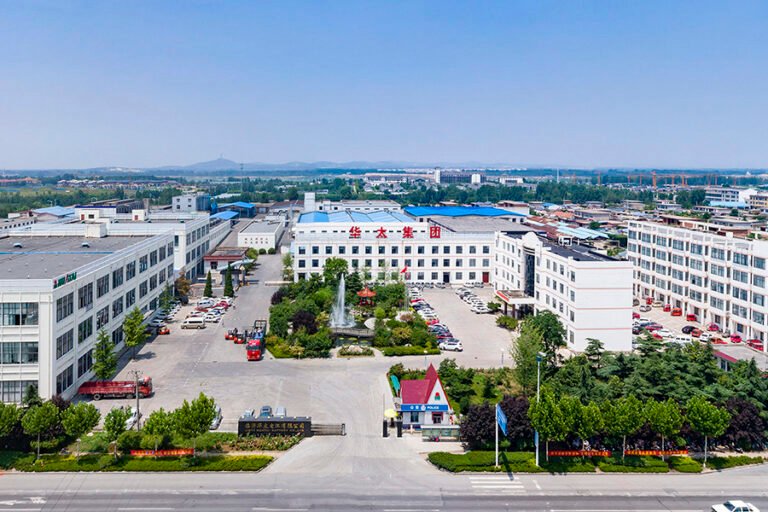
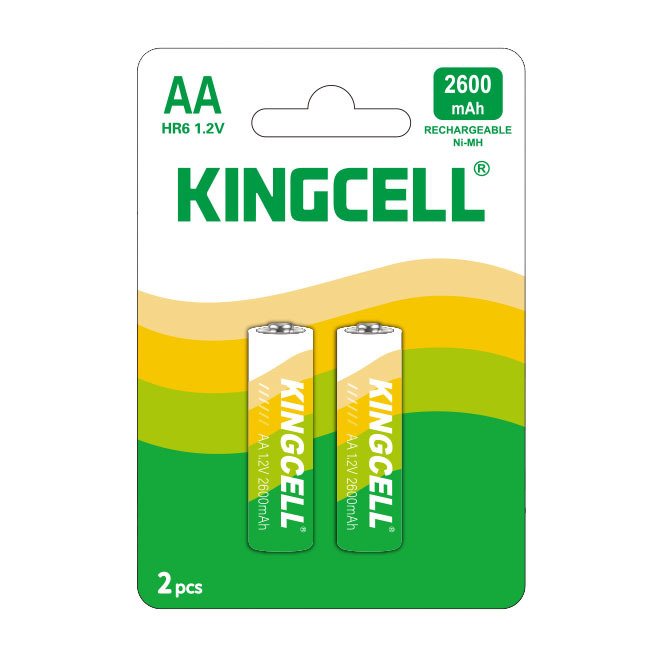
Shandong Linyi Huatai New Energy Battery Co., Ltd. was established in May 1993,but our factory’s history can date back to the establishment of the Linyi Battery Plant in 1956.We are currently one of the leading Eco-friendly & Mercury-free alkaline battery manufacturers and lithium battery manufacturers in China and the world’s largest heavy duty zinc-carbon batteries manufacturer & factory. Our products are produced with HUATAI, Power Flash and KINGCELL brands and customer’s private label, supplied 6 billion annual output by HIBAR high-speed automated production lines, offering OEM dry primary battery manufacturing solutions for zinc carbon, alkaline, and lithium batteries worldwide.

South Korea is one of Asia’s most advanced battery markets, but it is also one of the most technically demanding. The country is home to major global battery manufacturers such as LG Energy Solution, Samsung SDI and SK On, while domestic demand covers electric vehicles, energy storage systems (ESS), consumer electronics, industrial equipment, backup power and primary batteries. For Chinese battery manufacturers, South Korea is therefore both a highly developed end market and an important part of the global battery supply chain.
The opportunity is not limited to lithium-ion batteries. Carbon zinc, alkaline, lithium primary, button cells and rechargeable batteries continue to serve consumer and industrial applications. At the same time, South Korea is rapidly expanding its ESS infrastructure and building a more formal used-battery management system. In September 2026, the Korean government opened an ESS central contract market covering 1,180 MW of planned storage projects, showing that stationary energy storage is becoming an important domestic battery application.
For a Chinese battery supplier, however, success in South Korea depends less on simply offering a low price and more on product consistency, certification, traceability, technical documentation, environmental compliance and reliable delivery.
Understanding the South Korea Battery Market
South Korea has an unusual position in the global battery industry. It is simultaneously a major battery manufacturing center, a major exporter of advanced batteries and a significant market for imported cells and battery products.
Industry research indicates that domestic suppliers dominate the broader South Korean accumulator, primary-cell and primary-battery industry, while imports still accounted for 14.8% of the market in 2025. B2B applications represented the overwhelming majority of demand, illustrating the importance of industrial procurement rather than only retail battery sales.
The country’s battery market can broadly be divided into five segments:
| Battery segment | Main applications in South Korea | Opportunity for Chinese suppliers |
| Carbon zinc | Clocks, radios, flashlights, low-drain devices | OEM, private label and cost-sensitive applications |
| Alkaline | Toys, remotes, household electronics, industrial devices | High-consistency AA/AAA, C/D and 9V |
| Lithium primary | Cameras, meters, sensors, electronics | Button cells, cylindrical lithium and specialty applications |
| Rechargeable | Consumer electronics, tools, mobility and industrial equipment | Ni-MH and selected lithium solutions |
| Lithium-ion / LFP | EVs, ESS, UPS, backup power and industrial storage | Cells, modules, packs and selected OEM projects |
This means that a company searching for a battery supplier in South Korea may require very different products depending on whether the buyer is a distributor, electronics manufacturer, industrial equipment company, ESS integrator or automotive customer.
Carbon Zinc Batteries Still Have a Place in South Korea
South Korea is technologically advanced, but advanced markets do not automatically eliminate traditional primary batteries.
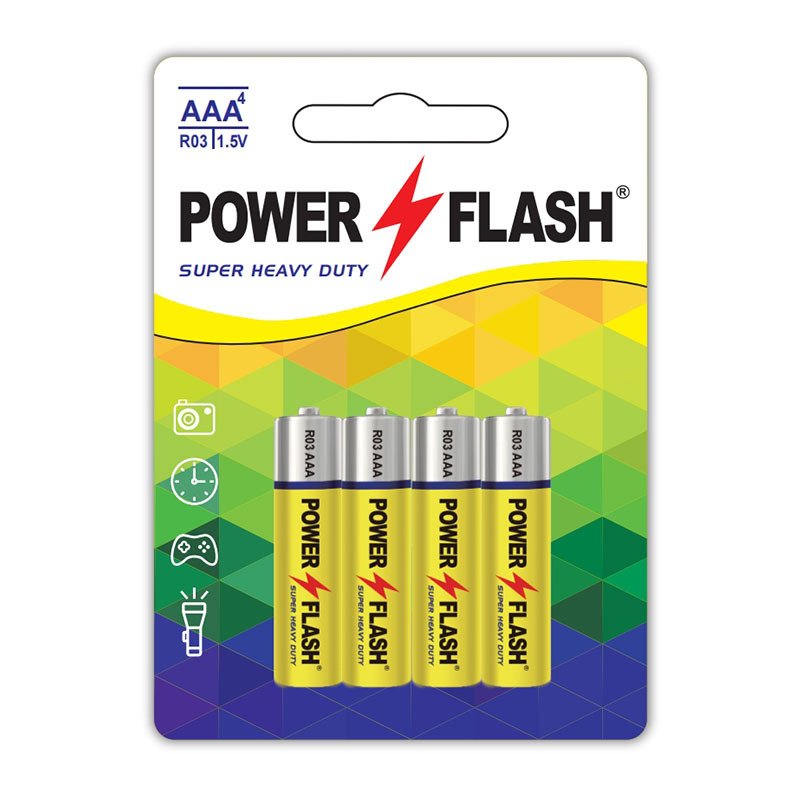
Carbon zinc batteries remain suitable for low-drain products where purchase price, shelf life and basic reliability are more important than maximum energy density. Typical applications include clocks, simple radios, flashlights, remote controls and other low-current consumer devices.
For Chinese manufacturers, the opportunity is mainly in OEM carbon zinc batteries, private-label production and high-volume supply rather than competing directly with premium Korean consumer brands.
The technical requirements are also higher than simply producing a low-cost R6 or R03 battery. Korean buyers may evaluate:
- Discharge performance
- Leakage resistance
- Shelf life
- Zinc can consistency
- Carbon rod quality
- Terminal and cap dimensions
- Label and packaging quality
- Heavy-metal compliance
- Batch consistency
- Factory quality-control systems
A supplier that can provide complete technical data and stable batch performance has a stronger basis for entering the Korean B2B market.
Carbon Zinc vs. Alkaline Batteries in South Korea
Alkaline batteries generally provide higher energy density and better high-drain performance than conventional carbon zinc batteries. As a result, alkaline AA and AAA batteries are more appropriate for toys, wireless devices, digital accessories and other applications with higher current requirements.
However, carbon zinc batteries can remain commercially attractive when the end product itself is designed around low power consumption.
| Requirement | Carbon Zinc | Alkaline |
| Purchase cost | Lower | Higher |
| Energy density | Lower | Higher |
| Low-drain devices | Very suitable | Suitable |
| High-drain devices | Limited | More suitable |
| Typical OEM opportunity | High-volume economy products | Branded and private-label products |
| Positioning | Cost efficiency | Performance and reliability |
For a Korean importer, the right question is therefore not simply “Which battery is better?” but “Which battery chemistry matches the device and target price?”
Why Alkaline Batteries Remain Relevant
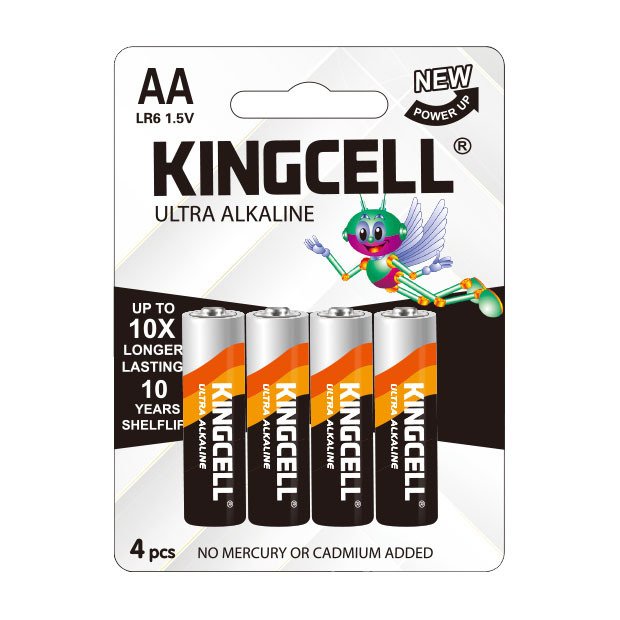
South Korea’s consumer electronics market creates continuing demand for AA, AAA, C, D and 9V alkaline batteries.
For OEM buyers, several details can determine whether a Chinese alkaline battery is commercially viable:
- Stable voltage and discharge curves
- Reliable sealing and leakage resistance
- Consistent dimensions
- Long storage life
- Clean labeling and Korean-market packaging
- Consistent production batches
- Appropriate safety and environmental documentation
For a China alkaline battery manufacturer, the ability to manufacture large volumes is useful, but it is not enough by itself. Korean customers are accustomed to technically sophisticated battery products and may expect detailed specifications, test reports and traceability.
Lithium Batteries and the Korean Battery Industry
Lithium-ion batteries are the strategic center of South Korea’s battery industry.
LG Energy Solution, Samsung SDI and SK On are major Korean battery manufacturers with extensive global production networks. South Korea has historically been particularly strong in high-performance lithium-ion batteries and overseas battery manufacturing. However, Korean manufacturers also face increasing competition from Chinese producers, especially in LFP batteries and cost-sensitive applications.
This competitive environment is changing the structure of the market.
LFP is increasingly important for ESS because of its combination of cost, cycle life and safety characteristics. Samsung SDI, for example, signed a long-term agreement in 2026 for LFP cathode materials specifically intended for ESS batteries.
For Chinese suppliers, this creates opportunities in areas where customers need:
- LFP cells
- Lithium battery modules
- Battery packs
- Portable power solutions
- Solar-storage batteries
- Industrial backup batteries
- E-bike and light-mobility batteries
- Specialized lithium battery OEM products
At the same time, suppliers should recognize that Korea is not a simple “export-to-Korea” market. Local technical requirements, safety certification and customer qualification processes can be substantial.

South Korea Is Expanding Its Domestic ESS Market
Energy storage is one of the most important developments in the Korean battery market.
On September 22, 2026, South Korea announced an ESS central contract market with a total procurement target of 1,180 MW, consisting of 1,100 MW on the mainland and 80 MW in Jeju. The projects are intended to support grid stability and better utilization of electricity generation.
This creates potential demand for several levels of the battery supply chain:
- Battery cells
- Battery modules
- Battery racks
- Battery management systems
- ESS containers
- UPS and backup systems
- Solar-plus-storage systems
- Second-life battery systems
Korean battery companies are also increasingly targeting ESS because EV battery demand has become more cyclical. In 2026, LG Energy Solution, Samsung SDI and SK On were all reported to be increasing their focus on stationary storage applications.
For Chinese battery manufacturers, this means the Korean market should not be analyzed only through electric vehicles. ESS, UPS, data-center backup and grid-scale storage deserve separate attention.
South Korea’s Used Battery Industry Is Becoming More Structured
Battery recycling and second-life applications are becoming increasingly important in Korea.
In May 2026, the Korean government approved legislation establishing the Act on the Management of Used Batteries and Promotion of the Used Battery Industry. The framework treats used batteries as strategic resources and introduces mechanisms covering performance evaluation, safety inspection, lifecycle tracking, recycled-material requirements and industry support. The law is scheduled to take effect in May 2027.
South Korea already operates an Extended Producer Responsibility system covering battery categories including lithium primary batteries, manganese/alkaline-manganese batteries and nickel-metal hydride batteries.
This is important for Chinese battery exporters.
A Korean importer may need more than the physical product. Depending on the battery type and commercial structure, the buyer may need:
- Product classification
- Safety documentation
- Recycling-related information
- Import records
- Test reports
- Material declarations
- Labeling information
- Traceability information
- Producer/importer responsibility arrangements
Therefore, a professional China battery supplier for South Korea should prepare compliance documentation before discussing mass production.
Korean Battery Standards and Certification Matter
South Korea has a mature product-safety framework, and lithium batteries require particular attention.
Korean testing and certification organizations publish specific guidance for battery categories, including lithium rechargeable batteries, ESS batteries and reused batteries. Updated 2026 guidance covers areas such as KC62133-2 for small lithium rechargeable batteries and safety inspection procedures for reused batteries.
For primary batteries, the compliance route can differ according to chemistry, application and product classification.
This makes it important for exporters to confirm the exact Korean requirements before production, rather than assuming that CE, RoHS or UN38.3 documentation alone will automatically satisfy Korean requirements.
What Battery Products Have the Best Commercial Fit?
The Korean market should be segmented rather than approached with one standard battery catalog.
| Buyer type | Potential battery products | Main purchasing concerns |
| Battery distributor | AA, AAA, C, D, 9V | Price, consistency, packaging |
| Electronics manufacturer | Alkaline, lithium primary, button cells | Dimensions, electrical performance, reliability |
| Industrial equipment maker | Lithium, rechargeable, specialized packs | Safety, cycle life, certification |
| ESS integrator | LFP cells, modules and storage batteries | Safety, cycle life, BMS, traceability |
| OEM/private-label brand | Carbon zinc, alkaline, lithium | Packaging, MOQ, branding, quality |
| Solar/backup supplier | Lithium, LFP, rechargeable | Capacity, safety, lifecycle |
For traditional primary batteries, AA and AAA alkaline batteries, carbon zinc batteries and button cells are likely to be more realistic starting points than attempting to compete directly in Korea’s most sophisticated automotive battery programs.
For lithium suppliers, LFP, ESS, backup power and specialized applications may provide more differentiated opportunities.
Why a China Battery Manufacturer Can Still Work with Korean Buyers
The existence of major Korean battery manufacturers does not mean every battery product is manufactured domestically.
South Korea continues to import battery products and components, and trade data show China as an important supplier of primary cells and batteries to Korea. A 2026 market report based on 2025 trade data identified China as the largest supplier of primary cells and batteries to South Korea.
The commercial opportunity for Chinese manufacturers therefore lies in complementing, rather than necessarily replacing, Korean production.
A Chinese supplier may offer advantages in:
- Large-scale primary battery production
- Competitive OEM pricing
- Flexible private-label packaging
- Carbon zinc and alkaline specialization
- Button cell production
- Diverse battery chemistry options
- Integrated component supply
- Shorter development cycles for selected products
- One-stop sourcing across primary and rechargeable batteries
Why Huatai Battery Is More Than a Carbon Zinc Battery Manufacturer
Shandong Huatai New Energy Battery Co., Ltd. traces its factory history to the establishment of the Linyi Battery Factory in 1956 and was formally established in 1993. Today, its product portfolio extends beyond traditional zinc-carbon batteries to alkaline, button cell, rechargeable, lithium and sodium-ion batteries as well as energy-storage products.
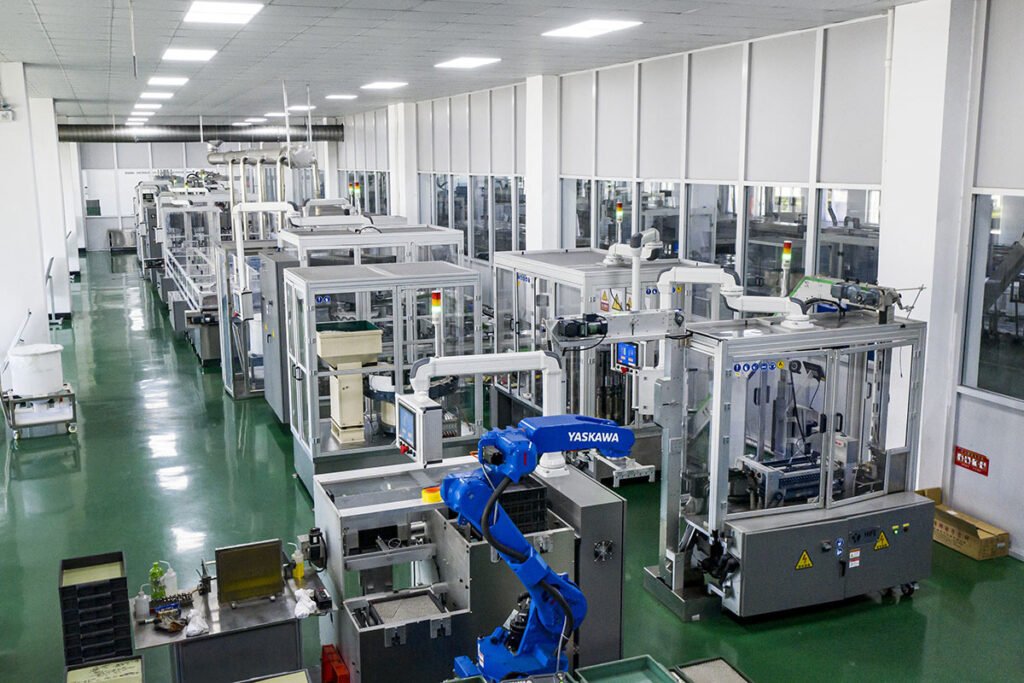
Huatai operates more than 40 production lines and seven battery-component production facilities, with Canadian HIBAR high-speed automated alkaline battery production lines. The company states that its annual battery output exceeds 6 billion pieces and that it supplies customers in more than 80 countries.
For Korean buyers, this broader portfolio can be useful because one supplier can potentially support several battery categories:
- R6P / AA carbon zinc
- R03P / AAA carbon zinc
- LR6 / AA alkaline
- LR03 / AAA alkaline
- C and D batteries
- 9V batteries
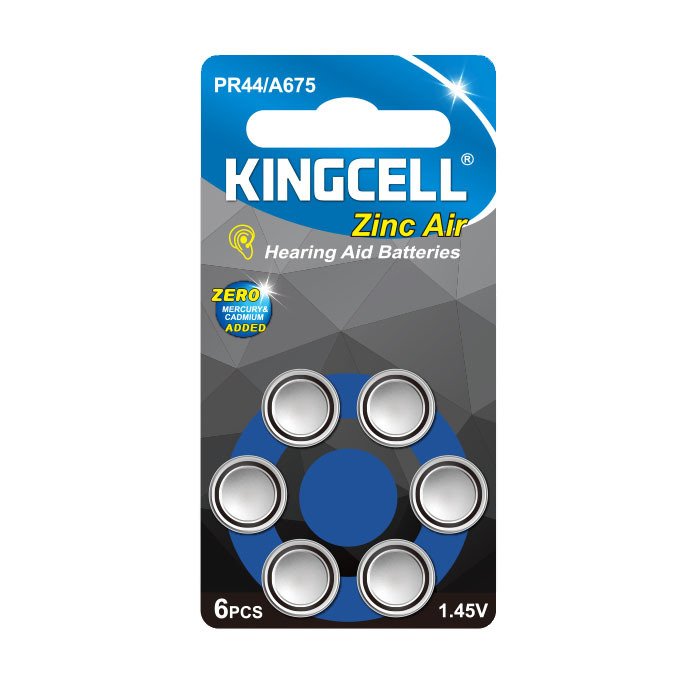
- CR and AG button cells
- Lithium batteries
- Ni-MH rechargeable batteries
- LFP and other lithium solutions
- OEM/private-label batteries
The more important point is not simply manufacturing scale. Korean customers evaluating a Chinese supplier should examine quality consistency, documentation, testing capability, production traceability, certification and after-sales support.
What Should Korean Importers Look for in a China Battery Supplier?
A Korean buyer evaluating a China battery manufacturer should ask at least the following questions:
- Which battery chemistries does the factory actually manufacture?
- Is the production line owned and operated by the manufacturer?
- Can the supplier provide batch-level test reports?
- What safety and environmental certifications are available?
- Can the factory support Korean labeling and packaging requirements?
- What is the MOQ for OEM and private-label batteries?
- Can the supplier provide samples before mass production?
- How are leakage, voltage consistency and shelf life controlled?
- For lithium batteries, can the supplier provide UN38.3 and relevant safety documentation?
- Can the supplier support long-term supply contracts and stable production capacity?
These questions are particularly important in South Korea because buyers generally operate in a market where battery technology, product safety and supply-chain quality are already highly developed.
FAQs About the South Korea Battery Market
1. Is South Korea a good market for Chinese battery manufacturers?
South Korea is a technically demanding but internationally important battery market. The strongest opportunities depend on product category. Primary batteries, OEM products, button cells, specialized rechargeable batteries and selected lithium/ESS applications can have different entry conditions.
2. Are carbon zinc batteries still used in South Korea?
Yes. Carbon zinc batteries remain relevant for low-drain applications such as clocks, flashlights, radios and basic electronic devices. They compete primarily on cost and sufficient performance rather than maximum energy density.
3. Are alkaline batteries more popular than carbon zinc batteries?
For applications requiring higher energy density and better high-drain performance, alkaline batteries are generally more suitable. However, carbon zinc remains commercially useful for cost-sensitive, low-drain applications.
4. Why is ESS important in South Korea?
South Korea is expanding energy storage to improve grid stability and better integrate electricity generation. In September 2026, the government announced a 1,180 MW ESS central contract market covering mainland Korea and Jeju.
5. Does South Korea import batteries from China?
Yes. China is an important source of imported primary cells and batteries for South Korea. Market research based on 2025 trade data identifies China as the largest supplier of primary cells and batteries to the Korean market.
6. What battery products can Chinese companies sell to Korea?
Potential products include carbon zinc batteries, alkaline batteries, button cells, lithium primary batteries, Ni-MH rechargeable batteries and selected lithium-ion or LFP products. The exact opportunity depends on Korean product standards, application requirements and importer responsibilities.
7. Are battery recycling requirements becoming stricter in South Korea?
Yes. Korea already includes several battery categories within its EPR system, while a new Used Battery Act is scheduled to take effect in May 2027 and will establish a more comprehensive lifecycle and recycling framework.
8. What is the most important factor when choosing a China battery supplier for South Korea?
Price is only one factor. Product consistency, safety documentation, Korean compliance, testing, traceability, leakage resistance, stable production capacity and reliable delivery should all be evaluated before placing a large OEM order.

Conclusion: South Korea Is Both a Battery Manufacturing Powerhouse and a Specialized Import Market
South Korea should not be viewed simply as another Asian destination for low-cost batteries. It is one of the world’s most sophisticated battery ecosystems, combining consumer batteries, automotive batteries, ESS, industrial storage, electronics and recycling.
The market is also changing. ESS is gaining strategic importance, LFP technology is becoming more relevant, and the government is building a formal lifecycle management system for used batteries. At the same time, China’s scale in battery manufacturing continues to create opportunities for Korean importers seeking competitive primary batteries, components, OEM products and selected lithium solutions.
For a top China battery manufacturer for the South Korea market, the winning proposition is therefore not simply “low price.” A competitive supplier needs a combination of manufacturing scale, product breadth, technical consistency, compliance documentation, OEM flexibility and long-term supply capability.
For Huatai Battery, the combination of a manufacturing history dating back to 1956, large-scale production of carbon zinc and alkaline batteries, and an expanding portfolio covering button cells, rechargeable batteries and lithium solutions provides a basis for serving different layers of the Korean battery supply chain.
The South Korean market is highly competitive, but its sophistication also creates a clear standard: the supplier that can consistently meet technical, regulatory and quality requirements has a much stronger foundation for long-term cooperation than a supplier competing on price alone.