English
 Spanish
 French
 Arabic
 Portuguese
 Russian
 Chinese
More Visitors but Where Are the Real Buyers?
Are the Canton Fair, IFA Berlin, and other international trade shows still generating valuable B2B orders? Huatai Battery examines changing buyer behavior, trade show ROI, and new export strategies for Chinese manufacturers.
For many Chinese manufacturers, international exhibitions used to be among the most important channels for finding overseas distributors, importers, and large-volume buyers. Events such as the Canton Fair, IFA Berlin, and the Hong Kong electronics exhibitions provided opportunities to meet customers, demonstrate products, negotiate contracts, and establish long-term partnerships.
However, our experience at Shandong Huatai New Energy Battery Co., Ltd. suggests that the value of traditional exhibitions deserves serious reconsideration.
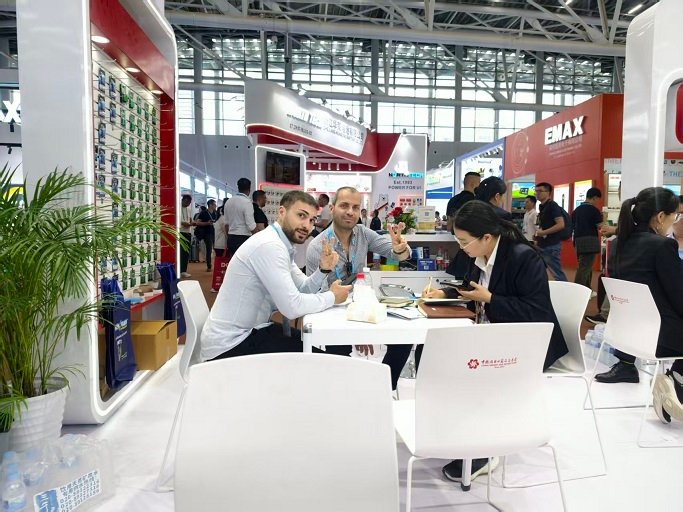
After attending the 140th Canton Fair in October 2026, we found it increasingly difficult to justify the investment based on the quality of business opportunities generated. Many exhibitors appeared to be participating because exhibitions had long been part of their export routines, while meaningful purchasing discussions and substantial orders were much harder to secure.
The question facing manufacturers is no longer simply whether an exhibition attracts international visitors. It is whether those visitors represent genuine purchasing demand.

1. High Visitor Numbers Do Not Necessarily Mean High-Quality B2B Demand
Official figures show that the first phase of the 140th Canton Fair attracted 189,000 overseas buyers from 214 countries and regions by October 19, representing a 13.3% increase compared with the same period of the previous session. By October 27, cumulative attendance had reached 278,000 across the first two phases.
These numbers demonstrate that international sourcing events still attract considerable attention. However, attendance figures alone cannot explain the commercial value of an exhibition.
For a manufacturer of carbon-zinc batteries, alkaline batteries, and lithium battery products, the most valuable visitors are not necessarily those who collect catalogues or request a few samples. We need importers, national distributors, established battery brands, supermarket purchasing organizations, and OEM customers with repeat purchasing capacity.
There is a significant difference between exhibition traffic and qualified purchasing opportunities.
A crowded booth can create the impression of strong demand, but without serious discussions about annual volume, product specifications, pricing, certification, payment terms, and delivery schedules, the commercial result may remain limited.
2. Global Uncertainty Is Changing International Purchasing Behavior
The international business environment has become more complicated.
The continuing Russia-Ukraine conflict, instability in the Middle East, changing tariff policies, and supply chain restructuring have made overseas buyers more cautious.
The European Commission reported in September 2026 that tariffs and regulatory compliance had overtaken logistics and input shortages as major trade obstacles for many EU businesses. Companies are increasingly adjusting their supply chains to manage geopolitical risks.
For battery importers, these uncertainties influence purchasing decisions in several ways:
Buyers may postpone large orders until market demand becomes clearer.
Importers may reduce inventory and purchase smaller quantities more frequently.
Distributors may hesitate to commit to long-term purchasing agreements.
Companies may diversify suppliers to reduce dependence on one country or production base.
Payment, shipping, insurance, and compliance risks may become more important than the lowest quotation.
For manufacturers, this means that even interested visitors may not be ready to place orders.
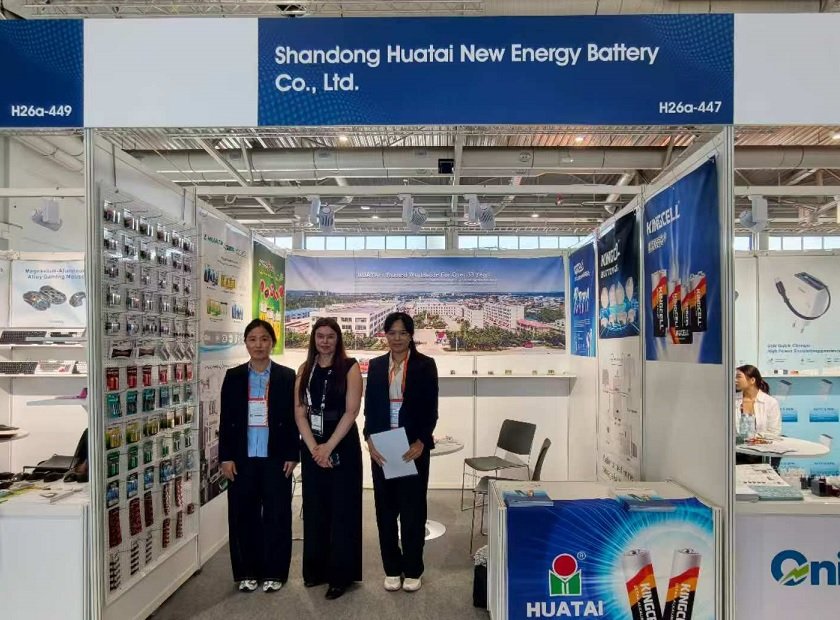
3. The Buyer Structure at Trade Shows Is Changing
Another noticeable change is the diversity of visitors attending international exhibitions.
Traditional B2B exhibitions were particularly valuable when large importers and distributors needed to travel to China to identify manufacturers, compare products, and negotiate supply agreements.
Today, the visitor structure can be much broader. Alongside established importers, exhibitors may meet small wholesalers, independent retailers, sourcing agents, cross-border e-commerce sellers, and visitors exploring products without immediate purchasing plans.
These visitors are not necessarily unimportant. Smaller buyers can become long-term customers, and some sourcing agents represent substantial purchasing organizations.
However, their requirements may differ considerably from those of large-volume distributors.
For a factory operating automated battery production lines, a buyer seeking a few cartons of mixed products may not be commercially compatible with the factory’s production planning, MOQ requirements, and export structure.
The problem is therefore not that small buyers have no value. It is that exhibition traffic may not match the customer profile an industrial manufacturer actually needs.

4. Traditional Exhibitions Are Becoming More Like Industry Networking Events
We have also noticed that some exhibitions increasingly serve several purposes beyond direct purchasing.
They provide opportunities for industry networking, product discovery, brand exposure, competitor observation, and discussions about emerging technologies.
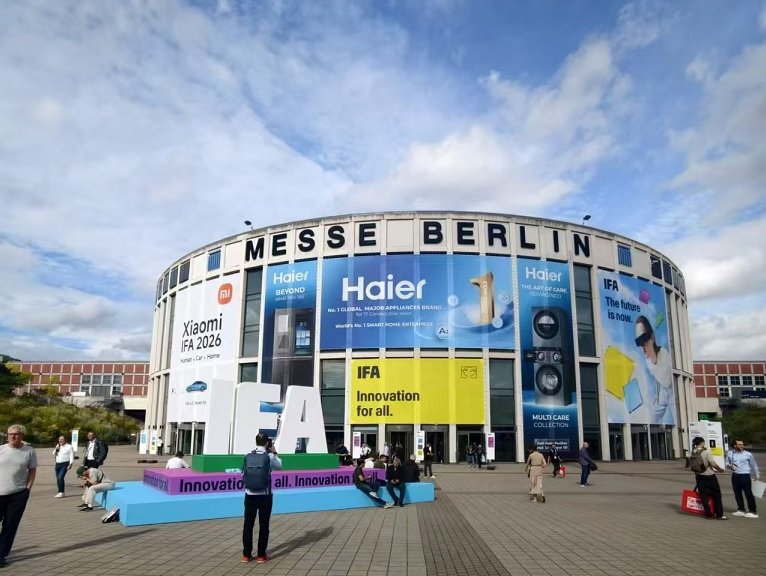
IFA Berlin offers a useful example. Its official 2026 results reported 240,000 visitors from 155 countries and more than 2,000 exhibitors. The event continues to position itself as a platform connecting technology, retail, media, and industry.
This broad role does not make IFA commercially irrelevant. However, manufacturers should not assume that every visitor is a professional buyer with an immediate sourcing requirement.
For companies selling consumer electronics or products with strong retail appeal, this wider audience may be valuable. For industrial suppliers seeking large-volume, repeat B2B orders, the return may be less predictable.
The right question is whether the exhibition’s visitor profile matches the company’s target customers.
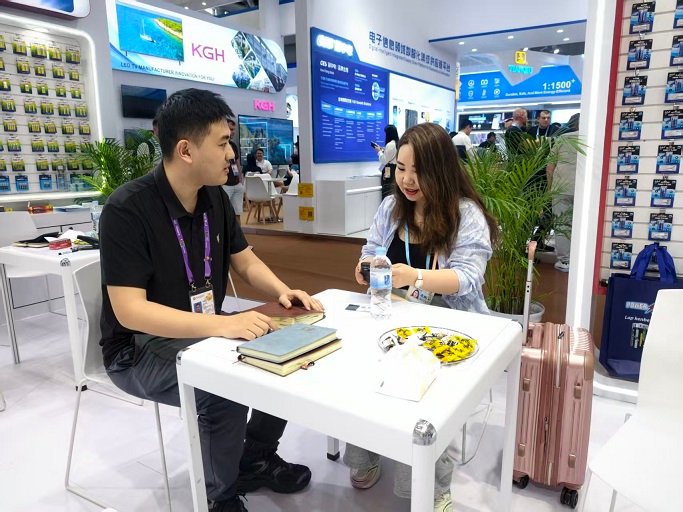
5. Why Exhibition ROI Is Becoming Harder to Justify
The total cost of participating in an international exhibition includes much more than the booth rental fee.
| Cost Category | Typical Expenses |
| Exhibition space | Booth rental and registration |
| Booth preparation | Design, construction, lighting, and decoration |
| Personnel | Flights, accommodation, meals, and salaries |
| Product display | Samples, shipping, and promotional materials |
| Follow-up | Sample delivery, customer visits, and quotation preparation |
| Opportunity cost | Time and resources unavailable for other sales activities |
For a manufacturer such as Huatai Battery, the commercial return should be evaluated against the actual number of qualified leads, quotations, sample orders, confirmed orders, and repeat customers.
A useful measurement is:
Exhibition ROI = (Gross profit attributable to the exhibition − Total exhibition cost) ÷ Total exhibition cost
Importantly, exhibition performance should be measured over a reasonable follow-up period. Some customers may take several months to complete supplier evaluations and place their first orders.
If an exhibition produces many business cards but few qualified opportunities, its apparent popularity may not translate into meaningful commercial value.
This is one reason we have decided not to participate in the Hong Kong exhibition this autumn. We would rather reassess our marketing budget than continue attending events simply because we have done so in previous years.
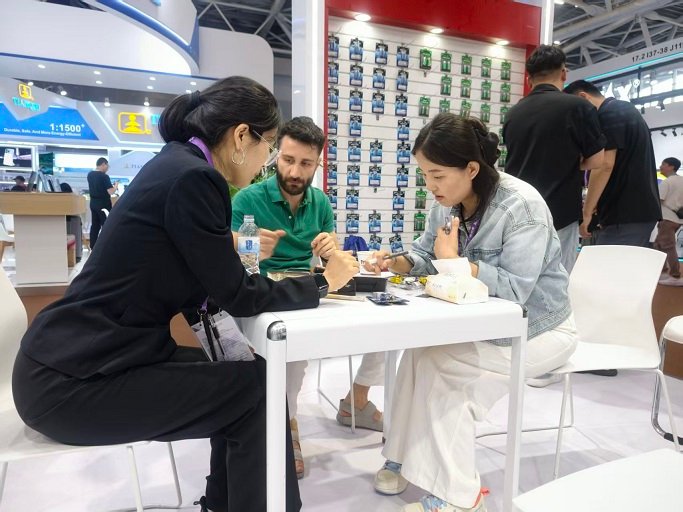
6. What Should Chinese Battery Manufacturers Do Instead?
We do not believe that manufacturers should abandon international exhibitions altogether. Instead, the focus should shift from passive participation to targeted customer development.
First, strengthen the independent B2B website.
A professional website should clearly explain product specifications, applications, production capabilities, certifications, OEM services, and purchasing requirements. For Huatai, important search topics include carbon zinc battery manufacturer, alkaline battery supplier, lithium battery manufacturer, dry cell battery factory, and private label battery solutions.
Second, develop a more selective exhibition strategy.
Before booking a booth, identify target importers and distributors, arrange meetings in advance, and establish clear lead-quality objectives. An exhibition should be part of a customer acquisition plan rather than an isolated marketing activity.
Third, invest in direct customer visits.
For large distributors and established battery brands, visiting their headquarters, warehouses, or purchasing departments can create more focused discussions than waiting for them to visit a crowded exhibition booth.
Fourth, build long-term customer relationships.
Technical support, stable product quality, competitive pricing, reliable delivery, and effective communication are often more important than a one-time exhibition meeting.
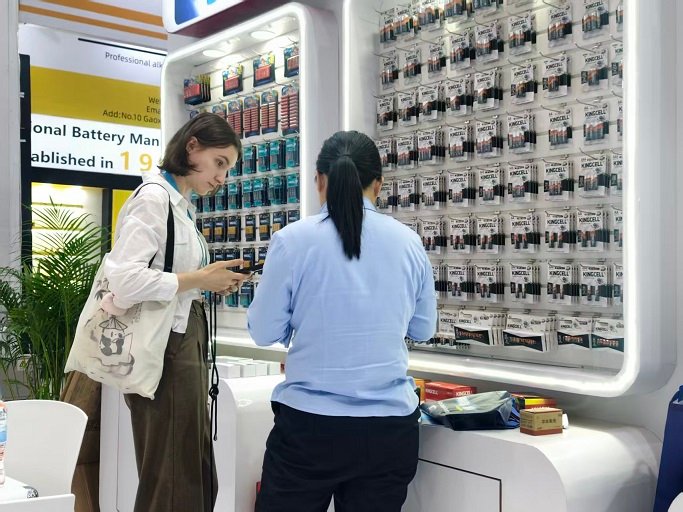
7. The Future of B2B Battery Exports: From Exhibition Traffic to Qualified Customers
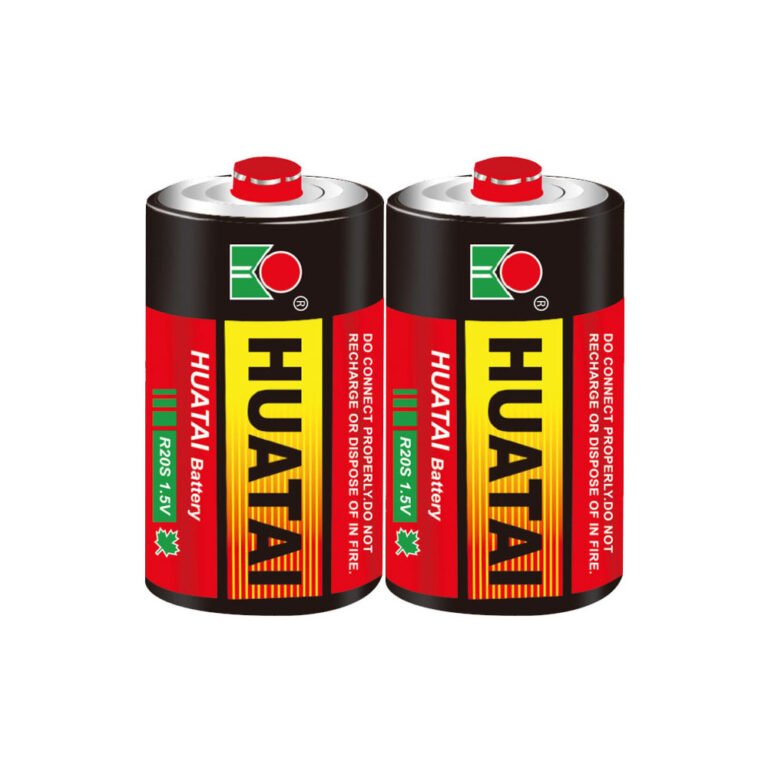
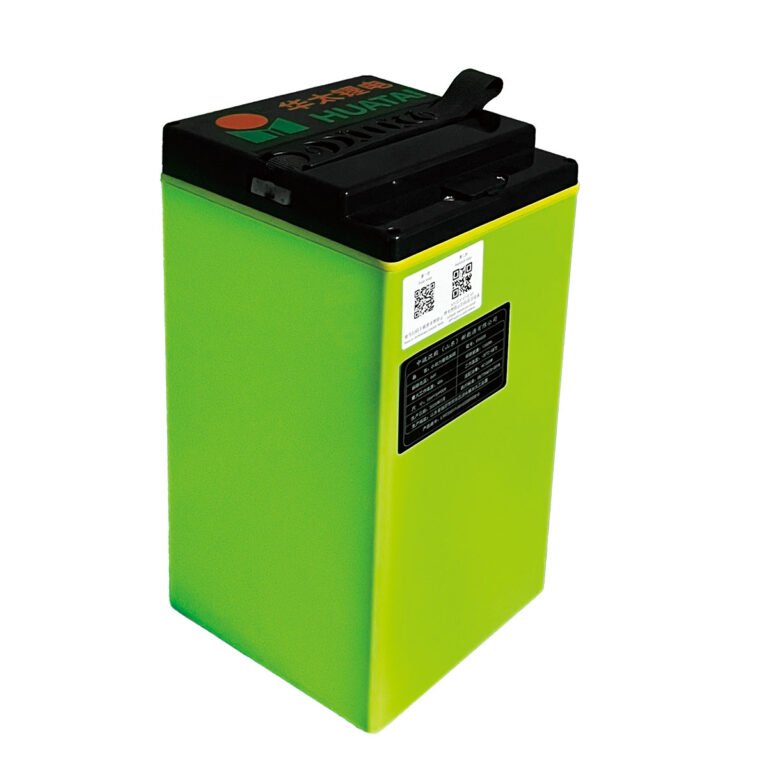
At Huatai Battery, we manufacture carbon-zinc, alkaline, lithium, and rechargeable battery products, supported by more than 40 production lines and seven component workshops.
Our manufacturing heritage dates back to 1956, and our modern company was established in 1993. With customers in international markets, we understand that different buyers require different products, packaging arrangements, certifications, and commercial terms.
We therefore need marketing channels that reach customers with genuine purchasing requirements.
The future of international battery sales will likely involve several channels working together: independent websites, search marketing, industry platforms, direct customer visits, existing distributor networks, and carefully selected trade exhibitions.
No single channel can replace every other channel. The key is to measure the quality of customers each channel produces.
Frequently Asked Questions
1. Are international trade shows still useful for Chinese manufacturers?
Yes, but their value depends on the industry, visitor profile, target customers, and actual business conversion rather than attendance numbers alone.
2. Why can a crowded trade show generate few orders?
Many visitors may be researching products, networking, or comparing suppliers without immediate purchasing plans. Visitor numbers do not directly measure purchasing intention.
3. Are large overseas distributors still attending the Canton Fair?
Yes. Official reports confirm that leading buyer companies and overseas business organizations continue to attend. However, manufacturers should evaluate whether they can reach the specific purchasing decision-makers relevant to their products. <Cite refs={[“turn232699search2”]}/>
4. Is IFA Berlin suitable for battery manufacturers?
It depends on the product portfolio and target audience. It may offer opportunities for consumer battery brands and technology-related products, but industrial suppliers should evaluate the expected B2B purchasing value.
5. Should Chinese manufacturers stop attending the Canton Fair?
Not necessarily. A better approach is to assess historical lead conversion, order value, customer quality, and total participation costs before deciding.
6. Can SEO replace international exhibitions?
SEO cannot replace face-to-face meetings in every situation, but it can generate ongoing supplier discovery opportunities and attract buyers with specific product requirements.
7. What should a battery manufacturer look for in an overseas buyer?
Relevant factors include annual purchasing volume, distribution capability, target markets, product requirements, payment reliability, and potential for repeat orders.
8. How can Huatai Battery develop overseas customers without relying entirely on exhibitions?
Huatai can combine its independent website, targeted SEO, direct distributor development, customer visits, technical communication, and selected international exhibitions.

Conclusion: The Objective Is Not to Attend More Exhibitions, but to Find Better Customers
The experience of the 140th Canton Fair has encouraged us to reconsider the role of traditional exhibitions in international battery marketing.
We recognize that exhibitions still provide international exposure, networking opportunities, and access to potential buyers. However, high attendance does not automatically produce high-quality B2B orders.
For Chinese manufacturers, the more important task is to understand changing purchasing behavior and allocate resources according to measurable commercial results.
At Shandong Huatai New Energy Battery Co., Ltd., we believe that long-term export growth depends on manufacturing capability, product competitiveness, reliable customer relationships, and efficient customer acquisition channels.
The future of B2B marketing is not about collecting the largest number of business cards. It is about identifying the right buyers, understanding their purchasing needs, and building profitable partnerships that last.