English
 Spanish
 French
 Arabic
 Portuguese
 Russian
 Chinese
Is Manufacturing Batteries Locally Always Cheaper?
Discover why importing zinc-carbon battery raw materials and manufacturing locally may cost more than buying finished batteries. Explore supply chain, production efficiency, quality control, and total manufacturing costs with Huatai Battery.
For some overseas battery companies, importing raw materials from China and manufacturing zinc-carbon batteries locally seems like an attractive business model. Instead of purchasing finished batteries, they prefer to source manganese dioxide, zinc cans, ammonium chloride, zinc chloride, carbon rods, metal components, sealing materials, and other production materials separately.
However, our experience at Shandong Huatai New Energy Battery Co., Ltd. has revealed an interesting situation: after calculating their actual procurement and production expenses, some customers discover that manufacturing batteries independently does not reduce costs. In certain cases, their total cost is even higher than purchasing finished batteries directly from our factory.

Why does this happen?
The reason is simple: the cost of purchasing battery raw materials is not the same as the cost of manufacturing qualified batteries. A competitive battery manufacturer combines purchasing scale, technical experience, production efficiency, quality control, and supply chain management to achieve a lower cost per finished cell.
1. Raw Material Prices Do Not Represent the Actual Manufacturing Cost
A zinc-carbon battery contains several materials and components, including:
Manganese dioxide (MnO₂)
Prepared cathode mixture
Zinc cans or zinc cups
Ammonium chloride and zinc chloride
Carbon black and acetylene black
Carbon rods
Metal positive and negative terminals
Bottom washers, support components, and compression rings
Sealing compounds and other auxiliary materials
These materials perform different functions and must meet specific technical requirements.
For example, manganese dioxide is the main active cathode material, while carbon black and acetylene black contribute to electrical conductivity. Ammonium chloride and zinc chloride form part of the electrolyte system. The zinc can serves as both the battery container and negative electrode, while the central carbon rod functions as a current collector for the positive electrode.
These components must work together as a complete electrochemical system. Their specifications cannot be selected independently without considering the finished battery’s performance.
The production process involves material preparation, zinc-can manufacturing, separator installation, cathode filling, carbon-rod insertion, sealing, terminal assembly, and testing. <Cite refs={[“turn748363search6″,”turn748363search3”]}/>
Therefore, comparing the purchase price of individual materials with the wholesale price of finished batteries does not provide a reliable cost comparison.
2. Established Suppliers Give Manufacturers a Purchasing Advantage
At Huatai Battery, our long manufacturing history has allowed us to develop established relationships with suppliers of manganese dioxide, zinc materials, electrolyte chemicals, carbon rods, metal components, and other battery materials.
This purchasing experience creates several advantages:
Bulk purchasing: Regular and relatively large orders can help manufacturers negotiate more competitive prices.
Supplier evaluation: Long-term cooperation makes it easier to assess material consistency, delivery reliability, and technical specifications.
Standardized materials: Repeated production helps maintain stable specifications and reduces unnecessary material adjustments.
Procurement efficiency: A mature purchasing team can coordinate multiple suppliers, delivery schedules, and quality inspections more efficiently.
An overseas customer purchasing relatively small quantities may not receive the same supplier prices or commercial terms as an established battery factory.
The difference is not necessarily the price of one material. It is the efficiency of the entire procurement system.

3. Battery Materials Require Technical Compatibility
One of the most underestimated challenges in local battery manufacturing is material compatibility.
For example, purchasing manganese dioxide at a competitive price does not guarantee satisfactory battery performance. Its activity, purity, particle characteristics, and consistency can influence the final cathode mixture.
Similarly, zinc cans must match the dimensions of the battery design and associated components. Their diameter, thickness, weight, and material properties affect assembly accuracy and product consistency.
The same applies to carbon rods, separators, metal terminals, and sealing compounds.
A customer may purchase individually acceptable materials from several suppliers, yet still encounter problems when combining them in production.
At Huatai, we understand that material specifications must be evaluated as part of the complete battery design rather than as isolated purchasing items.
This is particularly important for customers manufacturing different sizes, such as R20, R14, R6 (AA), and R03 (AAA), because their components and production requirements are not identical.

4. Small-Volume Purchasing Creates Hidden Supply Chain Costs
Manufacturing zinc-carbon batteries requires more than purchasing manganese dioxide and zinc materials.
Customers must coordinate multiple suppliers, minimum order quantities (MOQs), transportation arrangements, customs clearance, delivery schedules, and warehouse inventory.
For a factory producing only several hundred thousand or one or two million batteries annually, some materials may need to be purchased in quantities larger than immediate production requirements.
This creates several hidden expenses:
International freight and import handling
Excess inventory and warehouse costs
Capital tied up in unused materials
Supplier communication and inspection expenses
Delays caused by mismatched delivery schedules
Material deterioration or specification changes during storage
A material with a low unit price can become expensive once transportation, inventory, and procurement management are included.
For smaller manufacturers, these indirect costs can significantly reduce the expected savings from local production.
5. Equipment, Labor, and Production Efficiency Matter
Raw materials are only one part of battery manufacturing costs.
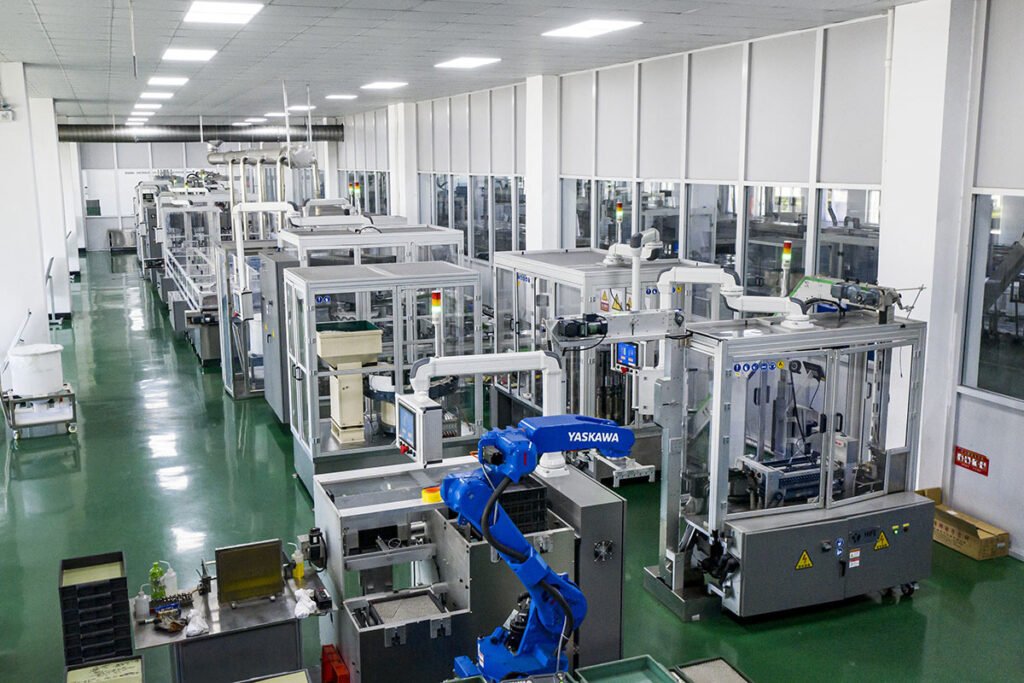
A local zinc-carbon battery factory also needs suitable equipment for material mixing, zinc-can processing, battery assembly, sealing, compression, packaging, and testing.
It must also employ trained operators, technical personnel, maintenance workers, and quality inspectors.
If production volume is insufficient, equipment utilization may remain low. Machinery depreciation, factory overhead, and maintenance expenses must then be distributed across a relatively small number of batteries.
This increases the manufacturing cost per cell.
By comparison, a large-scale battery manufacturer can distribute fixed expenses across greater production volumes and maintain more consistent equipment utilization.
The advantage comes from production efficiency, not simply from purchasing cheaper machinery or raw materials.

6. Production Yield Determines the Real Cost per Qualified Battery
Another important factor is production yield.
Consider a simplified example:
| Item | Factory A | Factory B |
| Total production | 1,000,000 cells | 1,000,000 cells |
| Qualified products | 980,000 cells | 900,000 cells |
| Rejection rate | 2% | 10% |
Assuming both factories have the same total production expenditure, Factory A has a lower cost per qualified battery because more of its production can be sold.
This example is illustrative rather than an actual Huatai production result.
In zinc-carbon battery manufacturing, inconsistent cathode mixtures, inaccurate component dimensions, assembly problems, and inadequate sealing can all affect product quality.
Defective cells consume materials, labor, energy, and production capacity without generating equivalent sales revenue.
For this reason, a manufacturer’s process experience and quality management system can create a substantial cost advantage.
7. Inventory and Working Capital Are Often Overlooked
When customers purchase finished batteries, they generally need to manage finished-goods inventory.
When they manufacture batteries independently, however, they must maintain inventories of multiple raw materials and components.
For example, they may have sufficient manganese dioxide but insufficient zinc cans, or enough carbon rods but no matching metal terminals.
Some components may remain unused because production schedules or customer orders change.
This increases working capital requirements and makes inventory planning more complicated.
Customers should therefore consider not only the purchase price of raw materials but also the time and capital required to convert those materials into saleable batteries.

8. When Does Local Battery Manufacturing Actually Make Sense?
We do not believe that purchasing finished batteries is always the best solution for every customer.
Companies with established production lines, experienced technical teams, reliable local suppliers, and sufficient annual demand may achieve competitive costs through local manufacturing.
However, customers without these advantages should compare the complete costs of both business models.
| Business Model | Main Cost Components |
| Importing finished batteries | Product price, international freight, import duties, warehousing |
| Importing raw materials and manufacturing locally | Materials, freight, duties, equipment, labor, energy, production losses, testing, inventory, and management |
The correct comparison is the total cost per qualified battery, not the price of raw materials alone.
For customers with limited production capacity or relatively small annual demand, purchasing finished zinc-carbon batteries directly from an experienced Chinese battery manufacturer may be more economical and operationally reliable.

Frequently Asked Questions
1. Is importing zinc-carbon battery raw materials cheaper than importing finished batteries?
Not necessarily. The final cost depends on purchasing volume, production efficiency, labor, equipment, material losses, and logistics.
2. What raw materials are needed to manufacture zinc-carbon batteries?
Common materials include manganese dioxide, zinc cans, ammonium chloride, zinc chloride, conductive carbon materials, carbon rods, separators, metal terminals, and sealing compounds.
3. Why can a battery factory offer lower prices than a local manufacturer?
Established manufacturers benefit from purchasing scale, standardized materials, higher equipment utilization, production experience, and quality control.
4. Can small factories manufacture zinc-carbon batteries profitably?
Yes, but profitability depends on production volume, local labor and energy costs, equipment utilization, supplier conditions, and product quality.
5. Why is production yield important in battery manufacturing?
A higher qualified-product yield means fewer materials and production resources are wasted, reducing the actual manufacturing cost per saleable battery.
6. Does Huatai Battery supply zinc-carbon battery raw materials?
Huatai works with overseas customers on battery products and related manufacturing materials. Specific supply arrangements depend on material specifications, quantities, and technical requirements.
7. Which battery sizes can overseas buyers source from Huatai?
Huatai’s zinc-carbon product range includes common cylindrical sizes such as R20, R14, R6 (AA), and R03 (AAA), subject to product specifications and order requirements.
8. How should importers choose between raw materials and finished batteries?
They should compare the complete cost per qualified battery, including materials, freight, production, labor, equipment, quality control, inventory, and working capital.

Conclusion: The Lowest Material Price Does Not Guarantee the Lowest Battery Cost
Our experience at Shandong Huatai New Energy Battery Co., Ltd. shows that independent battery manufacturing does not automatically create a cost advantage.
A competitive manufacturer does more than purchase manganese dioxide, zinc cans, carbon rods, chemicals, and metal components. It integrates these materials through established suppliers, standardized specifications, production experience, and quality management.
With our battery manufacturing heritage dating back to 1956 and our modern company established in 1993, Huatai understands the importance of controlling the entire production process.
For many overseas buyers, purchasing finished zinc-carbon batteries directly from Huatai Battery can be a more practical and cost-effective choice than independently managing every stage of battery manufacturing.
The real advantage is not buying raw materials at the lowest price. It is producing qualified batteries at the lowest sustainable total cost.