English
  Spanish
  French
  Arabic
  Portuguese
  Russian
  Chinese
 China alkaline battery and lithium battery manufacturer using AI automation. OEM battery factory with intelligent production lines and global export supply.For more insights, please stay tuned to our News section, which covers the latest Company News and Industry News.We also supply one-stop Product Catalog service for our customers.
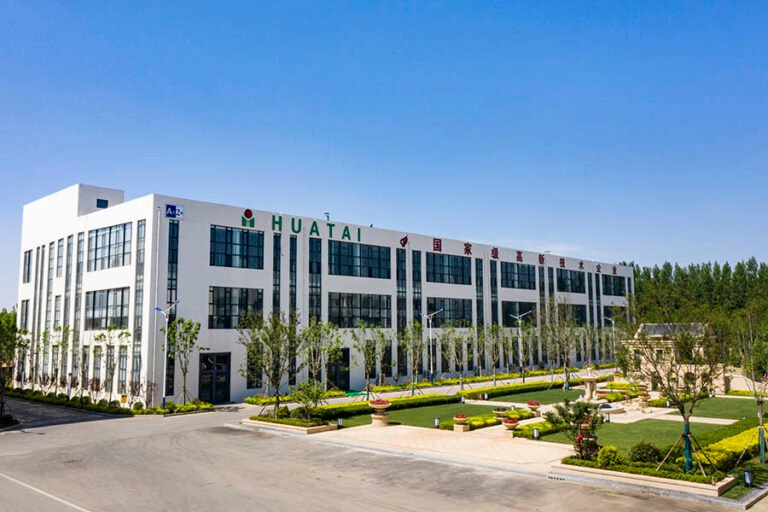
As a professional alkaline battery manufacturer in China, Shandong Linyi Huatai Battery Co., Ltd. has witnessed firsthand how artificial intelligence and automated production lines are transforming the global battery manufacturing industry.
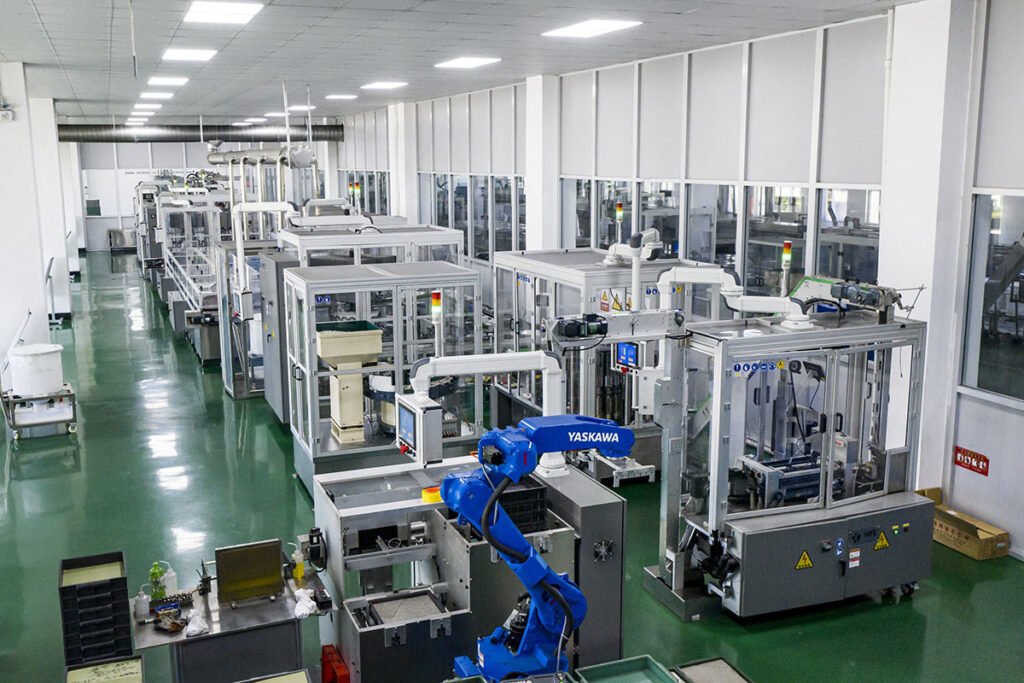
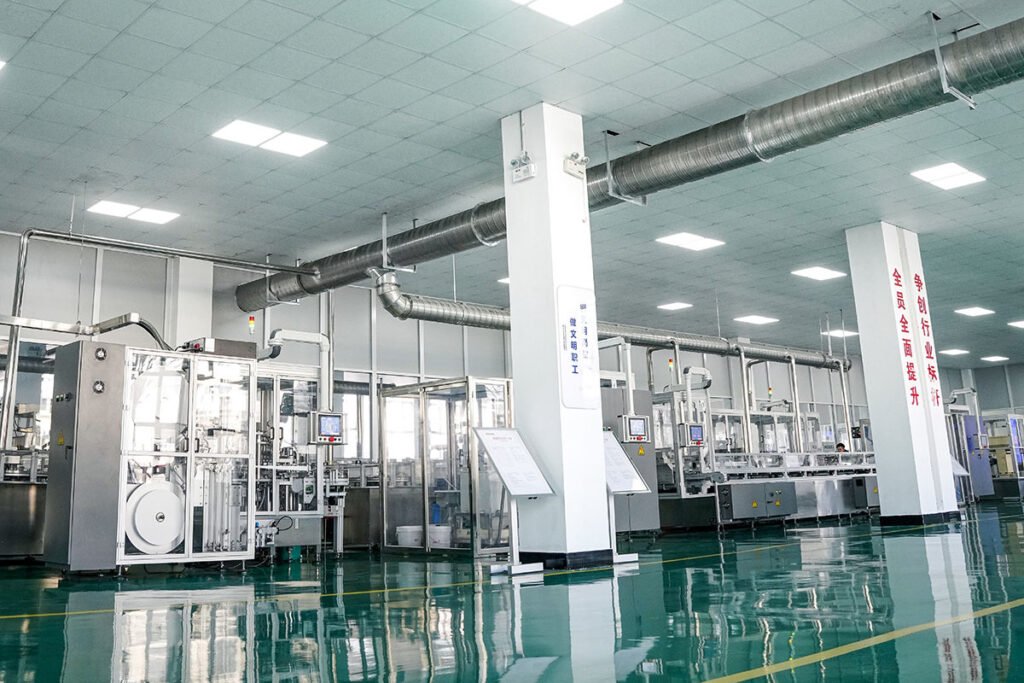
Across modern factories, robotic arms, intelligent quality inspection systems, and fully automated battery assembly lines are replacing traditional labor-intensive operations. In our own battery factory, advanced automated HIBAR production equipment introduced from Canada has significantly upgraded our:AA alkaline battery production line,AAA alkaline battery manufacturing system,Zinc carbon dry cell battery assembly line,CR2032 button cell battery production,Lithium battery pack manufacturing process.
These intelligent battery production systems have improved efficiency, reduced defects, and strengthened our position as a reliable OEM battery manufacturer and supplier in China.
However, this transformation also raises important global questions:
Will automation reduce jobs permanently?
Will manufacturing return to the United States?
Can intelligent factories operate without strong consumer demand?
What is the future of battery manufacturing in a highly automated world?
From our real factory experience, here is our perspective.
1. Automation in Battery Manufacturing: Efficiency vs Employment
In traditional battery factories, production relied heavily on manual labor:Manual electrolyte injection,Manual battery sealing,Manual packaging,Manual quality inspection.
Today, automated alkaline battery production lines perform these tasks faster and more precisely.
For example:Automatic zinc carbon battery filling systems,High-speed AA/AAA alkaline battery assembly machines,Robotic arm packaging for export battery orders,AI-driven lithium battery testing and sorting equipment.
These technologies reduce repetitive labor positions. At Linyi Huatai Battery Co., Ltd., our workforce has gradually transitioned from thousands of general workers to a leaner team of skilled technicians, engineers, and management professionals.
But automation does not eliminate the need for human talent.
Instead, it increases demand for:Battery R&D engineers,Automation maintenance specialists,International battery sales managers,Private label battery OEM project managers,Supply chain coordination experts.
As a modern dry cell battery manufacturer in China, we are not simply producing more batteries — we are upgrading the entire manufacturing structure.
2. Will Rising Automation Bring Manufacturing Back to China?
Over the past decade, some low-end battery production moved to Southeast Asia due to lower labor costs. However, with intelligent manufacturing systems becoming standard, labor cost differences are no longer the primary deciding factor.
In a highly automated battery factory, cost structure depends more on:Supply chain integration,Raw material stability,Energy efficiency,Production scale,Export logistics capacity.
China continues to maintain strong advantages in battery manufacturing:Complete alkaline battery raw material supply chain,Mature lithium battery component ecosystem,Advanced automated equipment manufacturing industry,Strong export infrastructure for global battery suppliers.
For large-scale alkaline battery OEM manufacturing, the benefits of industrial clustering remain significant. As automation increases, production is more likely to stay in regions with mature ecosystems rather than purely low labor cost regions.

3. Can the United States Achieve Manufacturing Reshoring Through AI?
In recent years, the U.S. government has promoted reshoring through policies such as:CHIPS and Science Act&Inflation Reduction Act.
The idea is clear: if factories become highly automated, high wages become less of a barrier.
In theory, intelligent battery manufacturing systems could support reshoring. However, large-scale battery production still requires:Stable raw material supply,Industrial-scale automation experience,Mature battery manufacturing clusters,Cost-effective export logistics.
While some strategic industries may partially reshore, global alkaline battery manufacturing and lithium battery OEM production will likely remain internationally distributed.
Automation reduces labor cost impact, but it does not eliminate industrial ecosystem advantages.
4. The Bigger Economic Question: Who Will Buy the Batteries?
One critical concern in AI-driven manufacturing is consumer demand.
If automation significantly reduces employment:Household income declines,Consumer purchasing power decreases,Inventory pressure increases,Factories face overcapacity.
Even a fully automated alkaline battery factory depends on global market demand.
At Linyi Huatai Battery Co., Ltd., we believe the future lies in:Producing higher-value battery products,Expanding into lithium battery energy storage solutions,Developing customized OEM battery manufacturing services,Increasing export market penetration.
Intelligent manufacturing must support market growth — not replace human economic participation.
5. The Future: Human–Machine Collaboration in Battery Production
From our experience as a professional alkaline battery supplier and lithium battery manufacturer, the future is not “machines replacing humans.”
It is:Human expertise + intelligent production systems.
Robots handle:High-speed AA alkaline battery assembly,Precision electrolyte filling,Large-scale battery packaging.
Humans focus on:Product development,Export certification compliance,International OEM battery cooperation,Global brand building
The real competitive advantage is not cheap labor.It is intelligent manufacturing capability.

Frequently Asked Questions (FAQ)
AI reduces repetitive manual roles but increases demand for skilled positions in engineering, automation maintenance, and global battery sales.
Yes. With advanced automation and a complete supply chain ecosystem, China remains a leading alkaline battery manufacturer and OEM battery supplier.
Partial reshoring may occur, but large-scale lithium battery and dry cell battery manufacturing will continue to rely on established industrial ecosystems.
Our strengths include:Automated AA/AAA alkaline battery production lines,Zinc carbon battery OEM manufacturing,Button cell battery export capability,Lithium battery pack customization,Stable global battery supply chain partnerships.
Final Thoughts
Artificial intelligence is transforming battery manufacturing worldwide.
For companies like Linyi Huatai Battery Co., Ltd., automation is not about reducing people — it is about:Improving product quality,Enhancing manufacturing efficiency,Strengthening global battery supplier competitiveness,Supporting sustainable industry growth.
The future of battery manufacturing belongs to companies that combine intelligent production systems with human innovation.And that is the direction we are committed to.