French
 English
 Spanish
 Arabic
 Portuguese
 Russian
 Chinese
Top China Carbon Zinc Alkaline Battery Manufacturer for Colombia:
Explorer South America Colombia’s battery market, including carbon zinc, alkaline, lithium and rechargeable batteries, import demand, battery recycling requirements, electric mobility, energy storage, OEM opportunities and reliable battery supply from Groupe chinois Huatai Battery.
Shandong Linyi Huatai New Energy Battery Co, Ltd. a été créée en mai 1993, mais l'histoire de notre usine remonte à la création de l'usine de batteries de Linyi en 1956. leader dans le domaine de l'écologie et Fabricants de piles alcalines sans mercure et fabricants de piles au lithium en Chine et la le plus grand fabricant et usine au monde de piles zinc-carbone à usage intensif. Nos produits sont fabriqués avec HUATAI, Power Flash et KINGCELL Les marques et les marques de distributeur des clients ont fourni 6 milliards d'euros de production annuelle par an. Lignes de production automatisées à grande vitesse HIBAR, offrant Solutions OEM pour les piles au carbone-zinc, les piles alcalines et les piles au lithium dans le monde entier.

Colombia is one of the more diversified battery markets in South America, with demand spanning household dry batteries, consumer electronics, automotive applications, industrial equipment, telecommunications, backup power, electric mobility and energy storage. For Chinese battery manufacturers, Colombia is also an established import market: in 2024, Colombia imported about US$5.82 million of primary cells and primary batteries under HS 850619, dont environ US$2.46 million from China. China therefore represented a substantial part of Colombia’s recorded imports in this category.
The rechargeable-battery market is considerably larger in some trade classifications. Colombia imported approximately US$54.13 million of electric accumulators under HS 850780 in 2024, dont environ US$43.93 million came from China.
This combination of consumer dry-cell demand and large rechargeable-battery imports makes Colombia an important market for a comprehensive China battery supplier.
For Colombian importers, however, purchasing decisions involve more than FOB price. Product quality, battery chemistry, application, import documentation, post-consumer battery management, logistics and OEM capability all influence the commercial value of a supplier.
Understanding the Colombia Battery Market
Colombia’s battery market can broadly be divided into several segments.
| Segment de marché | Principaux types de batteries | Applications typiques |
| Ménage et commerce de détail | Zinc-carbone, alcaline, pile bouton | Horloges, télécommandes, jouets, lampes de poche |
| Commercial | Alcalines, au lithium, rechargeables | Security, electronics, instruments |
| Automobile | Plomb-acide, lithium | Voitures, motos, véhicules utilitaires |
| Industriel | Rechargeables, au lithium, au plomb-acide | Equipment, communications, backup |
| Télécommunications et onduleurs | Plomb-acide, LiFePO₄ | Telecom, data, emergency backup |
| Énergie solaire et stockage d'énergie | LiFePO₄, lithium-ion | Solar systems, backup power |
| Mobilité électrique | Lithium-ion, LiFePO₄ | EVs, electric motorcycles, fleets |
This diversity is important for suppliers entering Colombia.
A supermarket distributor may primarily need AA and AAA batteries, while an industrial importer may purchase rechargeable batteries or energy-storage systems worth considerably more than a conventional dry-cell order.

Carbon Zinc Batteries Remain Relevant in Colombia
Colombia’s Ministry of Environment specifically identifies alkaline and zinc-carbon batteries as common household battery technologies. Its post-consumer battery guidance includes cylindrical AA, AAA, C, D and 9V batteries as well as button and rechargeable batteries.
This confirms that carbon zinc batteries remain part of Colombia’s established consumer-battery ecosystem.
Typical carbon zinc products include:
- R03 / AAA
- R6 / AA
- R14 / C
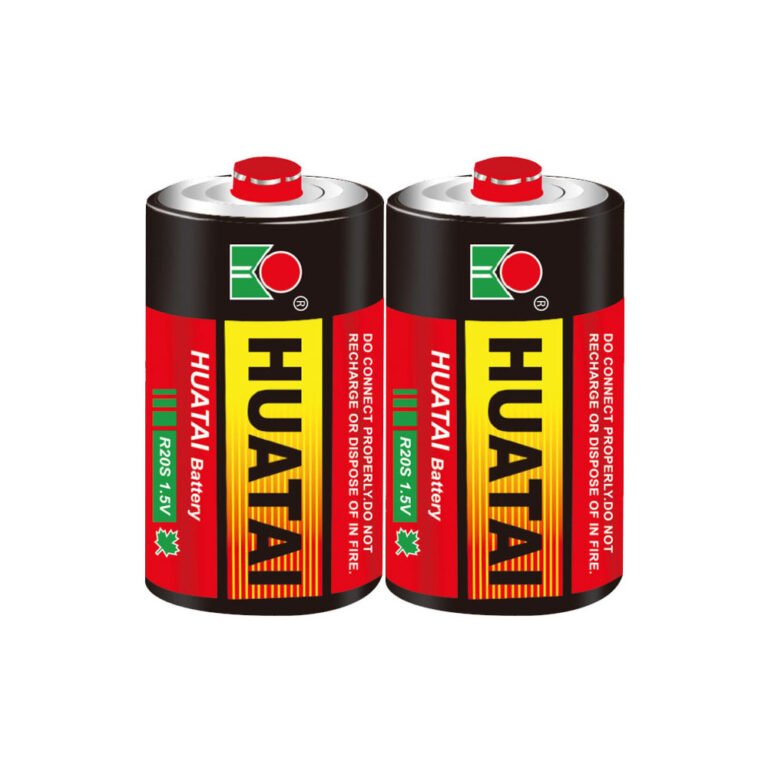
- R20 / D
- 6F22 / 9 V
Carbon zinc batteries are generally appropriate for low-drain applications where purchase price is an important consideration.
For Colombian distributors, the commercial advantage is straightforward: carbon zinc can provide an economical product for traditional retail channels without requiring consumers to pay alkaline-battery prices for applications that do not need higher capacity.
Carbon Zinc vs. Alkaline Batteries for Colombia
The two chemistries should normally be positioned differently.
| Facteur | Carbone Zinc | Alcaline |
| Prix d'achat | Plus bas | Plus élevé |
| Capacité | Plus bas | Plus élevé |
| Dispositifs à faible drain | Coupe ajustée | Coupe ajustée |
| Dispositifs à consommation moyenne/élevée | Plus restreint | Meilleur ajustement |
| Positionnement dans le commerce de détail | Économie/rapport qualité-prix | Grand public/haut de gamme |
| Fabricant d'équipement d'origine (OEM) / marque de distributeur | Fort | Très solide |
| Tailles courantes | AA, AAA, C, D, 9V | AA, AAA, C, D, 9V |
For a Colombian importer, carrying both technologies can be commercially useful.
For example, a private-label brand can offer carbon zinc AA and AAA for economy retail channels while positioning alkaline AA and AAA toward electronics, toys, flashlights and other applications with higher energy requirements.

Colombia Is Already a Significant Import Market for Chinese Batteries
Trade data provides useful evidence of China’s position in Colombia’s battery supply chain.
In 2024, Colombia imported approximately 7.74 million units under HS 850619, with China supplying about 4.80 million units and US$2.46 million in value.
For electric accumulators under HS 850780, China’s position was even more pronounced: Colombia imported approximately 4.87 million units, dont environ 4.39 million came from China, representing approximately US$43.93 million in Chinese exports to Colombia.
These figures do not represent the entire Colombian battery market because HS classifications cover specific product groups and do not necessarily distinguish every battery chemistry or end use. Nevertheless, they demonstrate that Chinese manufacturers already participate substantially in Colombia’s battery supply chain.
La conformité aux réglementations d'importation doit être vérifiée avant l'expédition
Battery importers should verify the applicable Colombian tariff classification and product-specific requirements before confirming production.
Depending on the battery type, the importer may need to consider:
- HS classification
- Customs documentation
- Étiquetage des produits
- Applicable technical regulations
- Conformity-assessment requirements
- Documentation relative à la sécurité
- Lithium-battery transport documentation
- Environmental obligations
- Spanish-language product information where applicable
For lithium batteries, transportation requirements can be significantly more demanding than for conventional dry cells.
A professional Chinese supplier should therefore be able to provide a complete technical package rather than only a commercial quotation.
Colombia Has a Defined Post-Consumer Battery Management Framework
Environmental compliance is an important difference between Colombia and a purely price-driven import market.
Colombia’s Ministry of Environment states that post-consumer management is based on the principle of Extended Producer Responsibility (EPR). For batteries and accumulators, the regulatory framework includes Resolution 1297 of 2010, later modified by Resolution 2246 of 2017.
The Ministry specifically describes systems for the selective collection and environmental management of used batteries and accumulators. It also explains that producers can include manufacturers, importers, assemblers and companies having products manufactured under their own brands.
This is especially relevant to private-label battery importers.
A Colombian company importing batteries under its own brand should not assume that environmental responsibility remains entirely with the Chinese factory. The local producer/importer role can create obligations under the applicable post-consumer system.
What Does Colombia’s Battery Recycling System Cover?
The Colombian environmental authority identifies several common battery categories within its used-battery collection system:
- Piles alcalines
- Piles zinc-carbone
- Piles bouton
- Piles rechargeables
- Laptop batteries
- Removable rechargeable batteries from portable equipment
The Ministry recommends that consumers separate batteries according to technology and size and use appropriate collection systems. It also states that collection points need suitable containers and safety measures.
For importers, this has a practical implication: battery sales should be considered as a complete product lifecycle.
A long-term supplier relationship should therefore include not only battery specifications but also product chemistry information, safety documentation and environmental data that the Colombian importer may need for local compliance.
Lead-Acid Batteries Form Another Important Market
Colombia’s battery market is not limited to small primary cells.
Automotive and industrial batteries create a separate and often higher-value segment. Lead-acid batteries remain important for:
- Passenger vehicles
- Motorcycles
- Trucks
- Commercial fleets
- Systèmes d'alimentation sans coupure (UPS)
- Sauvegarde des télécommunications
- Équipements industriels
The economics of this segment differ substantially from AA/AAA dry batteries.
Automotive batteries are heavier, have higher freight costs and usually involve stronger expectations regarding warranty, starting performance and local after-sales service.
Therefore, a Chinese supplier targeting Colombia’s automotive market needs capabilities beyond conventional consumer-battery production.
Lithium and Rechargeable Batteries Are Expanding the Market
Colombia’s large import value for electric accumulators from China indicates that rechargeable batteries already form an important part of the country’s import structure. In 2024, Chinese exports under HS 850780 to Colombia were valued at approximately US$43.93 million.
Parmi les applications possibles, on peut citer :
- Stockage de l'énergie solaire
- Systèmes d'alimentation sans coupure (UPS)
- Centrales électriques portables
- Mobilité électrique
- Équipements industriels
- Sauvegarde des télécommunications
- Outils électriques
- Électronique spécialisée
Lithium-ion and LiFePO4 batteries are particularly relevant where customers require higher energy density, longer cycle life or reduced maintenance.
For these applications, buyers should evaluate the complete battery system rather than only the cell capacity.
Important specifications include:
- Tension nominale
- Capacité nominale
- Capacité utile
- Durée de vie
- Battery management system
- Température de fonctionnement
- Fonctions de protection
- Protocole de communication
- Annexe
- Garantie
Colombia Is Building a Stronger Electric-Mobility Ecosystem
Electric mobility is another reason why Colombia’s rechargeable-battery market deserves attention.
In November 2025, Colombia’s Ministry of Mines and Energy announced incentives intended to accelerate electric-vehicle charging infrastructure, including changes designed to reduce operating costs for charging-service providers.
In July 2026, the ministry announced Resolution 40334, which assigns CREG responsibility for defining the procedure for connecting public electric-vehicle and plug-in hybrid charging stations to the electricity network. The stated objective is to streamline connection procedures and facilitate expansion of charging infrastructure.
These measures do not directly determine the size of Colombia’s battery-import market, but they demonstrate that the country is developing infrastructure around electric mobility.
For battery suppliers, this can create opportunities in:
- Motos électriques
- Passenger EVs
- Commercial fleets
- Electric three-wheelers
- Blocs-batteries
- Charging-related energy systems
- Fleet energy storage

Energy Storage Creates Another Opportunity Beyond EVs
Colombia’s energy transition also creates applications for stationary batteries.
Potential markets include:
- Stockage solaire résidentiel
- Commercial backup
- Systèmes de télécommunications
- Rural power
- Sauvegarde industrielle
- Micro-réseaux
- Systèmes d'énergie portables
LiFePO4 can be attractive for stationary applications where cycle life and safety are priorities.
A supplier serving Colombia should be able to distinguish between a consumer lithium battery and a professionally engineered energy-storage system.
For example, a 12V LiFePO4 battery for a small backup system has very different requirements from a multi-module commercial energy-storage system.
Colombia’s Diverse Geography Creates Different Battery Applications
Colombia’s geography also affects battery demand.
Major urban centers such as Bogotá, Medellín, Cali and Barranquilla have different climate, logistics and customer profiles. Rural regions may place greater emphasis on solar backup, telecommunications and off-grid applications.
Industrial and mining areas can require batteries for:
- Équipements de communication
- Instruments portables
- Safety equipment
- Lighting
- Surveillance à distance
- Systèmes de sauvegarde
This means that a Colombian battery distributor may need several product families rather than one standardized battery line.
A comprehensive Chinese manufacturer can help the distributor develop separate portfolios for consumer, automotive, industrial and energy-storage customers.
Battery Quality Matters in Colombia’s Retail Market
For imported dry batteries, long-term product consistency is critical.
Un fabricant professionnel doit contrôler :
- Qualité du dioxyde de manganèse
- Dimensions des boîtes de zinc
- Pureté du zinc
- Caractéristiques techniques des tiges en carbone
- Formulation d'électrolyte
- Papier séparateur
- Colle d'étanchéité
- Structure de compression
- Label materials
- Contrôle des batteries finies
Leakage is particularly important because poor sealing can damage consumer equipment.
For carbon zinc batteries, resin sealing and appropriate compression can contribute to better leakage resistance. Alkaline batteries require equally careful control of internal components and sealing structures.
A Colombian private-label customer should also receive batch-level production records and test results when required.

What Battery Products Have the Best Commercial Fit in Colombia?
A diversified product portfolio can cover the major market segments.
| Produit | Position sur le marché | Principales applications |
| Piles carbone-zinc AA/AAA | Économie | Horloges, télécommandes, jouets |
| Zinc-carbone C/D/9 V | Économie/spécialisé | Lampes de poche, articles ménagers |
| Alcaline AA/AAA | Grand public | Électronique, jouets, appareils ménagers |
| Piles alcalines C/D/9 V | Performances accrues | Lampes de poche, matériel professionnel |
| Piles bouton | Spécialisé | Montres, appareils électroniques |
| Rechargeable NiMH | Rechargeable pour particuliers | Appareils photo, jouets, appareils électroniques |
| Plomb-acide | Automobile/sauvegarde | Véhicules, UPS, télécommunications |
| Li-ion | Segment haut de gamme | Alimentation portable, mobilité |
| LiFePO4 | Stockage de l'énergie | Énergie solaire, onduleur, alimentation de secours |
| Blocs-batteries | Industriel | Equipment and mobility |
For a Colombian importer, the most suitable portfolio depends on its existing distribution network.
A consumer-goods distributor may start with carbon zinc and alkaline batteries. An electrical distributor may focus on rechargeable and lithium batteries. A solar company may have much stronger demand for LiFePO4 systems.
OEM and Private Label Battery Opportunities in Colombia
Colombia’s established consumer market makes OEM and private-label batteries commercially relevant.
Un fabricant chinois peut éventuellement personnaliser :
- Logo de la marque
- Étiquette de la batterie
- Emballages en espagnol
- Cartes sous blister
- Cartons destinés à la vente au détail
- Cartons principaux
- Caractéristiques techniques de la batterie
- Product grade
- Mixed battery portfolios
For example, a Colombian distributor could create an economy carbon-zinc series and a higher-performance alkaline series under the same brand.
The same company could later introduce rechargeable AA/AAA, button batteries or lithium products as its distribution network expands.
However, private-label importers should pay particular attention to Colombia’s post-consumer obligations because the Ministry of Environment explicitly includes companies that have products manufactured under their own commercial brands within the producer concept.
Pourquoi Huatai Battery est bien plus qu'un simple fabricant de piles au carbone-zinc
For Colombian buyers searching for a premier fabricant chinois de batteries, Huatai Battery’s carbon zinc manufacturing heritage is an important foundation, but its current product range is significantly broader.
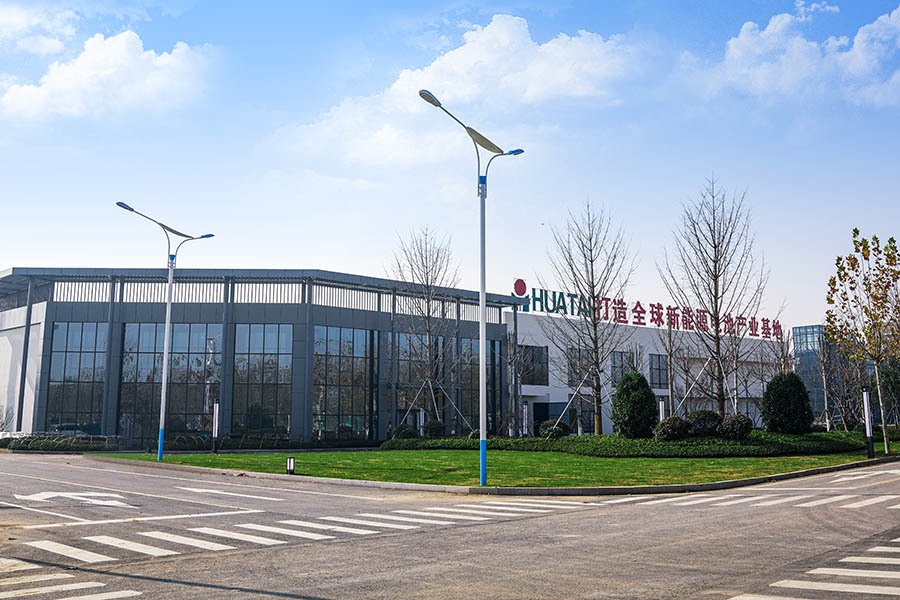
Les origines industrielles de Huatai remontent à L'usine de batteries de Linyi, fondée en 1956. L'entreprise, telle qu'elle existe aujourd'hui, a été fondée en 1993 et s'est développée pour devenir un fabricant de batteries à part entière.
Aujourd'hui, Huatai Battery propose :
- Piles carbone-zinc
- Piles alcalines
- Piles bouton
- Piles au lithium
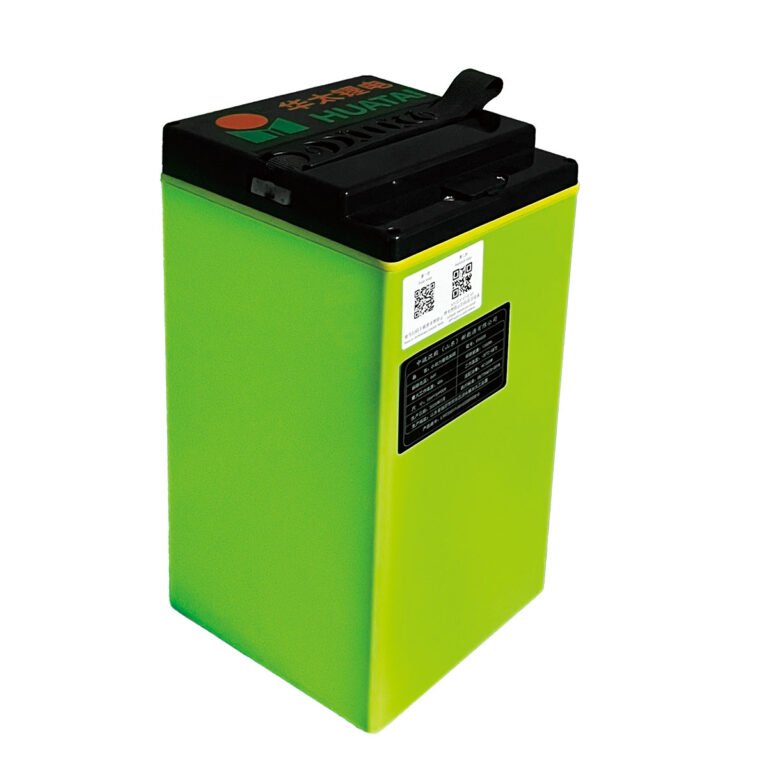
- Batteries LiFePO4
- Piles rechargeables NiMH
- Batteries sodium-ion
- Batteries solaires
- Batteries de stockage d'énergie
- Solutions d'alimentation portable
- Fabrication pour le compte d'autres marques (OEM) et sous marque de distributeur
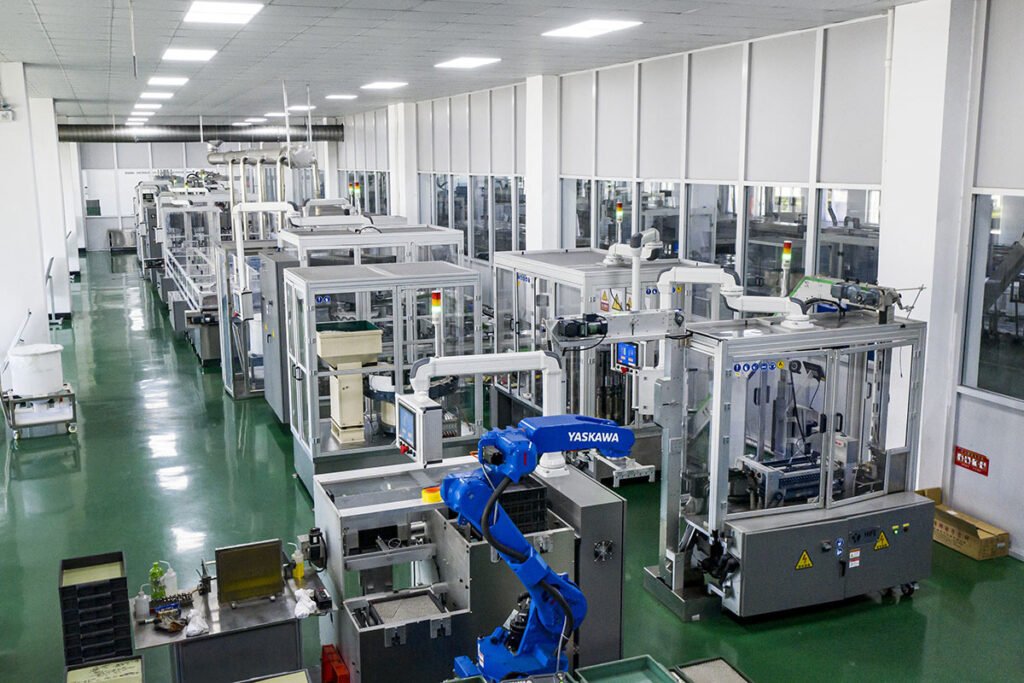
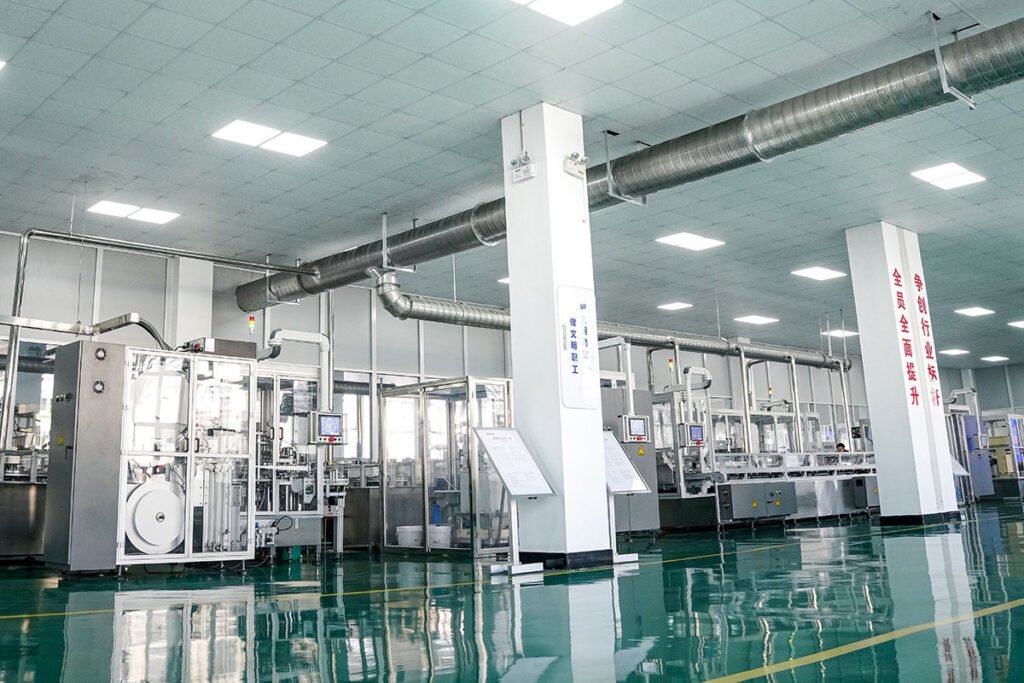
The company operates more than 40 production lines and multiple component workshops, allowing customers to source both traditional dry batteries and newer rechargeable and energy-storage products.
For Colombia, this broader product capability is useful because the market itself is diversified. One distributor may require millions of AA/AAA batteries for retail, while another may need lithium or LiFePO4 products for energy-storage applications.
What Should Colombian Importers Look for in a China Battery Supplier?
Supplier evaluation should consider the entire supply chain.
| Critère d'évaluation | What Colombian Buyers Should Check |
| Capacités de production | Multiple battery chemistries and stable production |
| Contrôle de la qualité | Capacité, fuite, tension et homogénéité |
| Documentation | Test reports and technical specifications |
| Soutien environnemental | Chemistry and post-consumer information |
| Capacité OEM | Assistance en matière d'emballage et de marques de distributeur en espagnol |
| Expérience à l'exportation | Expérience dans le domaine du transport maritime en Amérique latine |
| Compatibilité avec le lithium | Safety and transport documentation |
| Logistique | FOB/CIF options and container loading |
| Service après-vente | Traçabilité des lots et gestion des réclamations |
| Développement de produits | Ability to add rechargeable and lithium products |
The supplier should ideally understand the difference between a consumer battery order, automotive battery order and energy-storage project.
That distinction is particularly important in Colombia because the market includes all three.
FAQs About Buying Batteries from China for Colombia
1. Are carbon zinc batteries still suitable for Colombia?
Yes. Colombia’s Ministry of Environment explicitly identifies zinc-carbon and alkaline batteries among common household battery technologies. Carbon zinc batteries remain suitable for low-drain applications where price is important.
2. What are the most common consumer battery sizes for Colombia?
AA and AAA are important consumer sizes, while C, D and 9V batteries serve flashlights, toys and other equipment. Button batteries are used in watches, calculators and other compact electronic products.
3. Is China an important battery supplier to Colombia?
Yes. In 2024, China supplied approximately US$2.46 million of Colombia’s imports under HS 850619 and about US$43.93 million under HS 850780. The classifications cover specific battery categories and should not be interpreted as the entire battery market, but they demonstrate substantial Chinese participation.
4. Does Colombia have a used-battery recycling framework?
Yes. Colombia has a post-consumer management framework for used batteries and accumulators. Resolution 1297 of 2010 established selective collection and environmental-management systems for used batteries, and Resolution 2246 of 2017 modified part of that framework.
5. Do private-label battery importers have environmental responsibilities in Colombia?
Potentially, yes. Colombia’s Ministry of Environment states that the producer concept can include manufacturers, importers, assemblers and companies that have products manufactured under their own commercial brands. Applicable post-consumer obligations should therefore be reviewed by the Colombian importer.
6. Are lithium and rechargeable batteries growing in importance in Colombia?
Rechargeable batteries already represent a substantial import category, and Colombia is also developing electric-mobility infrastructure. In July 2026, the government announced a regulatory change intended to facilitate connection of public EV and plug-in hybrid charging stations.
7. Can Chinese battery manufacturers provide private-label batteries for Colombia?
Yes. OEM/private-label programs can include battery specifications, brand printing, Spanish packaging, blister cards, cartons and different product grades.
8. Should Colombian importers choose one battery chemistry or multiple technologies?
That depends on the distribution channel. Consumer distributors can combine carbon zinc and alkaline batteries, while industrial, solar and mobility distributors may need rechargeable, lithium or LiFePO4 products. A comprehensive supplier can support portfolio expansion without requiring a completely new supply chain.

Conclusion: Colombia Is a Diversified Battery Market for Chinese Suppliers
Colombia’s battery market combines traditional dry-cell demand with a substantial rechargeable-battery trade, automotive applications, electric mobility and energy storage.
Piles carbone-zinc remain relevant for economical low-drain applications, while alkaline batteries provide a higher-performance mainstream option. NiMH rechargeable batteries can serve consumer applications, and lithium-ion and LiFePO4 technologies provide opportunities in mobility, solar storage, backup power and industrial applications.
The country’s environmental framework is also important. Colombia operates post-consumer systems for used batteries and accumulators, with producer responsibility forming a central principle of the country’s waste-management approach.
At the same time, Colombia’s electric-mobility infrastructure is developing. Government measures in 2025 and 2026 have focused on charging infrastructure, connection procedures and incentives for clean-energy and electric-mobility investments.
For importers, the best supply strategy is therefore not simply to search for the cheapest AA or AAA battery. The more useful approach is to build a product portfolio around carbon zinc + alkaline + rechargeable + lithium + LiFePO4, while matching each technology to its application, retail position, technical requirements and post-consumer responsibilities.
For a Colombian importer searching for a premier fabricant chinois de batteries, par exemple Shandong Linyi Huatai New Energy Battery Co, Ltd., a comprehensive supplier with long-term manufacturing experience, stable quality control, OEM/private-label capability and multiple battery technologies can provide a stronger foundation for serving Colombia’s diverse battery market.