English
  Spanish
  French
  Arabic
  Portuguese
  Russian
  Chinese
 Real Difference from Carbon Zinc Battery and Alkaline Primary Dry Cell
Carbon Zinc Battery vs Alkaline Battery
Learn the key differences between carbon zinc batteries and alkaline batteries. Compare capacity, electrolyte, shelf life, leakage resistance, applications, and cost. Discover how Huatai Battery, a leading carbon zinc battery manufacturer and alkaline battery supplier in China, helps global buyers choose the right battery solution.
As one of China’s leading carbon zinc battery manufacturers, alkaline battery manufacturers, OEM battery suppliers, and private label battery factories, Shandong Huatai New Energy Battery Co., Ltd. has over three decades of manufacturing experience and annual production exceeding 6 billion batteries, supplying customers in more than 100 countries. This guide explains the real technical differences and helps importers, distributors, wholesalers, and OEM buyers select the most suitable battery for their markets.

Choosing between a carbon zinc battery and an alkaline battery is not simply a matter of selecting the “better” battery—it is about selecting the right battery for the right application. Although both belong to the broader family of primary zinc-manganese batteries, they are two independent battery technologies with different chemical systems, internal structures, discharge characteristics, manufacturing processes, and target markets. Carbon zinc batteries remain the most economical solution for low-drain devices, while alkaline batteries deliver significantly higher capacity, longer operating life, and superior performance for modern electronic products.
Understanding the Zinc-Manganese Battery Family
Many buyers mistakenly believe that carbon zinc batteries are simply a lower-grade version of alkaline batteries. In reality, this is technically incorrect.
Both battery types belong to the larger family of:
Primary Zinc-Manganese Batteries
This category includes two parallel technologies:
- Carbon Zinc Battery (Acidic Zinc-Manganese Battery)
- Alkaline Battery (Alkaline Zinc-Manganese Battery)
Neither battery is a subset of the other.
Instead, they are two independent battery chemistries developed for different market needs.
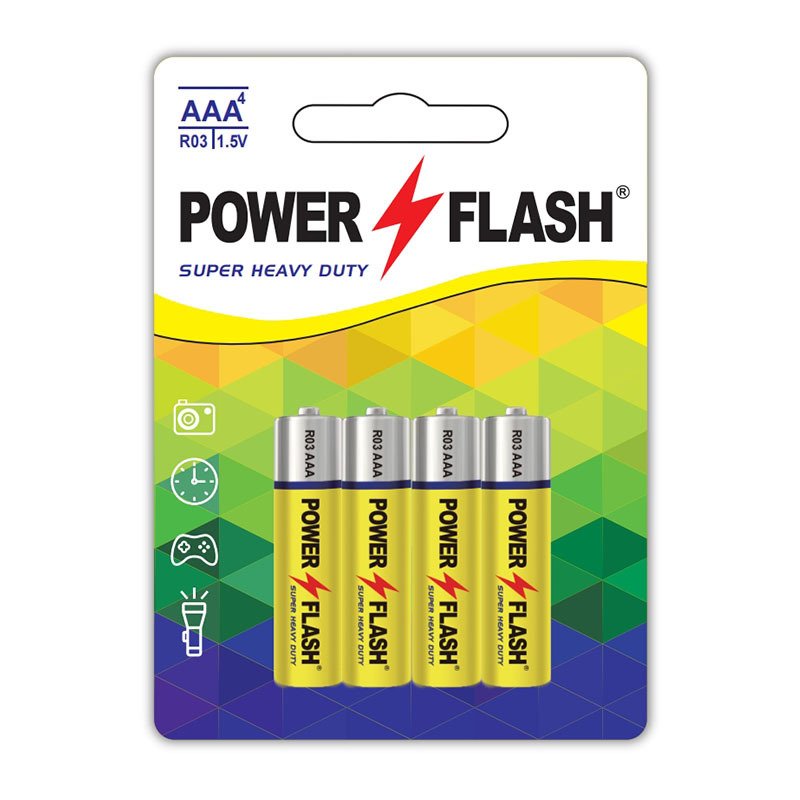
Carbon Zinc Battery vs Alkaline Battery: Technical Comparison
| Comparison Item | Carbon Zinc Battery | Alkaline Battery |
| Battery Category | Primary Zinc-Manganese Battery | Primary Zinc-Manganese Battery |
| Electrolyte | Zinc Chloride / Ammonium Chloride | Potassium Hydroxide (KOH) |
| Current Collector | Carbon Rod | Steel Can + Brass/Copper Collector |
| Nominal Voltage | 1.5V | 1.5V |
| Capacity (AA) | Approximately 400–1,000 mAh | Approximately 1,000–2,800 mAh |
| Energy Density | Medium-Low | High |
| Continuous Discharge | Moderate | Excellent |
| Shelf Life | Up to 3 years (premium products longer) | Up to 10 years |
| Self-Discharge | 30–40% per year | 10–15% per year |
| Leakage Resistance | Moderate | Excellent |
| Low Temperature Performance | Fair | Excellent |
| Cost | Lowest | Moderate |
| Best Application | Low-drain electronics | Medium & High-drain electronics |
The comparison clearly demonstrates that the two battery types are designed for different operating conditions rather than directly replacing one another.

The Biggest Difference: Electrolyte Chemistry
The fundamental distinction lies in the electrolyte.
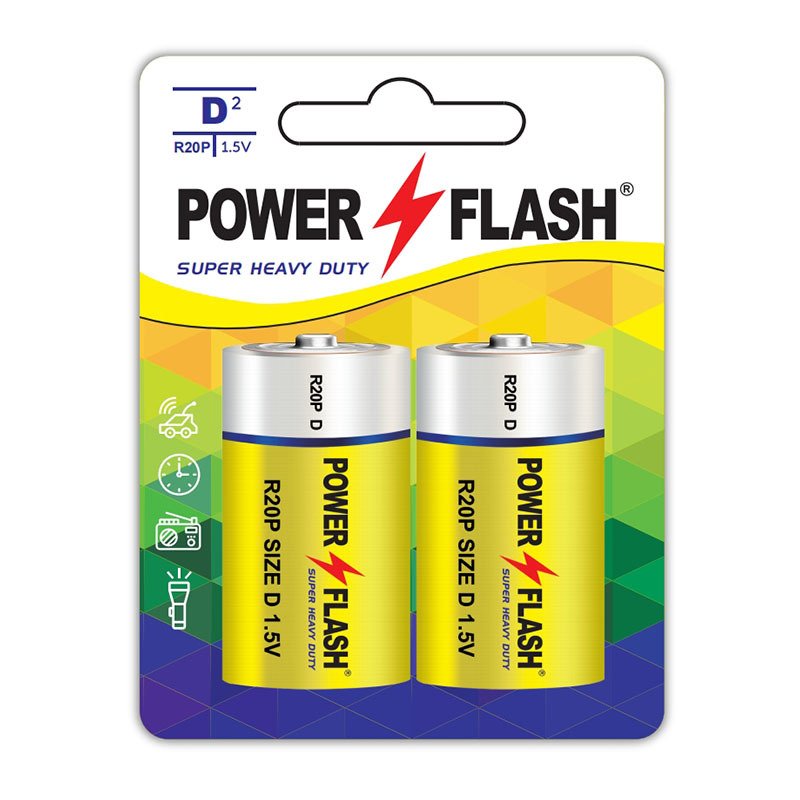
Carbon Zinc Battery
Uses:
- Zinc Chloride (ZnCl₂)
- Ammonium Chloride (NH₄Cl)
These acidic or mildly acidic electrolytes give the battery its traditional structure and lower manufacturing cost.
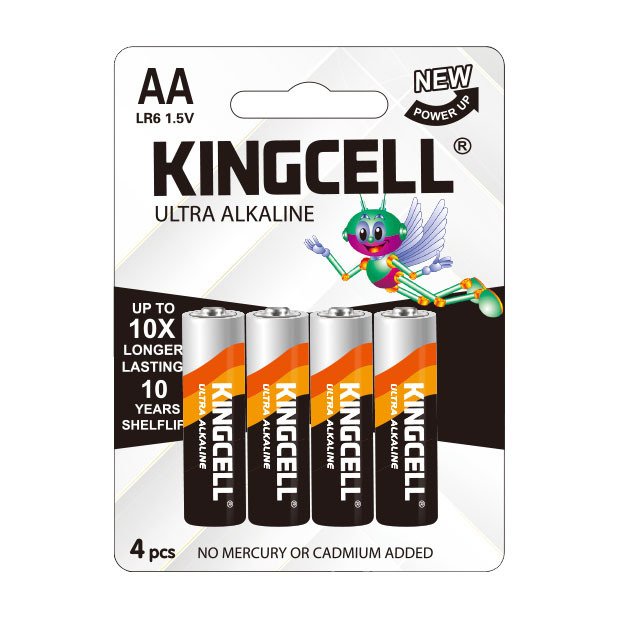
Alkaline Battery
Uses:
- Potassium Hydroxide (KOH)
The alkaline electrolyte greatly improves:
- Ionic conductivity
- Internal resistance
- High-current discharge
- Overall battery efficiency
This is the primary reason alkaline batteries provide significantly longer operating life.
Why Is It Called a Carbon Zinc Battery?
Many customers assume the carbon in “carbon zinc battery” is the active material.
Actually, it is not.
The battery is named after the carbon rod positioned in the center of the battery.
The carbon rod functions only as the current collector for the manganese dioxide cathode.
In alkaline batteries, this carbon rod is completely eliminated and replaced by a more advanced current collection system using steel and metal conductors.
This design improvement contributes to:
- Higher capacity
- Lower internal resistance
- Better sealing
- Longer service life

Capacity Comparison
Capacity is where alkaline batteries show their greatest advantage.
Typical AA battery capacity:
| Battery Type | Capacity |
| Carbon Zinc AA | 400–1,000 mAh |
| Alkaline AA | 1,000–2,800 mAh |
Depending on discharge conditions, alkaline batteries often provide 2–5 times the usable energy of comparable carbon zinc batteries.
For devices requiring continuous power, this difference is highly significant.
Shelf Life and Storage Performance
Shelf life is especially important for distributors, importers, supermarkets, and emergency inventory.
Carbon Zinc Batteries
Typical shelf life:
- 18 months to 3 years
- Higher self-discharge rate
- Best stored in cool, dry conditions
Huatai Alkaline Batteries
Typical shelf life:
- Up to 10 years
- Excellent storage stability
- Low annual self-discharge
- Reliable emergency backup power
Huatai’s advanced sealing technology significantly improves storage performance for both battery categories.

Leakage Resistance
Leakage remains one of the most important purchasing considerations.
Carbon Zinc Battery
The zinc can serves as both:
- Battery container
- Negative electrode
During discharge, the zinc gradually becomes thinner, increasing leakage risk if the battery is deeply discharged or left inside equipment for extended periods.
Huatai Alkaline Battery
Huatai alkaline batteries feature:
- Precision steel shell construction
- Multiple sealing rings
- Advanced leak-resistant design
- Optimized electrolyte management
These improvements dramatically reduce leakage risk and help protect valuable electronic devices.
Performance in Low Temperatures
Low-temperature operation is increasingly important for export markets including:
- Russia
- Central Asia
- Northern Europe
- Canada
Carbon zinc batteries experience noticeable voltage drop under low temperatures.
Huatai alkaline batteries maintain:
- More stable voltage
- Longer runtime
- Better current output
making them more suitable for demanding outdoor applications.

Application Comparison
Carbon Zinc Batteries
Best suited for:
- Wall clocks
- TV remote controls
- Air-conditioner remotes
- Radios
- Calculators
- LED flashlights
- Basic household electronics
These devices require low current and intermittent operation.
Carbon zinc batteries provide the most economical solution.
Alkaline Batteries
Recommended for:
- Wireless mouse
- Computer keyboards
- Children’s toys
- Electric toothbrushes
- Medical devices
- Blood pressure monitors
- Digital cameras
- Smart locks
- Portable electronics
Their higher energy density delivers longer operating time and improved user experience.

Cost Performance: Choosing the Right Battery Instead of the Most Expensive One
Professional battery buyers understand that value is measured by cost per application, not simply by purchase price.
Carbon zinc batteries remain highly competitive because they provide:
- Lowest manufacturing cost
- Excellent value for low-drain devices
- High-volume market demand
- Strong profitability in emerging markets
Alkaline batteries deliver greater value where longer runtime and higher performance are required.
This complementary relationship is why Huatai continues investing heavily in both product categories.
Why Global Buyers Choose Huatai Battery
As one of China’s leading carbon zinc battery manufacturers and alkaline battery manufacturers, Huatai offers complete battery solutions for international customers.
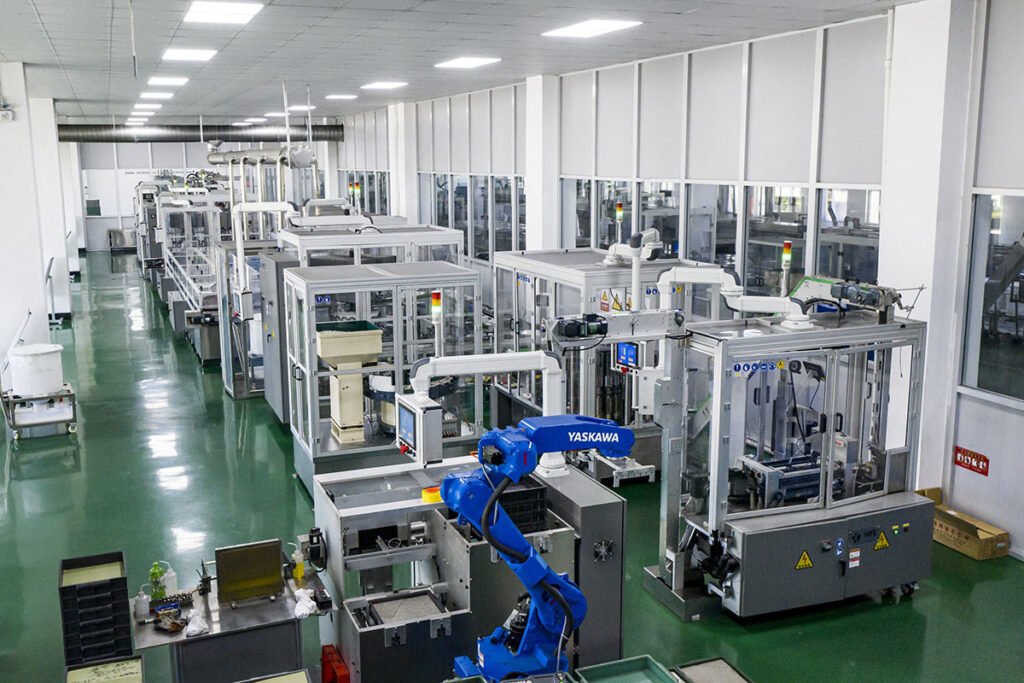
Large-Scale Manufacturing
- Established in 1993 with manufacturing roots dating back to 1956
- More than 48 automated dry battery production lines
- Canadian HIBAR high-speed production technology
- Annual output exceeding 6 billion batteries
Complete Battery Portfolio
Huatai manufactures:
- Carbon Zinc Batteries
- Super Heavy Duty Batteries
- Alkaline Batteries
- Lithium Batteries
- NiMH Rechargeable Batteries
- USB Rechargeable Batteries
- High Voltage Batteries
- CR Lithium Coin Cells
- AG Alkaline Button Batteries
- Zinc Air Batteries
- Sodium-Ion Batteries
- Energy Storage Batteries

OEM & Private Label Battery Manufacturing
Huatai supports:
- OEM Battery Manufacturing
- Private Label Battery Production
- Customized Packaging
- Multilingual Printing
- Retail Blister Packs
- Industrial Bulk Packaging
- Export Documentation
- CE, RoHS, REACH, ISO-certified quality systems, MSDS, and other required certifications
Global Market Experience
Huatai batteries are exported worldwide, including:
- Africa
- Middle East
- Latin America
- Europe
- North America
- Southeast Asia
- Russia and CIS countries
Battery Selection Guide
| Device | Recommended Battery |
| Wall Clock | Carbon Zinc |
| TV Remote | Carbon Zinc |
| Calculator | Carbon Zinc |
| Radio | Carbon Zinc |
| Flashlight | Carbon Zinc / Alkaline |
| Wireless Mouse | Alkaline |
| Electric Toothbrush | Alkaline |
| Children’s Toys | Alkaline |
| Medical Equipment | Alkaline |
| Digital Camera | Alkaline / Lithium |
| Smart Lock | Alkaline / Lithium |
Frequently Asked Questions (FAQ)
1. Are carbon zinc batteries the same as alkaline batteries?
No. They are two independent battery technologies within the primary zinc-manganese battery family. They use different electrolytes, internal structures, manufacturing processes, and are designed for different applications.
2. Why do alkaline batteries last longer?
Because alkaline batteries use potassium hydroxide electrolyte, have lower internal resistance, higher energy density, and more efficient electrochemical reactions than carbon zinc batteries.
3. Are carbon zinc batteries still popular?
Absolutely. Carbon zinc batteries remain widely used worldwide due to their affordability and excellent performance in low-drain devices. They continue to be especially popular in Africa, the Middle East, Latin America, and Southeast Asia.
4. Which battery is better for remote controls?
Both work well, but carbon zinc batteries usually provide the most cost-effective solution because remote controls consume very little power.

5. Which battery is better for children’s toys?
Alkaline batteries are recommended because toys often require continuous high current, where alkaline batteries significantly outperform carbon zinc batteries.
6. Why do alkaline batteries leak less frequently?
Their steel-shell construction, advanced sealing systems, and optimized electrolyte design greatly reduce leakage compared with traditional carbon zinc batteries.
7. Does Huatai manufacture both battery types?
Yes. Huatai Battery is one of China’s largest manufacturers of both carbon zinc batteries and alkaline batteries, offering OEM, ODM, and private label solutions for customers worldwide.
8. Which battery should distributors import?
For the best market coverage, distributors should stock both categories: carbon zinc batteries for price-sensitive markets and alkaline batteries for premium consumer applications. This dual-product strategy maximizes sales opportunities across different customer segments.

Conclusion
Carbon zinc batteries and alkaline batteries are parallel technologies rather than competing versions of the same product. Carbon zinc batteries continue to provide an economical and reliable solution for low-drain applications, while alkaline batteries deliver higher capacity, longer service life, stronger leak resistance, and superior performance for modern electronic devices.
With decades of manufacturing expertise, advanced Canadian HIBAR automated production technology, 48 dry battery production lines, an annual output exceeding 6 billion batteries, and exports to more than 100 countries, Shandong Huatai New Energy Battery Co., Ltd. offers a complete portfolio of carbon zinc batteries, alkaline batteries, and customized OEM battery solutions.
Whether you are sourcing AA batteries, AAA batteries, C batteries, D batteries, 9V batteries, carbon zinc batteries, alkaline batteries, or private label battery products, Huatai combines technical expertise, large-scale production, strict quality control, and global supply capabilities to help distributors and brand owners succeed in competitive international markets.