English
  Spanish
  French
  Arabic
  Portuguese
  Russian
  Chinese
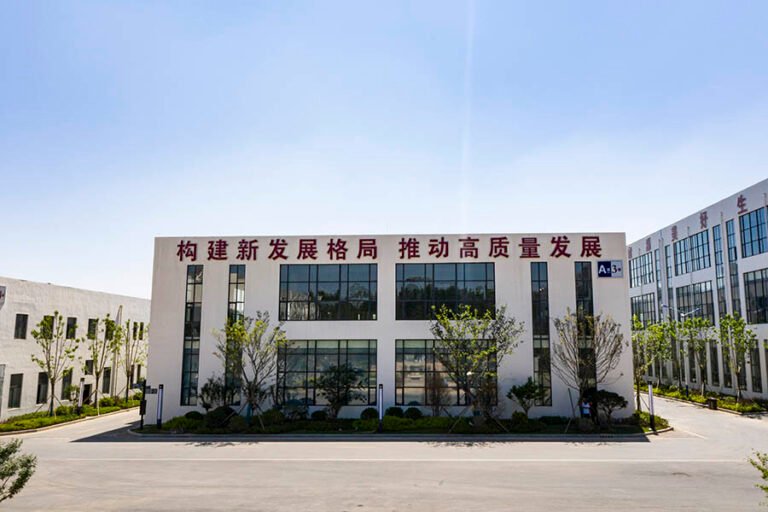
 Shandong Huatai New Energy Battery Co., Ltd. is a professional dry battery manufacturer, factory, producer, and global supplier, specializing in the production of zinc carbon batteries, zinc manganese dry batteries, and alkaline dry batteries. Both zinc carbon batteries and alkaline batteries generate electrical energy through the redox reaction between zinc and manganese dioxide, although they differ in structure, materials, and performance characteristics.
Introduction About Huatai Battery
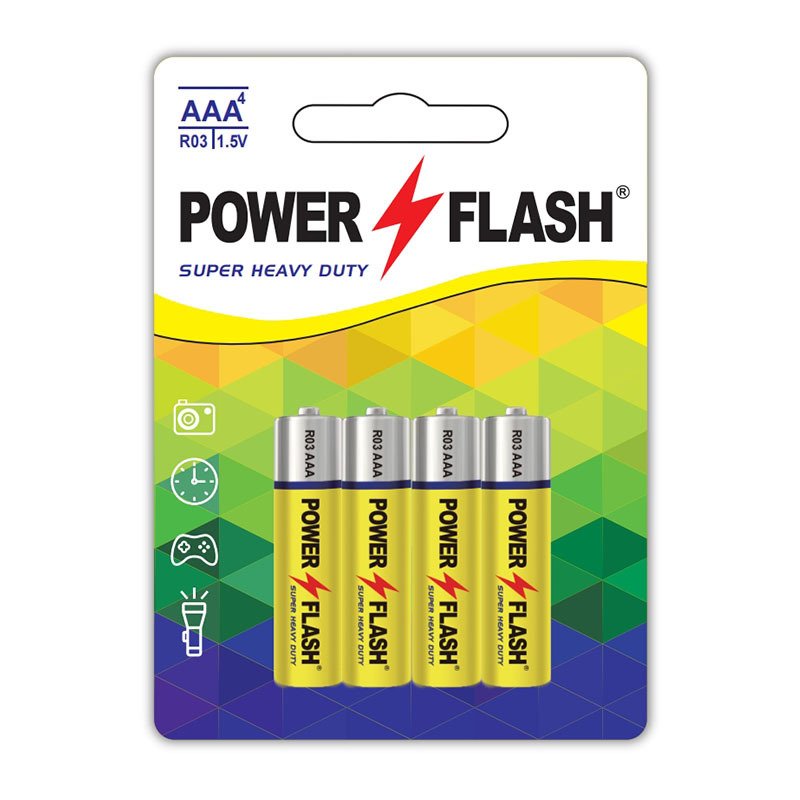
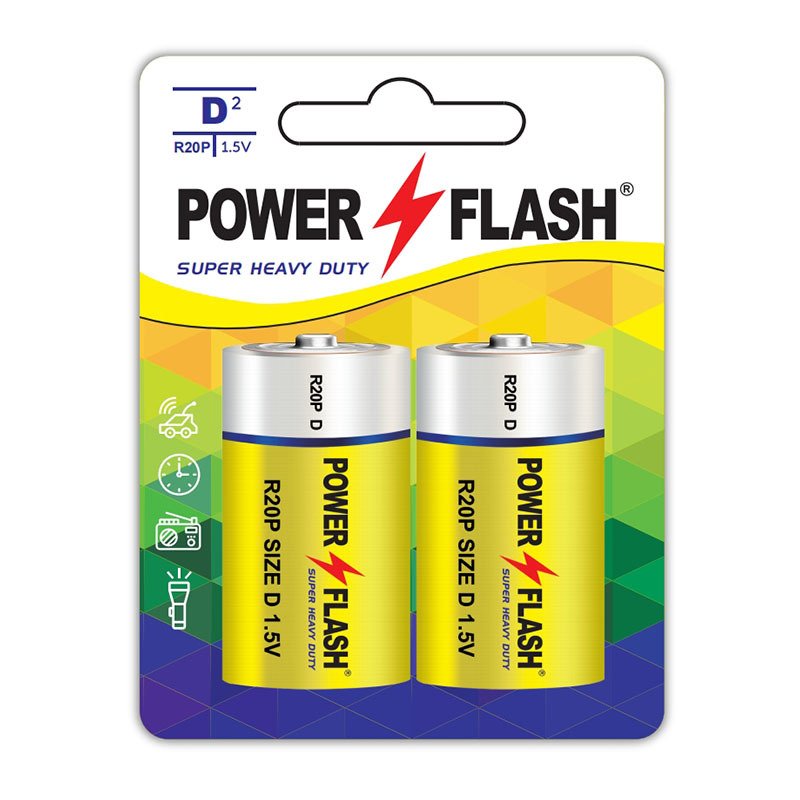
Shandong Linyi Huatai New Energy Battery Co., Ltd. was established in May 1993,but our factory’s history can date back to the establishment of the Linyi Battery Plant in 1956.We are currently one of the leading Eco-friendly&Mercury-free alkaline battery manufacturers and lithium battery manufacturers in China and the world’s largest heavy duty zinc-carbon batteries manufacturer&factory. Our products are produced with HUATAI,Power Flash and KINGCELL brand and customer’s private label, supplied 6 billion annual output by HIBAR high-speed automated production lines, offering OEM solutions for zinc carbon, alkaline, and lithium batteries worldwide.For more insights, please stay tuned to our News section, which covers the latest Company News and Industry News.We also supply one-stop Product Catalog service for our customers.
Huatai’s manufacturing quality has been validated through long-term cooperation with internationally recognized companies.
Global OEM Partnerships:
Panasonic
Philips
Energizer
Domestic Strategic Clients:
Bull Group
Haier
Hisense
Huatai provides complete OEM / ODM battery services, including:
private label battery production
customized packaging design
flexible MOQ solutions
fast production turnaround
Many well-known battery brands rely rely on Huatai for zinc carbon battery&alkaline battery&lithium battery OEM production, demonstrating its strong cost-performance advantage in global markets.
Below is a brief introduction to the dry battery products manufactured by Huatai Battery.

Carbon Zinc Manganese Dry Batteries (Zinc Carbon Batteries)
Huatai’s carbon zinc manganese dry batteries use electrolytic manganese dioxide (EMD) as the cathode material and a zinc can as the anode. The electrolyte is primarily zinc chloride (ZnCl₂), with a small amount of ammonium chloride (NH₄Cl) added to balance battery capacity and output power.
An important internal component is the separator paper (base paper)—commonly referred to as cable paper—which must have high water absorption and strong wet strength. Another key component is the paste layer, typically in a gel-like form, which helps retain moisture while acting as a barrier to prevent manganese dioxide particles from penetrating and causing internal short circuits.
Alkaline Zinc Manganese Dry Batteries (Alkaline Batteries)
Huatai’s alkaline zinc manganese dry batteries also operate based on the redox reaction between manganese dioxide and zinc powder. The cathode consists of electrolytic manganese dioxide, while the anode uses zinc powder. The outer shell is made of stainless steel, providing excellent structural protection and effectively preventing leakage.
The electrolyte in alkaline batteries is an aqueous potassium hydroxide (KOH) solution. Thanks to its high electrical conductivity and optimized internal structure, alkaline dry batteries offer significantly improved energy storage capacity and excellent continuous discharge performance, making them ideal for devices requiring stable power output.

Discharge Characteristics & Application Scenarios
During operation, carbon zinc manganese batteries experience both polarization resistance and ohmic resistance, which causes the working voltage to be lower than the open-circuit voltage. As discharge products accumulate, internal resistance increases, and higher discharge currents result in faster voltage drop. Therefore, zinc manganese batteries are not suitable for high-current continuous discharge.
However, the manganese dioxide cathode exhibits a recovery effect. During discharge, manganite forms on the cathode surface. When the battery rests, this manganite can migrate and partially restore the cathode to a state close to its pre-discharge condition. As a result, zinc manganese dry batteries perform significantly better under intermittent discharge conditions than under continuous discharge, making them ideal for low-drain and intermittent-use devices.
In contrast, Huatai alkaline dry batteries feature low internal resistance, allowing for strong high-current discharge capability, higher capacity, and excellent low-temperature performance. Under cold conditions, alkaline batteries consistently outperform carbon zinc batteries, making them suitable for applications requiring continuous and stable power supply.
Primary Batteries with Long-Term Market Value
Most of the zinc carbon batteries produced by Huatai are primary (non-rechargeable) batteries with low manufacturing cost, easy portability, and simple operation. Even in today’s rapidly growing lithium battery and rechargeable battery market, zinc carbon and alkaline dry batteries remain irreplaceable energy solutions in many applications.
As a comprehensive battery manufacturer and supplier, Huatai also provides lithium batteries, button cell batteries, and customized battery solutions for global customers.
Technical FAQ: Carbon-Zinc vs. Alkaline Battery Architecture
Answer: Both technologies utilize a redox reaction between manganese dioxide and zinc, but they differ significantly in their internal architecture.
Carbon-Zinc (Zinc-Manganese): Utilizes a zinc can as the anode and a manganese dioxide cathode, with a zinc chloride (ZnCl₂) or ammonium chloride (NH₄Cl) electrolyte. It relies on a separator/paste system to manage moisture and prevent internal shorts.
Alkaline: Features a more robust stainless-steel outer shell, with the cathode consisting of electrolytic manganese dioxide and the anode utilizing zinc powder. The electrolyte is an aqueous potassium hydroxide (KOH) solution, which provides superior electrical conductivity.
Answer: The electrolyte choice is the primary driver of performance characteristics:
Carbon-Zinc: The zinc chloride/ammonium chloride system is optimized for low-drain, intermittent use. It is cost-effective but limited in total energy capacity.
Alkaline: The potassium hydroxide (KOH) solution allows for much higher ionic conductivity. This results in significantly higher energy density, better continuous discharge performance, and superior stability for high-drain devices.
Answer: The stainless steel shell provides two distinct advantages:
Structural Integrity: It offers superior mechanical protection against impact during logistics.
Leak Prevention: It is a core component of our anti-leakage architecture, which is vital for maintaining brand reputation in high-humidity or high-temperature markets where standard dry cells might fail.
Answer: * Select Carbon-Zinc: For low-drain household applications like TV remote controls, quartz wall clocks, or simple flashlights. It offers the best “cost-per-unit” value for price-sensitive markets.
Select Alkaline: For devices requiring high-drain, stable, or continuous power output, such as smart toys, wireless controllers, digital cameras, and medical equipment.
Answer: Beyond the cathode and anode, the quality of our internal components—such as the high-water-absorption cable paper (separator) and the specially formulated paste layer—is what prevents internal short circuits and moisture loss. By self-supplying these key components, Huatai ensures that our cells maintain consistent voltage output throughout their shelf life.
Commitment to Quality and Partnership
Shandong Huatai New Energy Battery Co., Ltd. sincerely welcomes customers from around the world to visit our battery factory, provide guidance, and supervise our production processes. We are committed to delivering high-quality dry batteries, carbon zinc batteries, alkaline batteries, lithium batteries, and button cell batteries to meet diverse market needs and to build long-term, mutually beneficial partnerships with our global clients.