English
 Spanish
 French
 Arabic
 Portuguese
 Russian
 Chinese
Top China Battery Manufacturer for Argentina: Carbon Zinc, Alkaline and Lithium Battery Market
Explore Argentina’s battery market, including carbon zinc, alkaline, lithium and rechargeable batteries, import compliance, market demand, private label opportunities and reliable supply from China manufacturer – Shandong Huatai New Energy Battery Co., Ltd..
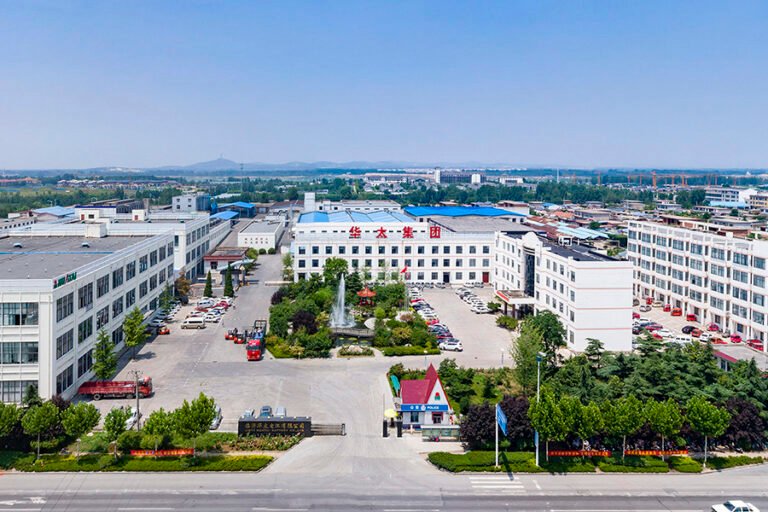
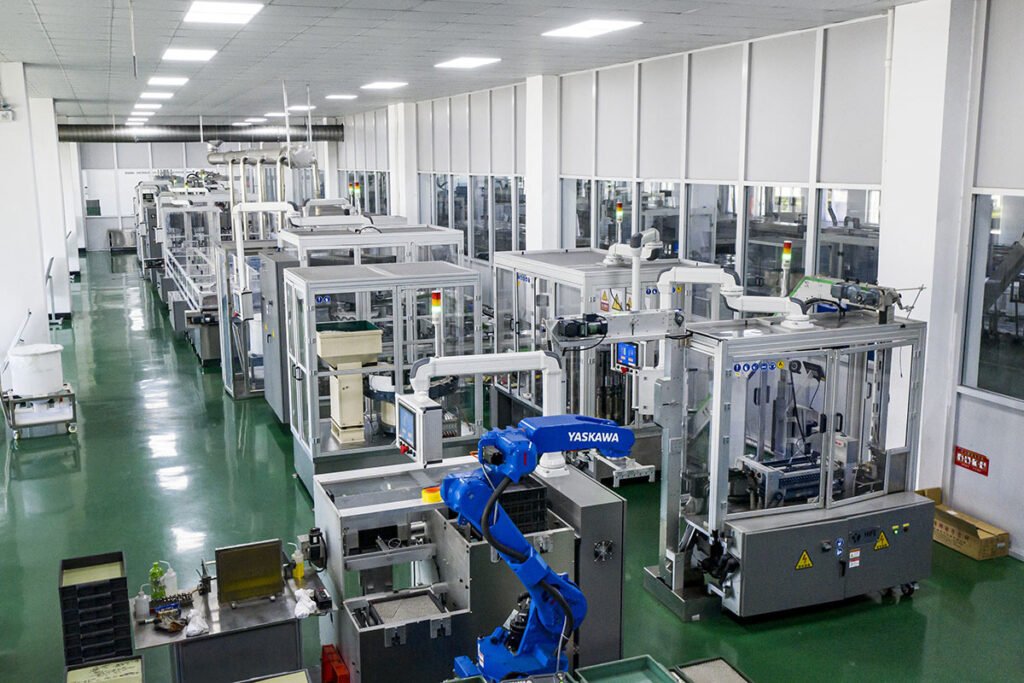
Shandong Linyi Huatai New Energy Battery Co., Ltd. was established in May 1993,but our factory’s history can date back to the establishment of the Linyi Battery Plant in 1956.We are currently one of the leading Eco-friendly & Mercury-free alkaline battery manufacturers and lithium battery manufacturers in China and the world’s largest heavy duty zinc-carbon batteries manufacturer & factory. Our products are produced with HUATAI, Power Flash and KINGCELL brands and customer’s private label, supplied 6 billion annual output by HIBAR high-speed automated production lines, offering OEM solutions for zinc carbon, alkaline, and lithium batteries worldwide.

Argentina is one of the most distinctive battery markets in South America. For importers, distributors, wholesalers and private-label brands, the opportunity is not limited to traditional AA and AAA dry batteries. Argentina has demand across carbon zinc batteries, alkaline batteries, lithium batteries, rechargeable NiMH batteries, button cells and new-energy battery systems. At the same time, Argentina has specific technical and environmental requirements for primary batteries, making supplier qualification and regulatory preparation particularly important.
For Chinese battery suppliers, Argentina therefore requires a different approach from simply offering the lowest FOB price. Product performance, heavy-metal compliance, leakage resistance, shelf life, certification documents, packaging, import procedures and long-term supply stability all influence the real purchasing decision. In 2026, Argentina also introduced a new technical and conformity-assessment framework for primary batteries, making regulatory awareness even more important for importers.
Why the Argentina Battery Market Deserves a Separate Strategy
Argentina has a large consumer market spread across Buenos Aires and other major urban centers, while its geography creates very different distribution conditions from one region to another. Battery products are sold through supermarkets, hardware stores, electronics retailers, wholesalers, online channels and specialized distributors.
For everyday applications, AA and AAA batteries remain important because they are used in remote controls, clocks, toys, flashlights, radios, household devices and many other low- to medium-drain products. At the same time, consumers and commercial users who require longer operating time increasingly have reasons to choose alkaline or lithium technology.
This creates a practical product ladder for Argentine distributors:
| Market segment | Suitable battery technologies | Typical applications |
| Economy / high-volume | Carbon zinc, zinc-manganese | Clocks, remotes, radios, basic toys, flashlights |
| Mainstream consumer | Alkaline AA/AAA/C/D/9V | Toys, electronics, flashlights, household devices |
| Higher-performance disposable | Lithium primary | Cameras, sensors, specialty electronics |
| Rechargeable | NiMH, Li-ion | Consumer electronics, rechargeable devices |
| Energy storage | LiFePO4 / lithium systems | Solar storage, backup power, BESS |
The key point is that Argentina should not be treated as a single-product battery market. A distributor selling only one battery technology may miss customers at other price and performance levels.

Carbon Zinc Batteries Remain Important in Argentina
For price-sensitive consumer applications, carbon zinc batteries in Argentina remain commercially relevant.
Carbon zinc batteries are particularly suitable when the device has relatively low or intermittent power consumption and the customer prioritizes purchase price. Typical applications include wall clocks, remote controls, basic toys, radios, small flashlights and other household products.
For Argentine importers, the important question is not simply whether carbon zinc is cheaper than alkaline. The more useful question is:
What applications can carbon zinc batteries serve reliably at a lower total product cost?
A properly manufactured zinc-carbon battery can offer an attractive combination of cost, stable supply and sufficient performance for low-drain applications.
This is especially relevant for wholesalers and private-label brands that need to maintain competitive retail prices.
Carbon Zinc vs. Alkaline Batteries for Argentine Buyers
| Factor | Carbon Zinc | Alkaline |
| Purchase cost | Lower | Higher |
| Low-drain applications | Very suitable | Suitable |
| Higher-drain devices | More limited | Better suited |
| Typical positioning | Economy/value | Mainstream/premium |
| Private label potential | High | High |
| Suitable for large-volume distribution | Yes | Yes |
Rather than replacing carbon zinc with alkaline completely, an experienced distributor can use both products to cover different consumer segments.

Alkaline Batteries Are the Core Upgrade Segment
Alkaline batteries in Argentina are important where consumers expect longer runtime, better discharge performance and greater reliability.
AA and AAA alkaline batteries are particularly relevant for toys, wireless accessories, flashlights, electronic devices and household products with higher power requirements. C, D and 9V alkaline batteries can also serve applications requiring greater capacity or different form factors.
For a distributor building a private-label battery range, a practical product portfolio could therefore include:
- Carbon zinc AA and AAA
- Carbon zinc C, D and 9V
- Alkaline AA and AAA
- Alkaline C, D and 9V
- Button lithium batteries
- Rechargeable NiMH AA and AAA
- Selected lithium primary batteries
This approach gives the distributor a good-better-best product structure rather than forcing every customer toward the same battery chemistry.
Argentina’s Battery Regulations Make Supplier Documentation Important
One of the most important differences between Argentina and some other South American markets is the specific regulatory framework governing primary batteries.
Argentina’s Law 26.184 establishes limits for mercury, cadmium and lead in certain primary batteries. The government states that cylindrical or prismatic zinc-carbon and manganese alkaline primary batteries exceeding the specified limits cannot be manufactured, assembled, imported or commercialized. The limits cited by the government are 0.0005% mercury, 0.015% cadmium and 0.200% lead by weight.
In June 2026, Argentina issued Joint Resolution 1/2026, establishing updated technical specifications and conformity-assessment procedures for covered primary batteries. The new framework applies to primary batteries sold in Argentina and requires manufacturers, assemblers and importers to ensure conformity through a declaration of conformity and the applicable evaluation procedure.
The 2026 framework covers electrochemical systems including:
- Manganese alkaline
- Zinc-carbon
- Silver oxide
- Zinc-air
Primary lithium batteries and rechargeable batteries are excluded from the scope of this particular resolution, according to the published annex.
This distinction is extremely important for importers. Not every battery technology should automatically be assumed to follow the same Argentine conformity procedure.

What Should an Argentine Battery Importer Request from a Chinese Supplier?
Before placing a container order, Argentine importers should request a complete technical document package rather than relying only on a product catalog.
A practical supplier checklist includes:
| Document / specification | Why it matters |
| Battery datasheet | Confirms voltage, capacity and intended application |
| Heavy-metal test data | Supports environmental compliance |
| IEC or applicable international test reports | Demonstrates product performance |
| Shelf-life information | Important for imported inventory |
| Leakage-resistance information | Reduces after-sales risk |
| Safety and conformity documents | Supports Argentine import procedures |
| Packaging artwork | Helps verify required markings |
| Production batch information | Useful for traceability |
| UN38.3 documents | Important for applicable lithium products |
| OEM/private-label specifications | Ensures production matches approved samples |
Argentina’s official guidance has historically required primary batteries to indicate an expiry date, have protective casing against leakage, meet applicable national or international duration standards, maintain liquid tightness and obtain certification. The newer 2026 framework changes the conformity process, so importers should verify the current procedure for each product category before shipment.
In September 2026, ARCA also issued General Resolution 5895/2026 concerning authorization for definitive or temporary imports of certain primary batteries under Law 26.184 and its amendments, replacing the previous Resolution 5398 framework.
For this reason, Argentine battery import compliance should be checked before production, not after the goods arrive at the port.
Reverse Logistics and Battery Waste Should Not Be Ignored
Battery sales also involve end-of-life management.
Argentina’s government identifies primary batteries as a waste stream requiring differentiated management, and its national framework addresses environmental handling and disposal.
For distributors and importers, this means environmental responsibility is increasingly part of the commercial supply chain.
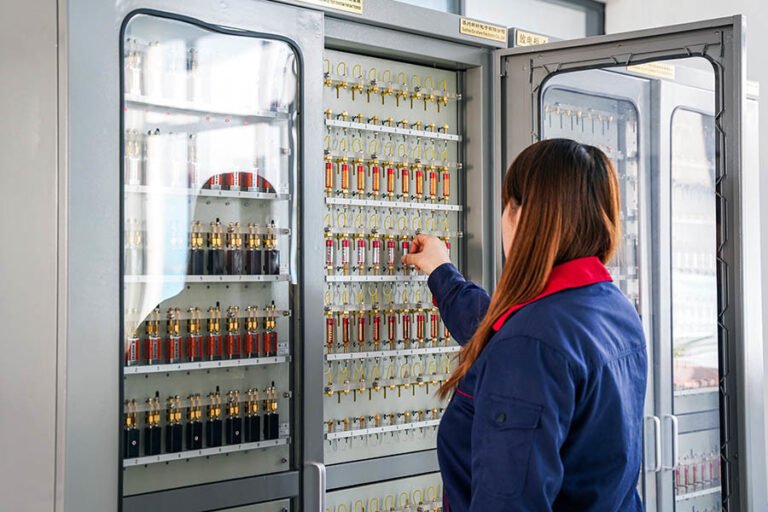
A professional Chinese battery manufacturer should therefore be able to discuss:
- Heavy-metal control
- Mercury-free and cadmium-free production
- Leakage prevention
- Product traceability
- Packaging requirements
- Battery disposal information
- Supporting compliance documentation
This is particularly important for large retail chains and private-label customers, which generally require a more complete supplier qualification process than small spot buyers.
Climate and Distribution Conditions Matter in Argentina
Argentina has an unusually broad geographic range, from subtropical northern regions to much colder southern areas. Therefore, battery storage and transportation conditions should not be evaluated only from the perspective of the average annual temperature.
For distributors, long shelf life and leakage resistance are valuable because batteries may spend considerable time in warehouses, wholesale channels and retail inventories before reaching consumers.
For this reason, Argentine buyers should pay attention to:
- Shelf-life stability
- Electrolyte leakage resistance
- Sealing quality
- Storage-temperature recommendations
- Batch consistency
- Packaging durability
For mass-market disposable batteries, a low factory price does not necessarily produce a low total cost if leakage, short shelf life or inconsistent voltage creates retailer complaints.
Argentina Is Also Developing a Larger Lithium and Energy-Storage Market
Argentina’s battery opportunity extends well beyond disposable dry cells.
In 2026, the Argentine government launched the AlmaSADI program to introduce new battery energy-storage systems into critical nodes of the national electricity system. The initial target was 700 MW, with an estimated investment of about USD 700 million.
The response was substantially larger than the initial target: 37 companies submitted 235 offers totaling more than 8,300 MW, according to the Argentine government.
In July 2026, the government formally awarded 700.5 MW across 20 projects in seven regions.
For the battery industry, this is significant because it shows that Argentina’s future battery demand cannot be understood only through AA and AAA consumer batteries.
There are increasingly different market layers:
Primary batteries → rechargeable batteries → lithium batteries → LiFePO4 energy storage → large-scale BESS.
For Chinese manufacturers with broader product capabilities, this creates opportunities to develop long-term relationships with Argentine distributors, energy companies, system integrators and industrial customers.
Why Huatai Battery Is More Than a Carbon Zinc Battery Manufacturer
Huatai Battery has a particularly long industrial history for a Chinese battery supplier.
Its manufacturing heritage can be traced back to Linyi Battery Factory, established in 1956. From those early industrial roots, the business has developed over decades into Shandong Huatai New Energy Battery Co., Ltd., a comprehensive battery manufacturer serving international markets.
Historically, Huatai was widely associated with large-scale carbon zinc battery production. Being one of the world’s largest carbon zinc battery manufacturers became an important label for the company.
But that label describes only part of Huatai’s current capabilities.
Today, Huatai has developed into a comprehensive battery manufacturer covering alkaline batteries, carbon zinc batteries, lithium batteries, rechargeable batteries and new-energy battery products.
Its manufacturing system includes more than 40 production lines and seven component workshops, with modern high-speed alkaline production lines. The company supplies international markets under brands including HUATAI, KINGCELL and POWER FLASH, while also supporting OEM and private-label projects.
For Argentine buyers, this broader product structure can be valuable because one supplier can support different market segments rather than forcing the importer to source carbon zinc, alkaline and rechargeable batteries separately.

OEM and Private Label Battery Opportunities in Argentina
Argentina’s distribution market provides opportunities for private label batteries from China, particularly when a distributor already has retail channels or a regional customer base.
A private-label program can be developed around several levels:
| Private-label strategy | Suitable target |
| Economy carbon zinc | Wholesalers and price-sensitive retail |
| Mid-range alkaline | Supermarkets and general retailers |
| Premium alkaline | Electronics and higher-value retail |
| Rechargeable NiMH | Consumer electronics distributors |
| Lithium primary | Specialty applications |
| Lithium/LiFePO4 | Energy and industrial customers |
The key is not simply printing an Argentine brand name on a standard battery. A stronger OEM project defines the target market, discharge performance, packaging, shelf life, leakage resistance, labeling and regulatory documentation before mass production.
What Should Argentine Buyers Look for in a China Battery Manufacturer?
For an Argentine importer, the supplier selection process should consider five areas:
Product portfolio: Can the factory supply carbon zinc, alkaline, lithium and rechargeable products?
Manufacturing depth: Does the supplier actually manufacture batteries, or mainly trade products from other factories?
Compliance capability: Can the supplier provide the technical and environmental documents required for the Argentine market?
OEM capability: Can it produce private-label batteries consistently over multiple orders?
Supply stability: Can it maintain consistent specifications, packaging and delivery schedules?
A factory capable of supporting the complete product range can reduce supplier fragmentation and make it easier for an Argentine distributor to expand from basic dry batteries into higher-value battery products.

FAQs About the Argentina Battery Market
1. Are carbon zinc batteries still suitable for the Argentina market?
Yes. Carbon zinc batteries remain suitable for low-drain applications such as clocks, remote controls, basic toys, radios and some flashlights. They are particularly useful where low purchase cost is more important than maximum runtime.
2. Should Argentine distributors choose carbon zinc or alkaline batteries?
The answer depends on the application and target price. Carbon zinc is more appropriate for economy applications, while alkaline is generally better suited to devices with higher or more demanding power consumption. A distributor can carry both technologies to serve different customer groups.
3. What are the most important battery regulations in Argentina?
Law 26.184 and its subsequent amendments establish heavy-metal limits and requirements for certain primary batteries. In 2026, Joint Resolution 1/2026 introduced updated technical specifications and conformity-assessment procedures. Importers should verify the current requirements applicable to their exact battery technology before shipment.
4. Does Argentina require certification for imported carbon zinc and alkaline batteries?
Covered primary batteries are subject to Argentina’s conformity requirements. The 2026 framework uses a declaration of conformity and specified evaluation procedures, replacing the previous regulatory approach. The exact requirements should be checked by product type and import operation before shipment.
5. Why are heavy-metal test reports important for Argentine battery importers?
Argentina establishes limits for mercury, cadmium and lead in covered primary batteries. Technical evidence showing compliance helps the importer complete the conformity and import process and reduces the risk of problems with non-compliant products.
6. Is long shelf life important for batteries sold in Argentina?
Yes. Argentina is geographically large, and batteries may spend extended periods moving through import, warehousing, wholesale and retail channels. Long shelf life, reliable sealing and leakage resistance can therefore have a direct effect on inventory quality and customer satisfaction.
7. Can Chinese battery manufacturers supply private-label batteries to Argentina?
Yes. A capable Chinese battery factory can develop private-label carbon zinc, alkaline, rechargeable and selected lithium products according to the importer’s specifications. The important point is to confirm technical specifications, packaging, compliance documents and samples before mass production.
8. Is Argentina’s future battery market limited to disposable batteries?
No. Argentina is developing opportunities in rechargeable batteries, lithium batteries and large-scale energy storage. In 2026, the government awarded 700.5 MW of battery energy-storage projects through the AlmaSADI program, demonstrating growing attention to grid-scale battery storage.

Conclusion: Building a Broader Battery Supply Strategy for Argentina
The Argentina battery market should not be viewed simply as another destination for low-cost AA and AAA batteries. Carbon zinc batteries remain important for price-sensitive applications, alkaline batteries provide higher-performance mainstream products, rechargeable and lithium batteries address growing technology demand, and large-scale BESS is opening a separate new-energy market.
For Argentine importers, the most important sourcing principle is to combine competitive cost with technical compliance, reliable performance, long shelf life and stable supply.
For Huatai Battery, the opportunity is broader than its historical reputation as a major carbon zinc battery manufacturer. With manufacturing roots dating back to the 1956 Linyi Battery Factory and today’s capabilities across carbon zinc, alkaline, lithium, rechargeable and new-energy batteries, Huatai can support Argentine customers at multiple stages of the battery market.
For distributors seeking a top China battery manufacturer for Argentina, the practical objective is not simply to find the cheapest battery. It is to establish a supply chain that can meet Argentina’s regulatory requirements today while giving the distributor room to expand into higher-performance and new-energy battery products tomorrow.