English
  Spanish
  French
  Arabic
  Portuguese
  Russian
  Chinese
 A New Phase for Chinese Battery Manufacturers in Europe
EU trade measures are raising the entry barriers for Chinese alkaline batteries. Learn how Huatai Battery can turn compliance, quality, automation and manufacturing scale into a competitive advantage in Europe alkaline battery market.
The European battery market is entering a more demanding phase.
For years, European importers could compare Chinese alkaline batteries primarily on price, capacity, delivery time and basic product specifications. That model is becoming increasingly difficult to sustain.

The European Commission formally opened an anti-dumping proceeding in July 2026 concerning imports of cylindrical, non-rechargeable alkaline manganese dioxide primary cells and batteries originating in China, currently classified under CN code 8506 10 11. The proceeding follows a complaint filed by VARTA Consumer Batteries GmbH & Co. KGaA on behalf of the EU industry.
At the same time, European battery legislation continues to raise the importance of environmental performance, documentation, producer responsibilities, traceability and conformity throughout the battery supply chain. Regulation (EU) 2023/1542 establishes a broader framework for batteries and waste batteries, including sustainability and market-related requirements.
This creates a difficult environment for manufacturers whose business model depends mainly on low prices and minimal compliance investment.
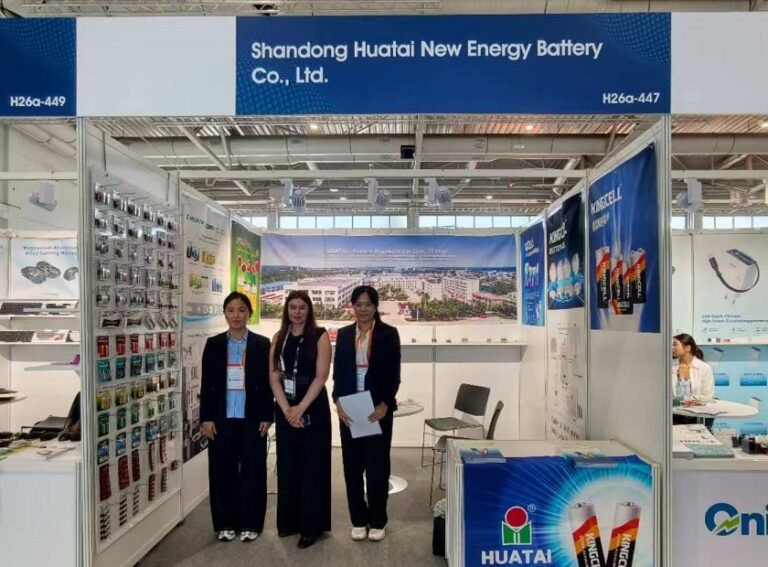
For a company such as Shandong Huatai New Energy Battery Co., Ltd., however, the situation can be viewed differently.
The tightening of the European market may remove some of the advantages previously enjoyed by small, informal or opportunistic battery processing operations. It can give established manufacturers with real factories, controlled production processes, documented quality systems, stable supply capacity and international export experience a stronger position.
The opportunity is not automatic. Huatai needs to actively convert its manufacturing advantages into European market advantages.
The European Market Is Becoming Less Friendly to “Cheap but Uncontrolled” Supply
It is important to make one distinction clear.
Anti-dumping measures are not the same thing as product certification requirements. A company does not become eligible for the EU market simply because it is a large factory, and a small factory is not automatically excluded because of its size.
However, the practical direction of the European market is clear: importers increasingly need suppliers capable of demonstrating that their products, production processes and supporting documentation satisfy applicable EU requirements.
That creates a very different competitive environment.
A small workshop that buys components from multiple sources, performs limited assembly or packaging, lacks consistent batch testing and competes almost entirely through price may find it increasingly difficult to serve serious European customers.
By contrast, a professional manufacturer can provide:
- Stable product specifications
- Controlled raw materials
- Batch traceability
- Factory quality management
- Environmental documentation
- Test reports
- Product compliance documentation
- Consistent packaging and labelling
- Long-term production capability
- OEM/private-label support
- Reliable export records
For European distributors, these are not theoretical advantages.
They directly reduce customs, compliance, quality and supply-chain risks.
Why Compliance Can Become a Competitive Advantage
Many manufacturers regard compliance as a cost.
A better way to look at it is:
Compliance can become part of the product’s commercial value.
Consider a European importer purchasing 10 million LR6 alkaline batteries.
A supplier offering a price only slightly below the market may appear attractive.
But if that supplier subsequently causes problems with:
- inconsistent capacity,
- leakage,
- missing documentation,
- environmental declarations,
- packaging requirements,
- product traceability,
- customs clearance,
- customer complaints,
the apparent price advantage can disappear very quickly.
The importer may lose considerably more money through product returns, warehouse delays and retailer complaints than through a slightly higher purchase price.
This is why serious European buyers increasingly need a battery manufacturing partner, rather than simply a battery seller.
Huatai Battery Has the Manufacturing Foundation to Take Advantage
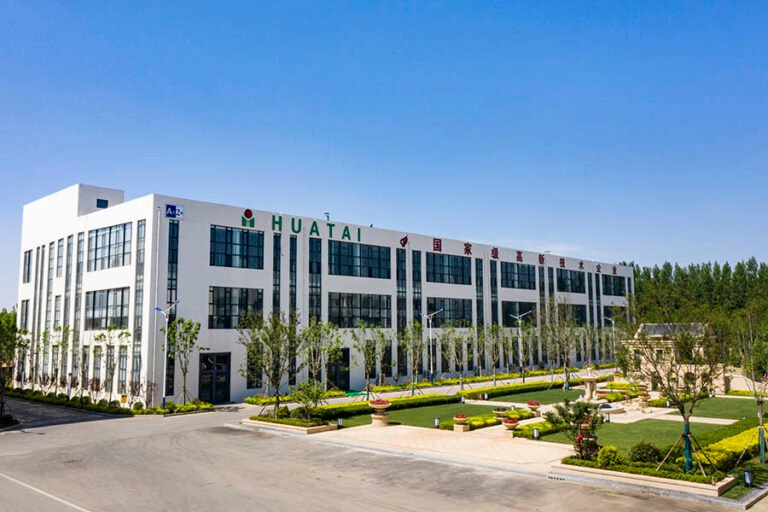
Shandong Huatai New Energy Battery Co., Ltd. was established in 1993, while the company’s manufacturing heritage can be traced back to the Linyi Battery Plant established in 1956.
That history matters because Huatai has evolved alongside the battery industry rather than appearing recently as a trading company or simple assembly operation.
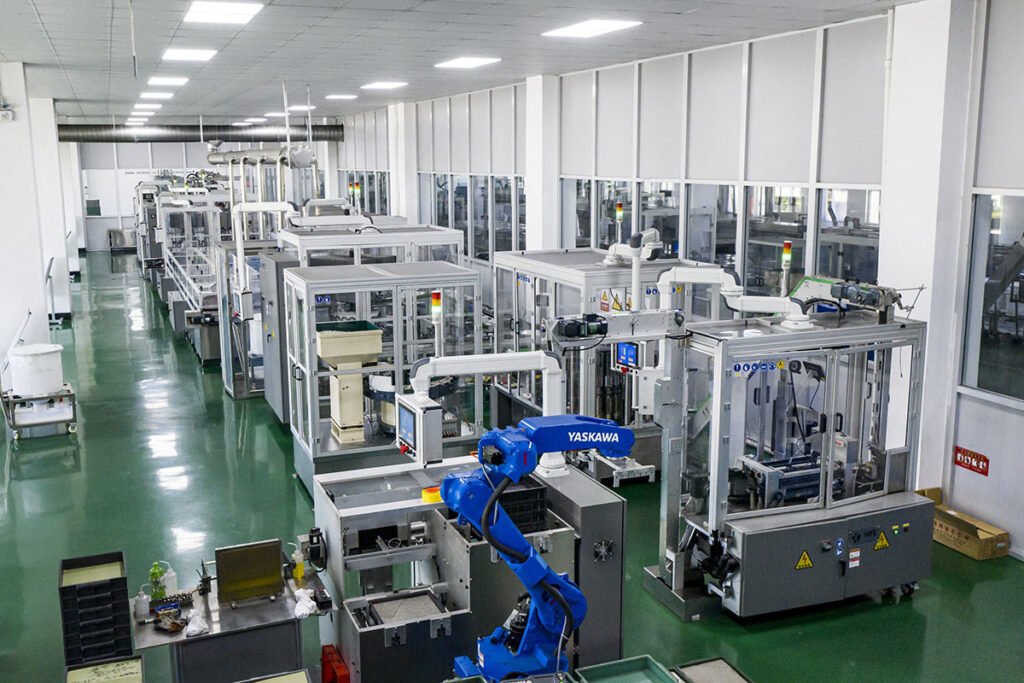
Today, Huatai manufactures zinc-carbon batteries, alkaline batteries, lithium batteries, button cells and other battery products, together with OEM and private-label solutions. Its official company information states that the factory operates more than 40 production lines, seven battery-component production facilities and annual production exceeding 6 billion pieces, with alkaline batteries manufactured using Canadian HIBAR high-speed automated production lines.
This scale gives Huatai an important advantage in the European market:
the ability to combine high-volume supply with controlled manufacturing.
That is very different from competing solely on the lowest FOB price.
Quality at the Source Is More Important Than Ever
One of Huatai’s potentially strongest advantages in Europe is its approach to manufacturing control.
A battery is not simply a finished product assembled at the end of a supply chain.
Its performance depends on the consistency of:
- Zinc materials
- Manganese dioxide
- Steel components
- Carbon components
- Electrolyte
- Separators
- Sealing components
- Internal collectors
- Assembly precision
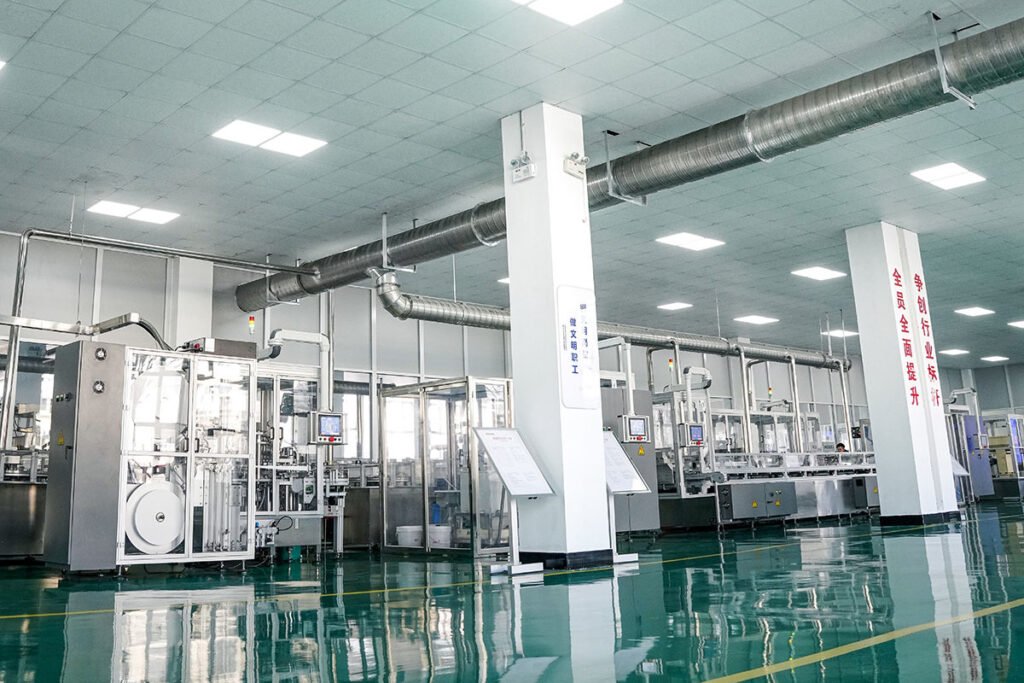
Huatai’s production system includes internal battery-component manufacturing, giving the company greater control over important components and production consistency. Its published manufacturing information highlights vertical integration and self-supply of core components.
For European customers, this can translate into something very practical:
The battery specification agreed during sampling can be reproduced more consistently during mass production.
That is particularly important for private-label customers.
A European retailer does not want its LR6 private-label battery to perform differently six months after the initial order.
Mercury-Free and Environmentally Responsible Battery Manufacturing
European customers are also becoming more sensitive to the environmental profile of batteries.
Huatai positions its alkaline batteries as mercury-free and states that its management systems include ISO 9001 and ISO 14001, with BSCI certification. The company’s published information also references European environmental requirements such as RoHS and REACH.
For the European market, Huatai should go one step further.
Instead of simply advertising:
“Mercury-Free Alkaline Battery”
the company should build a complete Environmental Compliance Package for European customers.
For each major product family, this should ideally include:
| Documentation / Evidence | Commercial Value |
| Mercury and heavy-metal declarations | Environmental compliance |
| RoHS-related documentation | Restricted-substance control |
| REACH-related documentation | EU chemical compliance support |
| IEC test reports | Product performance reference |
| ISO 9001 | Quality-management credibility |
| ISO 14001 | Environmental-management credibility |
| Batch test records | Quality traceability |
| Factory audit documentation | Buyer confidence |
| Product specifications | Consistent procurement |
| Packaging compliance information | Retail-market readiness |
The important point is that compliance should be packaged as a sales tool, not kept inside the company’s administrative department.

Leak Resistance Can Be a Real Differentiator
For alkaline batteries, leakage is one of the most commercially damaging quality problems.
A battery can meet a basic voltage requirement and still create serious problems if it leaks during storage or operation.
This becomes even more important in Europe because batteries may spend considerable time moving through:
factory → port → European warehouse → distributor → retailer → consumer.
Huatai’s use of high-speed HIBAR production technology for its alkaline series provides an opportunity to emphasize precision in electrolyte injection, assembly and sealing. The company states that its LR6 and LR03 alkaline batteries are manufactured using HIBAR high-speed production lines operating at up to 800 pieces per minute.
For European marketing, the message should not simply be:
“Our machines are advanced.”
It should be:
“Precision manufacturing is used to achieve consistent electrolyte control, sealing quality and battery performance across high-volume production.”
That is much more meaningful to a European buyer.
Long Shelf Life Is Another Advantage for European Distribution
European battery distributors frequently need to hold inventory.
A battery that performs well immediately after production but loses performance rapidly during storage is not a good commercial product.
Huatai can therefore position long shelf life and low self-discharge as important procurement advantages.
The company currently promotes a 10-year shelf-life concept for its battery products.
But the next step should be stronger:
Show the data.
For example:
- Initial voltage
- Initial capacity
- 12-month retention
- 36-month retention
- Accelerated aging results
- Leakage test results
- High-temperature storage results
- Low-temperature performance
European buyers increasingly respond better to test data than adjectives.
“Premium quality” is a marketing phrase.
“Capacity retention after controlled storage testing” is evidence.

Huatai Should Stop Competing With Europe on Price Alone
This may be the most important strategic change.
If Chinese alkaline batteries face additional trade costs in Europe, Chinese manufacturers cannot all respond by reducing their factory prices.
That creates a race to the bottom.
Huatai should instead establish a clearer value proposition:
Not:
“We manufacture cheaper AA batteries.”
But:
“We provide stable, compliant, high-volume alkaline battery manufacturing with controlled quality, long shelf life and professional OEM support.”
The difference is substantial.
A European distributor purchasing a large quantity of batteries is not buying zinc, manganese dioxide and steel.
The distributor is buying:
reliable inventory + predictable quality + compliance support + supply continuity + fewer customer complaints.
That is what Huatai should sell.
The Coming Market May Favor Professional Manufacturers
The European regulatory environment is moving toward greater sustainability and accountability across the battery value chain. Regulation (EU) 2023/1542 is designed to ensure safer and more sustainable batteries and addresses areas including harmful substances, resource efficiency and waste-battery management.
This does not mean that every small Chinese battery factory will disappear from the European market.
But the economics are changing.
A factory that previously competed through:
Low price + simple product + minimal documentation
may have less room to operate.
A manufacturer that can provide:
Quality + Compliance + Traceability + Technology + Capacity + Documentation
has a stronger foundation.
That is precisely where Huatai should position itself.
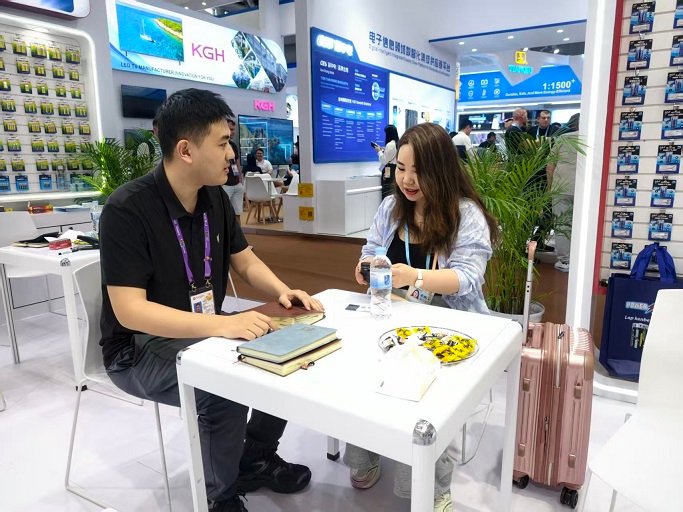
From “Chinese Battery Supplier” to “European-Ready Manufacturing Partner”
Huatai should use the current market transition to upgrade its European positioning.
Its historical strength in carbon-zinc batteries remains important, but the company has developed far beyond that category.
Today, its portfolio includes:
- Carbon zinc batteries
- Heavy Duty batteries
- Alkaline batteries
- Hi-Volt alkaline batteries
- Lithium primary batteries
- Button cells
- Rechargeable batteries
- Lithium-ion batteries
- Sodium-ion batteries
- Energy-storage products
- OEM/private-label batteries
The company’s official information describes annual output exceeding 6 billion pieces and service to international customers through its multiple battery product categories.
This gives Huatai an opportunity to offer European customers something smaller factories cannot easily provide:
One supplier for multiple battery categories and multiple market segments.
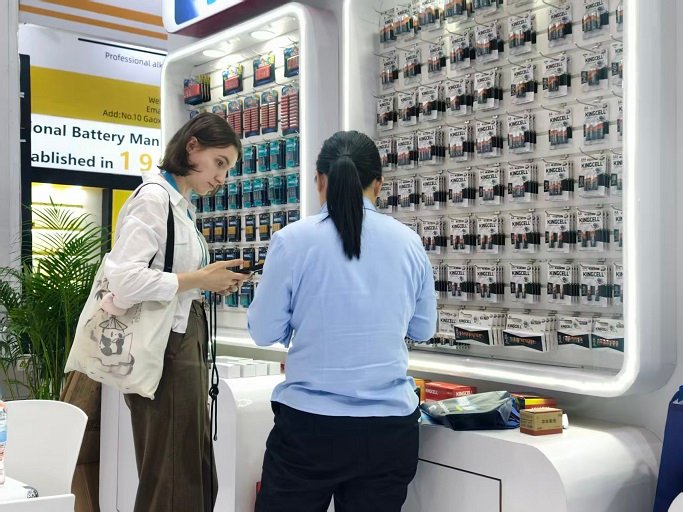
Five Practical Actions Huatai Should Take Now
1. Build a dedicated EU Compliance File for Every Main Battery Series
Create a standardized digital package for:
LR6, LR03, LR14, LR20, 6LR61 and other major products.
The package should contain current technical specifications, test reports, environmental documentation, factory certifications, packaging information and relevant declarations.
The sales team should be able to send the package to a European customer within hours rather than days.
2. Turn Factory Data Into Sales Evidence
Huatai should systematically record and publish measurable performance indicators:
- Leakage rate
- Capacity
- Shelf life
- Self-discharge
- Production speed
- Batch consistency
- Temperature performance
- Defect rate
This is especially important for Google and AI search visibility, but more importantly, European procurement managers can actually use the information.
3. Create a “European Market Battery” Product Line
Rather than selling exactly the same product everywhere, Huatai could develop a clearly defined European-focused series emphasizing:
Mercury-Free + Long Shelf Life + Leak Resistance + Stable Capacity + EU Compliance Documentation.
This gives European customers a recognizable procurement product rather than another generic Chinese LR6.
4. Select European Customers More Carefully
Huatai should prioritize:
- Established battery distributors
- Supermarket/private-label customers
- Hardware chains
- Industrial distributors
- Professional electronics distributors
- Long-term OEM customers
These customers are more likely to value manufacturing reliability than buyers who make purchasing decisions entirely on the lowest quotation.
5. Use the Current Trade Environment to Strengthen the Brand
Huatai should actively communicate that it is a real manufacturing enterprise with a long industrial history, not a trading company.
Its story is unusually strong:
1956 manufacturing heritage → 1993 modern company → 40+ production lines → 7 component facilities → 6+ billion annual output → alkaline + lithium + carbon zinc + OEM.
That is a much stronger European positioning than simply saying:
“Chinese battery supplier.”

Frequently Asked Questions
1. Will stricter EU trade and compliance requirements eliminate all small Chinese battery manufacturers?
No. Anti-dumping measures and product compliance rules are separate issues, and company size alone does not determine whether a manufacturer can sell in Europe. However, stricter compliance, documentation, traceability and quality expectations can make it increasingly difficult for informal or poorly controlled suppliers to compete for serious European business.
2. Why could the changing European market benefit Huatai Battery?
Because Huatai already operates at industrial scale, with more than 40 production lines, seven battery-component facilities and reported annual production exceeding 6 billion batteries. It also has ISO 9001 and ISO 14001 systems and supplies multiple battery chemistries.
3. Is Huatai’s compliance capability enough to avoid anti-dumping duties?
No. Product compliance and anti-dumping are different legal matters. Compliance allows a product to meet applicable market requirements; it does not exempt a Chinese manufacturer from a possible anti-dumping measure. Huatai should therefore handle trade-defense proceedings and product compliance as two separate workstreams.
4. What should European buyers ask a Chinese alkaline battery manufacturer to provide?
They should request technical specifications, applicable IEC test reports, environmental compliance documentation, quality-system certificates, batch testing information, traceability records and clear information about the actual manufacturing location and product origin.
5. Why is factory traceability important for European battery buyers?
Traceability allows buyers to identify the production batch, raw-material source, manufacturing process and quality records associated with a product. This becomes particularly valuable when a distributor has to investigate leakage, capacity complaints or regulatory questions.
6. What makes Huatai’s HIBAR production lines relevant to European customers?
Huatai states that its LR6 and LR03 alkaline batteries are manufactured using Canadian HIBAR high-speed automated production lines, with production speeds of up to 800 pieces per minute. The value is not speed alone; precision and repeatability are important for maintaining consistent mass production.
7. Should European distributors choose the cheapest Chinese alkaline battery supplier?
Not necessarily. When trade costs, compliance, transportation, inventory, leakage, returns and warranty issues are included, the lowest factory quotation may not represent the lowest total procurement cost. A stable manufacturer can sometimes provide a lower total cost of ownership even when its initial unit price is higher.
8. What should Huatai do to expand its European market share?
Huatai should combine five priorities: anti-dumping legal response, stronger EU compliance documentation, measurable product-performance data, differentiated alkaline battery products and closer cooperation with established European distributors and private-label customers.

Conclusion: A Barrier for Some, an Opportunity for Others
The European market is becoming harder for battery manufacturers that rely purely on low prices.
That is not necessarily bad news for a company like Shandong Huatai New Energy Battery Co., Ltd.
The current environment may actually accelerate a market shift from price-only competition toward manufacturing credibility, compliance, product quality and supply reliability.
Huatai has several foundations that fit this new environment: a battery-manufacturing heritage dating back to 1956, the modern company established in 1993, more than 40 production lines, seven component-production facilities, HIBAR automated alkaline-battery production, annual output exceeding 6 billion pieces, ISO 9001 and ISO 14001 systems, and a product portfolio extending from carbon-zinc and alkaline batteries to lithium and other battery technologies.
The key is not to assume that these advantages will automatically translate into more European orders.
Huatai has to make them visible, measurable and commercially useful.
If European importers increasingly need manufacturers that can provide consistent products, reliable documentation, environmental compliance, traceability and stable long-term supply, then Huatai should deliberately become one of those suppliers.
The company should therefore treat the current European market transition not simply as a threat to Chinese alkaline battery exports, but as an opportunity to remove dependence on low-price competition and build a stronger position as a professional, compliant and technically capable global battery manufacturer.
In that sense, the next stage of Huatai’s European strategy should not be:
“How can we remain the cheapest Chinese alkaline battery supplier?”
It should be:
“How can we become one of the most reliable Chinese battery manufacturing partners for European distributors and private-label brands?”
That is a much more defensible position—and one that fits the direction in which the European battery market is moving.