
 English
  Spanish
  French
  Arabic
  Portuguese
  Russian
 Short Answer:
In the foreseeable future, carbon zinc batteries (zinc–manganese dry batteries) will not be completely replaced by alkaline batteries.
However, their application scenarios will continue to shrink and be structurally replaced.
Below is a systematic analysis zinc–manganese dry batteries and alkaline cells from five key perspectives: technology, cost, market structure, regional differences, and industrial reality.
I. Technical Performance: Alkaline Batteries Are Superior, but “Excess Performance” Is Not Always Necessary
| Aspect | Carbon Zinc Battery (Zinc–Manganese) | Alkaline Battery |
| Energy density | Low | High (approx. 3–7× higher) |
| Discharge capability | Low current | Medium to high current, continuous discharge |
| Shelf life | 1–2 years | 5–10 years |
| Low-temperature performance | Weak | Excellent |
| Leak resistance | Average | Excellent |
| Environmental compliance | Mercury-free (progressive) | Fully mercury-free |
Conclusion:
From a purely technical standpoint, alkaline batteries clearly outperform carbon zinc batteries.
However, for low-power, short-cycle, non-critical devices, carbon zinc batteries are still “good enough”. In many real-world applications, the full performance advantages of alkaline batteries are simply not required.

II. Cost and Price: Carbon Zinc Batteries Retain an Irreplaceable “Price Moat”
This is the most decisive and realistic factor.
Production cost of carbon zinc batteries ≈ 40%–60% of alkaline batteries
Retail price of carbon zinc batteries is typically 30%–50% lower
For the following applications, price outweighs performance:
Low-cost flashlights
Quartz clocks and wall clocks
Low-power remote controls
Radios
Daily-use products in rural or underdeveloped regions
In these markets, alkaline batteries are better, but not essential.
This cost advantage ensures that carbon zinc batteries remain highly competitive for OEM battery suppliers, wholesale battery traders, and private-label dry battery manufacturers.
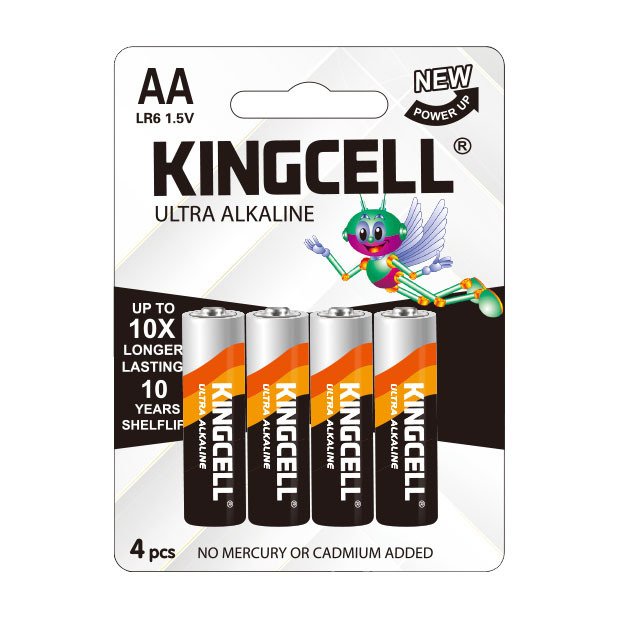
III. Global Market Structure: Carbon Zinc Batteries Still Support the “Bottom of the Pyramid”
1️⃣ Developed Markets (Europe, North America, Japan)
Carbon zinc batteries: largely phased out of mainstream retail
Alkaline batteries: absolute mainstream
Lithium primary batteries & rechargeable batteries: continuously growing
In these markets, carbon zinc batteries have already been de facto replaced.
2️⃣ Emerging & Developing Markets (Africa, South Asia, Middle East, Latin America)
This is where reality differs significantly.
Market characteristics include:
Extremely high price sensitivity
Low-power electrical devices
High purchase frequency but low single-unit value
In Africa (especially West and East Africa):
Carbon zinc batteries still account for 40%–60%+ of dry battery consumption
In some countries, they remain the dominant battery type
Alkaline batteries are viewed as an upgrade option, not a replacement
For many dry battery manufacturers and zinc manganese battery suppliers, carbon zinc batteries remain the backbone of volume sales.
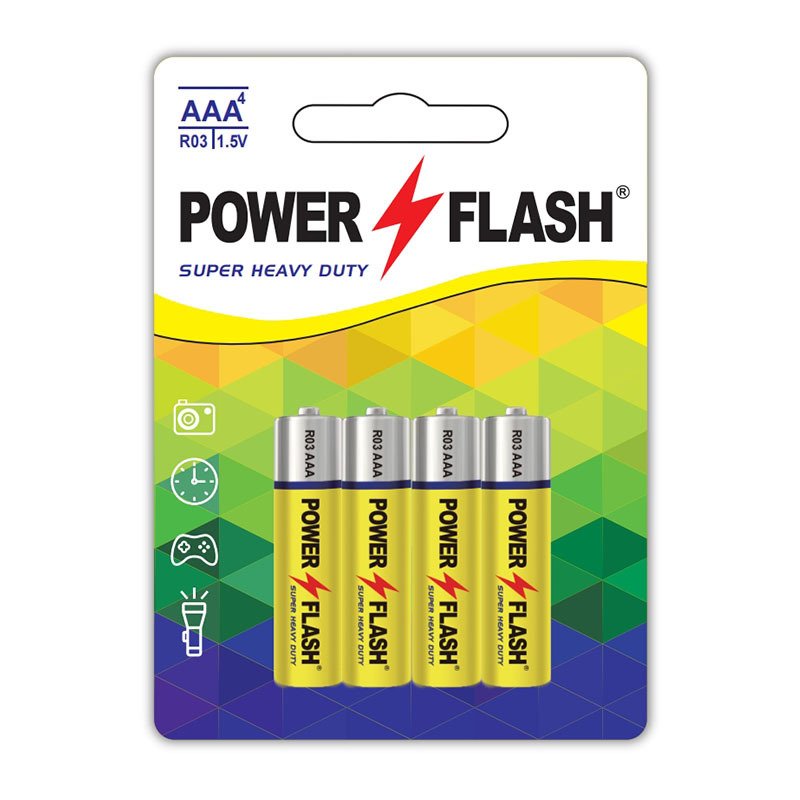
IV. Manufacturing Reality: Carbon Zinc Batteries Act as an “Industry Stabilizer”
From a factory and supply-chain perspective:
Carbon Zinc Batteries
Mature production technology
Lower capital investment
Fully depreciated equipment
High yield rate and stable cash flow
Alkaline Batteries
Higher investment and automation requirements
Greater raw material price volatility
More suitable for branded and mid-to-high-end markets
Industry reality:
Many battery manufacturers use carbon zinc batteries to sustain factory operations, while alkaline batteries generate higher margins and brand value.
This dual-structure is especially common among large-scale OEM battery factories and integrated dry battery producers.

V. Future Trend Outlook (Core Conclusions)
Why Carbon Zinc Batteries Will NOT Be Completely Replaced
Long-term price gap will persist
Low-power devices will continue to exist
Developing markets have massive population bases
Strong consumer habits and channel inertia
But Structural Replacement Will Occur
Carbon zinc batteries will gradually exit:
High-drain devices
Premium retail channels
Mainstream markets in developed countries
They will remain concentrated in:
Low-power, low-frequency-use devices
Highly price-sensitive markets
OEM, private-label, and wholesale battery channels

VI. One-Sentence Summary
Alkaline batteries will not completely replace carbon zinc batteries in the short to medium term.
They will continue to dominate mid- and high-end markets, while carbon zinc batteries will remain a long-term “basic battery solution” for low-power applications and price-sensitive regions, coexisting with alkaline batteries, lithium batteries, and button cell batteries in the global battery ecosystem.


