— From Invention to Modern High-Performance Power Solutions
Strategic Technical Guide: Alkaline vs. Zinc-Carbon
Understanding the structural and chemical evolution of batteries is essential for professional buyers and consumers alike.
1. Comparative Performance & Structure
While both systems use Zinc and Manganese Dioxide, the internal architecture defines their utility. Alkaline batteries utilize a reverse polarity structure where the steel can acts as the positive terminal (rather than the negative terminal in zinc-carbon), significantly reducing corrosion and leakage risks.
| Feature | Zinc-Carbon (R Series) | Alkaline (LR Series) |
| Electrolyte | Ammonium/Zinc Chloride (Acidic) | Potassium Hydroxide (Basic) |
| 容量 | Baseline | 3–7x Higher |
| Best For | Low-drain (Clocks, Remotes) | High-drain (Cameras, Toys) |
| 保质期 | 1–3 Years | 7–10 Years |
| Structure | Zinc can is the negative terminal | Steel can is the positive terminal |
2. How to Identify High-Quality Batteries
To ensure you are receiving the performance of a professional alkaline cell rather than a standard dry battery, use the following checklist:
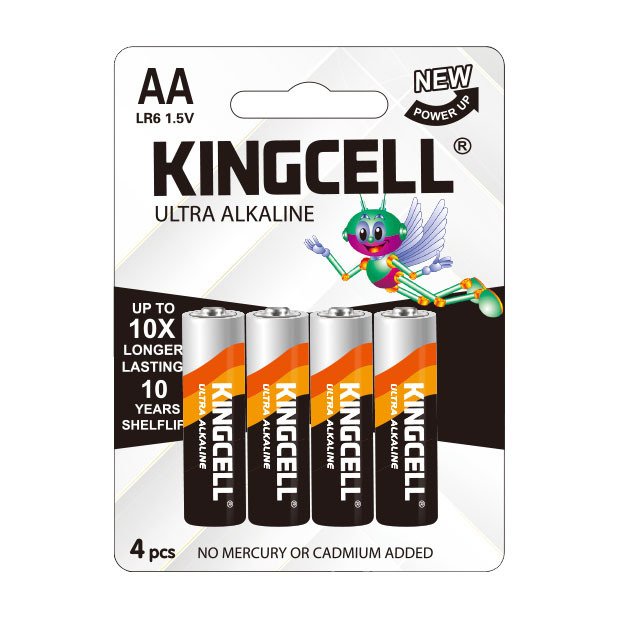
- The “L” Mark: Look for the LR prefix (e.g., LR6 for AA, LR03 for AAA). A battery marked only as R6 is a standard zinc-carbon unit.
- The Weight Test: High-energy alkaline batteries are denser. A standard AA alkaline cell should weigh approximately 24g, whereas a zinc-carbon cell weighs around 18g.
- Structural Groove: Professional alkaline batteries produced on high-speed lines (like our Canadian HIBAR lines) feature a distinct annular groove near the positive cap, a hallmark of superior sealing technology.
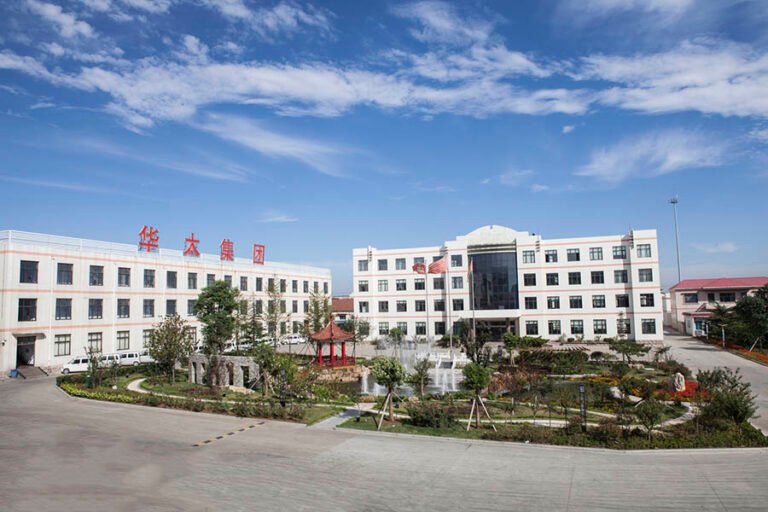
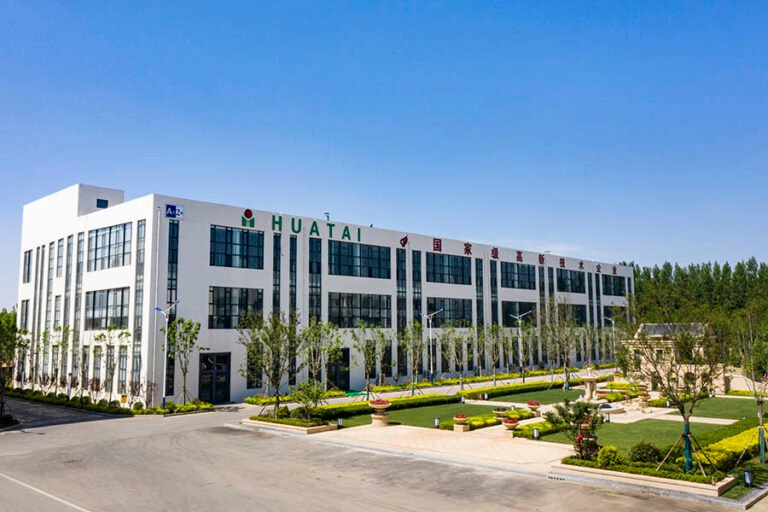
山东华泰新能源电池有限公司., established in 1993 and headquartered near Qingdao Port, has evolved into the world’s largest manufacturer of 锌碳电池 and a global leader in high-performance alkaline battery solutions. With an annual capacity of 6 billion units, Huatai leverages world-class Canadian HIBAR high-speed lines to deliver ultra-precision energy solutions for global OEM/ODM partners. This article explores the technical trajectory from the 1868 Leclanché cell to modern mercury-free alkaline systems, detailing the structural differences between R (zinc-carbon) and LR (alkaline) models. As an ISO-certified “National High-Tech Enterprise,” Huatai combines 70 years of manufacturing heritage with a “Customer First” philosophy, serving over 80 countries with eco-friendly, high-density power for toys, medical devices, and professional electronics.
1. Long Development History of Alkaline Batteries
Today, 碱性电池 can be seen everywhere in daily life. However, their widespread use is the result of a long and continuous process of technological evolution driven by battery manufacturers, factories, and research institutions worldwide.
In 1868, French engineer Georges Leclanché invented the first zinc–manganese wet battery, laying the foundation for modern dry batteries. In 1886, Gassner developed the prototype of the dry battery, significantly improving portability and making large-scale industrial production possible. This marked the early stage of battery manufacturing.
As technology and electrical appliances advanced, ordinary zinc-manganese batteries gradually failed to meet growing market demands. More than 100 years ago, researchers proposed a new battery system using zinc as the negative electrode, manganese dioxide (MnO₂) as the positive electrode, and potassium hydroxide (KOH) or sodium hydroxide (NaOH) as the electrolyte.
The long research and development process mainly focused on four key technical breakthroughs:
Replacing sheet zinc electrodes with powdered porous zinc electrodes
Adopting a reverse polarity structure
Improving zinc stability through zinc powder amalgamation and ZnO additives
Enhancing sealing structures and sealing materials to prevent leakage
It was not until the 1950s that the 碱性电池 was successfully commercialized based on zinc–manganese dry battery technology. This innovation, now widely adopted by alkaline battery factories and OEM manufacturers, doubled battery performance compared with ordinary dry batteries.
Alkaline batteries feature:
High capacity
Suitability for continuous high-current discharge
Excellent low-temperature performance
Long storage life
Strong leak-proof performance
In the late 1980s, growing environmental awareness triggered intensive research into mercury-free alkaline batteries. By the mid-1990s, mercury-free alkaline batteries had fully entered the global market, becoming the industry standard for responsible battery manufacturers.
Looking ahead, with the rapid development of electronic devices, alkaline battery manufacturers are focusing on:
Higher energy density
Longer shelf life
High-power, heavy-duty discharge performance
2. Introduction to Basic Types of Zinc–Manganese and Alkaline Batteries
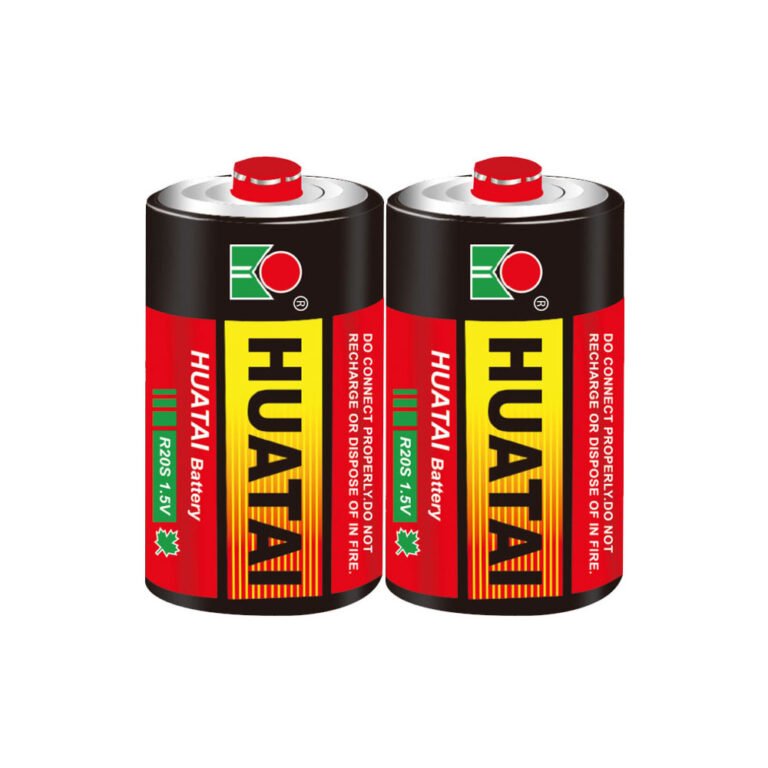
2.1 Zinc–Manganese Paste Batteries (e.g., R20S)
This type of battery uses low-activity manganese dioxide as the cathode material, with a paste layer separator. The zinc cylinder serves both as the container and the negative electrode.
Characteristics:
Low capacity
High risk of leakage at end of life
低成本
These batteries are mainly produced by low-cost battery factories for basic applications.
2.2 High-Capacity Cardboard Batteries (e.g., R6C, R20C)
These batteries replace the paste layer with paper pulp separators, increasing the amount of active material.
Characteristics:
Higher capacity than paste batteries
Suitable for small-current discharge
Commonly known as C-type or ammonium-type batteries
2.3 High-Power Cardboard Batteries (e.g., R6P, R20P)
These batteries mainly use electrolytic manganese dioxide 和 zinc chloride electrolyte.
Characteristics:
Much higher capacity than ordinary batteries
Good leakage resistance
Suitable for high-current continuous discharge
Often referred to as P-type or zinc-type batteries
2.4 High-Energy Alkaline Batteries (e.g., LR6, LR03)
High-energy alkaline batteries represent the highest performance level among disposable batteries and are the core products of professional alkaline battery manufacturers and OEM factories.
Key features include:
Electrolytic manganese dioxide cathode
Granular zinc powder anode
Potassium hydroxide electrolyte
Nickel-plated steel shell
The capacity of alkaline batteries is 3–7 times higher than ordinary batteries of the same size. They support continuous high-current discharge and offer excellent leak resistance, making them the preferred choice for modern electronic devices.
3. Shelf Life and Storage Performance of Alkaline Batteries
Shelf life refers to the period during which a battery is guaranteed to meet performance standards under proper storage conditions. All batteries experience some degree of self-discharge during storage.
According to industry standards followed by battery manufacturers:
After 12 months, alkaline battery capacity loss should not exceed 20%
High-quality alkaline batteries may limit capacity loss to 10% or less
This makes alkaline batteries ideal for long-term storage and global distribution by battery suppliers and exporters.
4. Differences Between Alkaline Batteries and Ordinary Dry Batteries
4.1 Logo Identification
碱性电池 are marked with LR (e.g., LR6 = AA, LR03 = AAA) and clearly labeled “ALKALINE”
Ordinary dry batteries are marked with R (e.g., R6P, R03C)
4.2 Structural Differences
Alkaline batteries feature an annular groove near the positive terminal, while ordinary dry batteries typically do not. This difference comes from distinct sealing technologies used by battery factories.
4.3 Weight Difference
Alkaline batteries are noticeably heavier due to higher material density:
AA alkaline battery: approx. 24 g
AA ordinary battery: approx. 18 g
4.4 Model Code Explanation
R = round battery
L before R = alkaline battery
Numbers (e.g., 03, 6,12,20) = battery size
Final letter:S = standard;P = high power;C = high capacity
5. Consumer Awareness and Market Advice
In daily life, many consumers confuse ordinary dry batteries with alkaline batteries. Because alkaline batteries offer higher capacity and longer service life, they are more expensive. Some small vendors may misleadingly sell ordinary batteries as alkaline batteries.
Consumers are advised to:
Check the LR marking and “ALKALINE” label
Compare weight and structure
Purchase from reliable battery manufacturers, factories, or authorized suppliers

Professional Strategic FAQ
请回答: Our scale is our greatest asset. With an annual production volume exceeding 3.6 billion pieces and more than 40 automated production lines, we provide a “Best Value” guarantee. Many global household brands outsource to us because we self-supply core components, ensuring quality control at the source and logistical advantages via our proximity to Qingdao Port.
请回答: HIBAR technology is the global gold standard for alkaline battery manufacturing. These high-speed ultra-precision lines allow us to produce batteries at 800 pcs/min with extreme consistency. This automation ensures that every cell meets the tight tolerances required for high-tech electronic devices.
请回答: Environmental stewardship is non-negotiable. All Huatai alkaline products have been mercury-, cadmium-, and lead-free since the mid-1990s. We are ISO14001 qualified and BSCI certified, ensuring our manufacturing processes meet the strict environmental and social audit standards required for export to Europe and North America.
请回答: We offer specialized solutions beyond standard sizes. Our zinc-air cells are high-density options for hearing aids, while our 27A and 23A Hi-Volt alkaline batteries are designed for remote car keys and security systems. This diverse portfolio allows us to be a “one-stop shop” for global battery suppliers.
请回答: Developed in our R&D center, this proprietary technology uses optimized sealing materials and structural grooves to prevent electrolyte leakage even at the end of the battery’s life or during long-term storage (up to 10 years). This is critical for preventing damage to expensive electronic equipment.
请回答: We follow a “Service Foremost” philosophy. We provide full private-label manufacturing and customized packaging solutions. To help our partners succeed in their local markets, we offer value-added marketing assets such as branded umbrellas, fans, and shopping bags, fostering long-term relationships rather than just one-time transactions.
请回答: In technical coding, Alkaline batteries are identified by the “L” prefix. For instance, while standard zinc-carbon batteries are labeled as R20, R14, R6, or R03, their alkaline counterparts are LR20, LR14, LR6 (AA), and LR03 (AAA). Alkaline batteries offer significantly higher energy density and are designed for high-drain devices like toys and flashlights, whereas zinc-carbon is suited for low-drain items like remote controls.
结论
From early zinc–manganese batteries to today’s high-performance mercury-free alkaline batteries, the industry has undergone more than a century of innovation. Modern alkaline battery manufacturers and factories continue to focus on energy density, durability, safety, and environmental responsibility, ensuring that alkaline batteries remain one of the most reliable disposable power solutions worldwide.
华泰电池简介
山东临沂华太新能源电池有限公司. 公司成立于 1993 年 5 月,但我们工厂的历史可以追溯到 1956 年临沂电池厂的成立。 领先的环保无汞碱性电池制造商 和 锂电池制造商 在中国和 全球最大的重型锌碳电池制造商和工厂.我们的产品采用 华太,电源闪光 和 金赛尔 品牌和客户的自有品牌,年产量达到 60 亿个 HIBAR 高速自动化生产线, 提供 OEM 解决方案 欲了解更多信息,请继续关注我们的 新闻版块, 其中涵盖了最新的 公司新闻 和 行业新闻.我们还提供 一站式产品目录服务 为客户服务。.