English
  Spanish
  French
  Arabic
  Portuguese
  Russian
  Chinese
 A Strategic Resilience Analysis
An in-depth analysis of how the Strait of Hormuz disruption impacts global battery manufacturing costs, raw material supply, and shipping logistics—and why Shandong Huatai Battery‘s vertical integration provides supply chain resilience for international distributors.
The ongoing maritime blockade and security crisis in the Strait of Hormuz have moved far beyond a regional geopolitical bottleneck. While mainstream media attention remains focused on crude oil volatility and LNG supply shocks, global industrial manufacturing—particularly the consumer battery sector—is facing a multi-layered cost and logistics challenge.

As a primary dry cell and advanced energy solution manufacturer, Shandong Huatai New Energy Battery Co., Ltd. presents this strategic analysis examining how Middle Eastern logistics disruptions cascade into the battery supply chain, and how integrated manufacturing platforms provide essential stability for international distributors.
Macroeconomic Transmission: How a Chokepoint Disruption Reaches Battery Manufacturing
The Strait of Hormuz connects the Persian Gulf to the Gulf of Oman and the wider Indian Ocean, serving as a key transit corridor for global energy and industrial raw materials. A disruption at this point triggers a multi-tiered cost transmission mechanism across the manufacturing sector:
| Transmission Stage | Primary Crisis Driver | Direct Impact on Manufacturing |
| Stage 1: Primary Shocks | Geopolitical Blockade at Hormuz | Spikes in crude oil and natural gas prices; vessel rerouting around Africa (+10-14 days). |
| Stage 2: Upstream Strain | Resource & Chemical Bottlenecks | Tightened global supply of primary aluminum (10% global capacity in Persian Gulf) and petrochemical resins (PE/PVC/Nylon). |
| Stage 3: Factory Overhead | Cost Inflation on Component Inputs | Higher prices for steel casings, nylon sealing rings, polymer gaskets, and factory processing power. |
| Stage 4: Landed Price Inflation | Cumulative Logistics Surcharges | War-risk insurance premiums, bunker adjustment factors, and extended transit container fees pushed onto final product prices. |
Battery manufacturing sits at the intersection of energy, metallurgy, and petrochemicals. When one system experiences inflation, the cumulative impact affects the final delivered price:
Metallurgical and Component Constraints: The Persian Gulf represents roughly ten percent of global primary aluminum capacity. Interruptions directly affect aluminum foil production (critical for lithium-ion collectors and structural casing elements). Similarly, global steel processing and zinc refining incur higher energy overheads.
Petrochemical Auxiliaries: Primary dry cells (such as AA/AAA alkaline batteries and carbon-zinc batteries) rely heavily on specialized polymer components, including nylon insulating rings, PVC shrink sleeves, and dual-sealing gaskets. Tightened supply in Middle Eastern petrochemical intermediates like Monoethylene Glycol (MEG) pushes component prices upward.
Freight and Route Rerouting: With commercial traffic through Hormuz severely curtailed, major ocean carriers have rerouted vessels around the Cape of Good Hope. This adds 10 to 14 days of transit time between Asia, Europe, and Africa, while driving up container freight rates, war-risk insurance premiums, and port congestion fees.
Battery Chemistry Vulnerability Analysis
The current macroeconomic environment highlights structural differences in how distinct battery categories absorb cost shocks:
| Operational Dimension | Lithium-Ion Power Packs | Standard Primary Dry Cells (Alkaline / Heavy Duty) | Huatai Strategic Resilience Positioning |
| Raw Material Dependency | High (Refined Lithium, Cobalt, Nickel, Battery-Grade Aluminum Foil) | Moderate (Zinc, Electrolytic Manganese Dioxide, Steel Casing, Polymers) | High localized sourcing within domestic Shandong and broader Chinese supply chains |
| Logistics Sensitivity | High sensitivity to airfreight caps and specialized hazardous cargo surcharges | Standardized Full Container Load (FCL) shipping; high reliance on predictable schedules | Standardized FCL export logistics with priority carrier allocations |
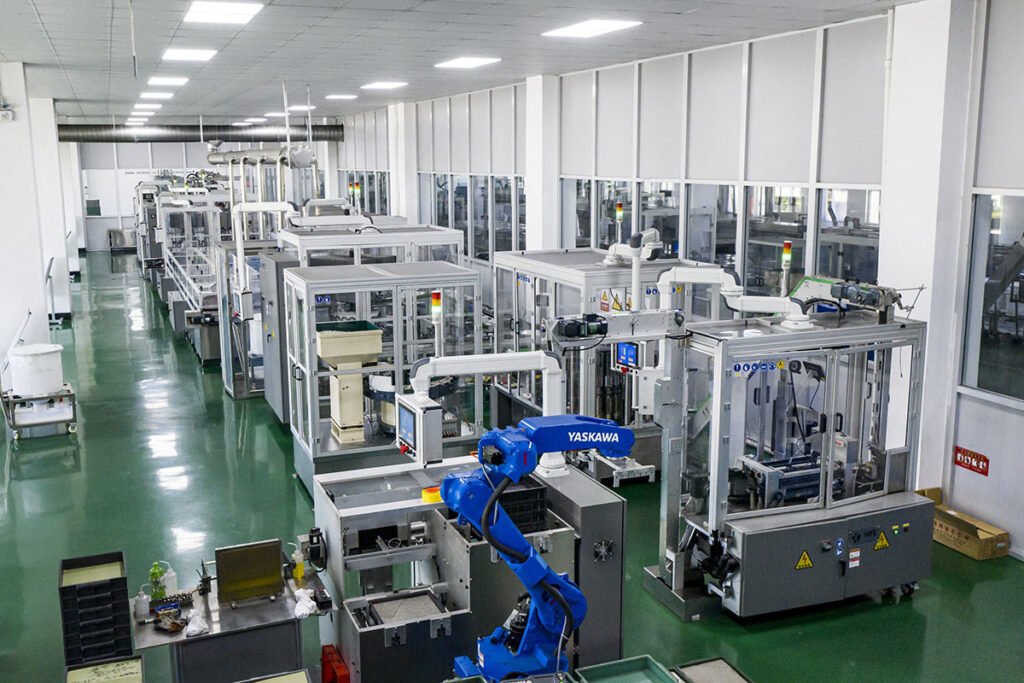
| Manufacturing Overhead | External petrochemical inputs for separators, binders, and battery management systems | High-speed automated assembly lines (e.g., Canadian HIBAR systems) | In-house component manufacturing and automated Dual-Sealing Technology |
Huatai Battery’s Strategic Advantage: Vertical Integration & Automation
During stable market cycles, vertical integration is primarily a cost-efficiency mechanism. During global supply shocks, it becomes a crucial risk-management tool.
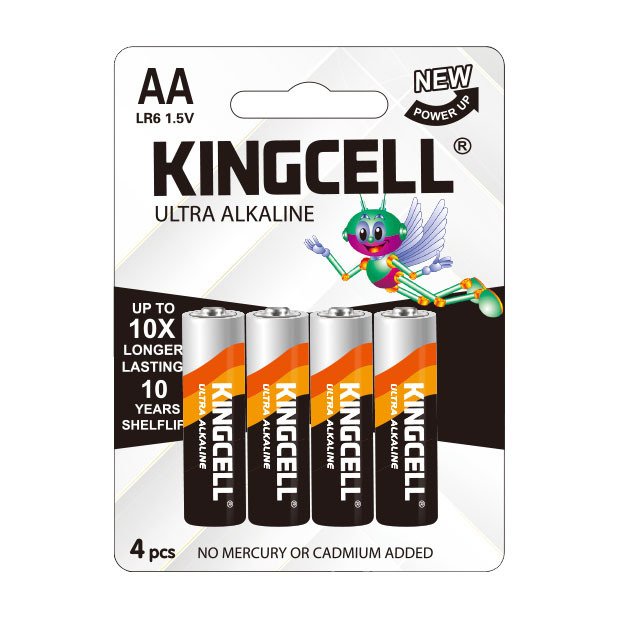
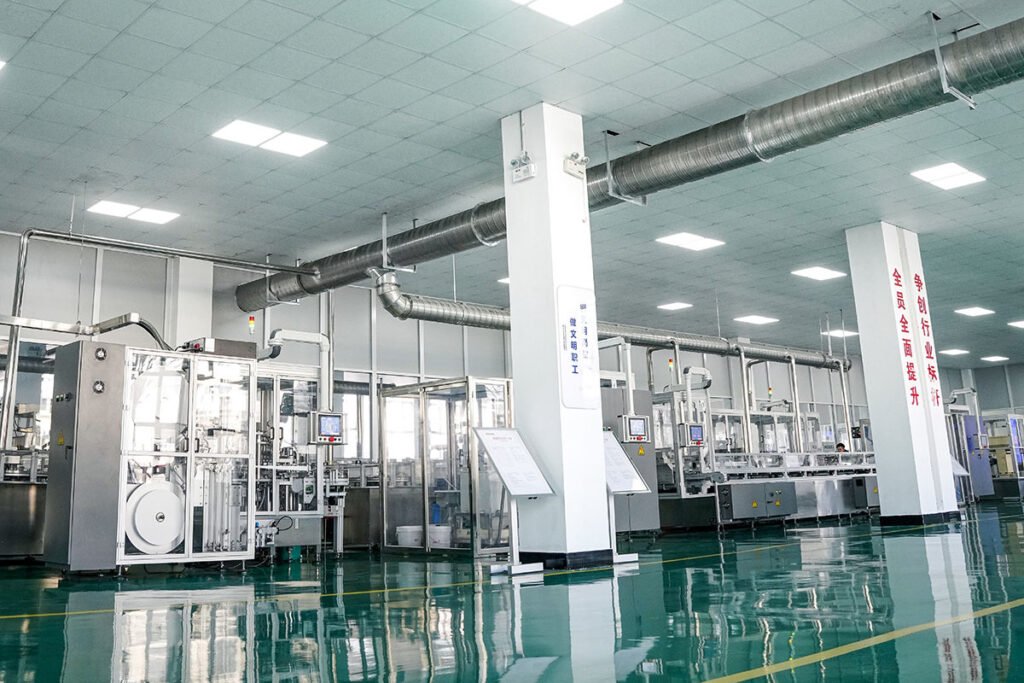
Tracing its manufacturing origins back to the Linyi Battery Plant established in 1956, Shandong Huatai New Energy Battery Co., Ltd. operates over 40 modern production lines and 7 specialized component facilities, delivering an annual output exceeding 6 billion batteries across carbon-zinc (R20, R14, R6, R03, 6F22), alkaline (LR20, LR14, LR6, LR03, 6LR61), and lithium series.
| Core Pillar | Operational Capability | Strategic Risk Mitigation |
| In-House Component Production | Self-manufactured zinc cans, carbon rods, and specialized hardware. | Prevents production halts caused by third-party component bottlenecks. |
| Domestic Material Sourcing | Direct partnerships for high-purity Chinese EMD and quality steel. | Eliminates exposure to international raw material import disruptions. |
| High-Speed Line Automation | Canadian HIBAR precision lines operating up to 800 pcs/min. | Distributes fixed factory overhead to absorb per-unit raw material inflation. |
| Advanced Quality Sealing | Proprietary automated Dual-Sealing Technology | Guarantees up to 10-year shelf life under extended ocean transit thermal stress. |

Tactical Procurement Recommendations for Global Distributors
As geopolitical volatility reshapes international trade routes, the traditional procurement metric of selecting the lowest FOB price is no longer sufficient. International buyers in Africa, the Middle East, Europe, and Latin America must transition toward evaluating total cost of ownership (TCO) and supply chain resilience.
| Strategic Procurement Dimension | Traditional Procurement Focus | Resilient Procurement Focus (Recommended) |
| Core Evaluation Metric | Lowest factory FOB unit price | Delivered landed cost and supply security |
| Inventory Planning | Minimal safety stock (Just-In-Time) | 30-to-45-day strategic buffer inventory |
| Supplier Selection | Single-source or small-scale assemblers | High-volume direct factories with vertical integration |
| Container Logistics | Spot-market LCL/FCL booking | High-density FCL load optimization under priority carrier contracts |

Frequently Asked Questions (FAQ)
Q1: How does a maritime crisis in the Middle East directly affect battery manufacturing costs in China?
A1: The impact cascades through interconnected commodity and logistics channels. Middle Eastern disruptions elevate crude oil and natural gas prices, which directly increases the costs of energy-intensive materials like steel and processed manganese, as well as essential petrochemical inputs like nylon insulating gaskets and PVC sleeves. Additionally, extended shipping routes around Africa add significant freight and insurance surcharges to the final delivered cost.
Q2: Why are primary dry cells (Carbon-Zinc and Alkaline) better positioned to withstand global supply shocks than specialized lithium batteries?
A2: Primary dry cells rely primarily on localized industrial materials like electrolytic manganese dioxide, high-purity zinc, and steel, which can be entirely sourced within domestic supply chains in China. In contrast, specialized lithium batteries depend heavily on globally traded refined metals (lithium, cobalt, nickel) and specialized battery-grade aluminum foil, making them more vulnerable to international commodity spikes.
Q3: How does Huatai’s vertical integration protect overseas buyers from market volatility?
A3: By operating 7 specialized component facilities that manufacture crucial inputs such as zinc cans and carbon rods in-house, Huatai reduces its reliance on third-party suppliers. This structural independence prevents production halts during external material shortages and allows Huatai to absorb short-term market shocks better than pure assembly operations.
Q4: What role does high-speed automated production play during periods of high inflation?
A4: Automation maximizes material utilization and dramatically reduces defect rates. Operating Canadian HIBAR precision lines at speeds of up to 800 pieces per minute allows Huatai to distribute fixed factory overhead over an annual output of 6 billion units, mitigating the margin-squeezing effects of rising raw material prices.
Q5: How can international distributors mitigate the risk of ocean shipping delays and freight surcharges?
A5: Overseas buyers should transition from spot-market ordering to strategic inventory planning. Key tactics include extending order lead times by 30 to 45 days, standardizing orders on high-density 20ft/40ft Full Container Loads (FCL) to minimize per-unit freight overhead, and partnering with direct manufacturers with priority carrier allocations.
Q6: Why is product leakage resistance even more critical during geopolitical shipping disruptions?
A6: Vessel rerouting around the Cape of Good Hope adds 10 to 14 extra days in transit, often exposing cargo to extended periods of high thermal stress and humidity at sea. Huatai’s automated Dual-Sealing Technology ensures structural seal integrity, protecting the battery’s 10-year shelf life and preventing costly inventory degradation before reaching the destination market.
Conclusion: Moving From Unit Price Competition to Supply Resilience
The ongoing Strait of Hormuz crisis provides a critical lesson for the international battery trade: supply security and manufacturing resilience are fundamental components of long-term commercial value. In a volatile macroeconomic environment, a distributor incurs far greater financial loss from a two-month inventory stock-out or compromised product quality than from a minor fluctuation in unit purchase price.
Through robust vertical integration, high-speed automated production, complete domestic sourcing, and localized component manufacturing, Shandong Huatai New Energy Battery Co., Ltd. demonstrates how scale and structural capability translate into commercial reliability. As the global market shifts its priority from basic unit cost to total supply chain stability, Huatai remains committed to serving as a resilient manufacturing partner for global distributors navigating complex market conditions.