English
 Spanish
 French
 Arabic
 Portuguese
 Russian
 Chinese
What the 2026 Anti-Dumping Case Means for Battery Manufacturers & Buyers
Why is the EU investigating Chinese alkaline batteries in 2026? Learn about the VARTA complaint, alleged dumping, Chinese battery competitiveness, EU industry concerns and what the case means for Huatai Battery and European buyers.
The European Commission officially launched an anti-dumping investigation on 2 July 2026 concerning imports of cylindrical, non-rechargeable alkaline manganese dioxide primary cells and batteries originating in China. The proceeding followed a complaint submitted on 18 May 2026 by VARTA Consumer Batteries GmbH & Co. KGaA, on behalf of the Union industry. The investigation covers imports currently classified under CN code 8506 10 11 and will determine whether Chinese alkaline batteries are being dumped and whether those imports have caused injury to the EU battery industry.
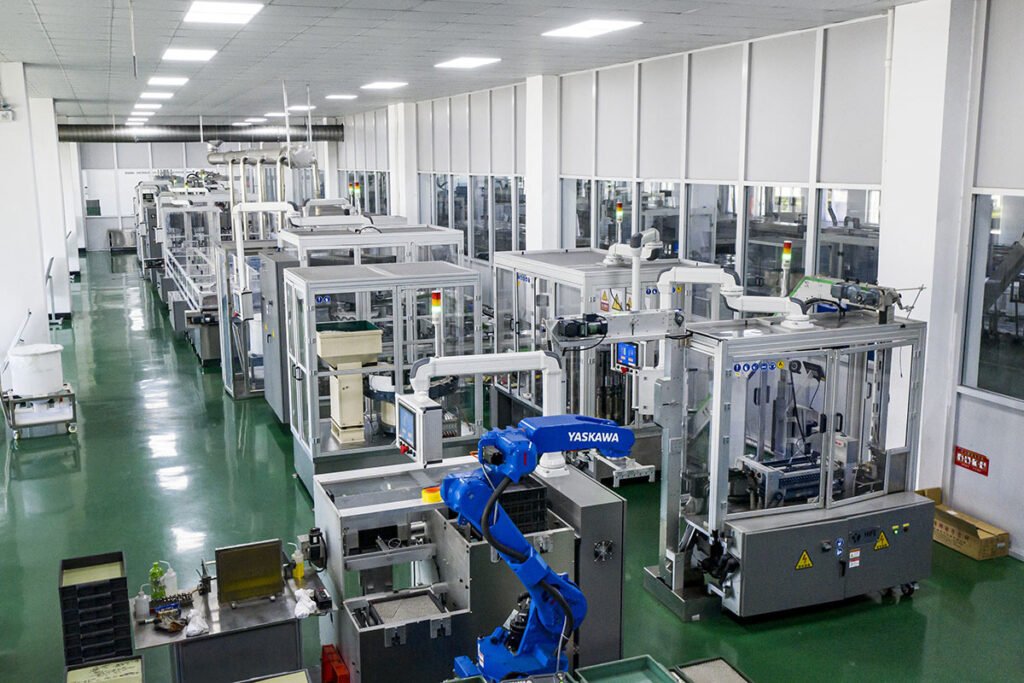
From the perspective of Shandong Huatai New Energy Battery Co., Ltd., the case should not simply be interpreted as a question of whether Chinese alkaline batteries are “cheap” or whether European batteries are “expensive.” It is better understood as a combination of international price competition, manufacturing scale, supply-chain structure, raw-material costs, market share, European industrial competitiveness and EU trade-defense policy. For Chinese alkaline battery manufacturers and European importers, distributors and private-label buyers, the investigation could become an important turning point for the European primary battery market.
What Exactly Is the EU Investigating?
The scope of the current investigation is relatively specific.
The European Commission is examining primary cells and primary batteries using alkaline manganese dioxide chemistry, in cylindrical, non-rechargeable form. The investigation does not simply cover every type of battery manufactured in China.
This distinction is important for international battery buyers.
Products such as:
- AA alkaline batteries
- AAA alkaline batteries
- C alkaline batteries
- D alkaline batteries
- 9V alkaline batteries
may fall within the relevant product category depending on their technical form and customs classification.
By contrast, carbon zinc batteries, rechargeable NiMH batteries, lithium primary batteries, lithium-ion batteries and LiFePO4 battery systems are chemically and commercially different product categories and should not automatically be treated as part of this particular investigation.
For procurement departments, therefore, the first step is to determine whether the specific product being imported actually falls within the investigation scope.

Who Initiated the Anti-Dumping Investigation?
The investigation was initiated following a complaint from VARTA Consumer Batteries GmbH & Co. KGaA, a German battery producer.
According to the European Commission’s official notice, VARTA submitted the complaint on 18 May 2026 on behalf of the Union industry producing alkaline manganese dioxide primary cells and batteries. The Commission subsequently concluded that there was sufficient evidence to justify opening an investigation under the EU’s basic anti-dumping regulation.
This does not mean that the EU has already determined that Chinese battery manufacturers have dumped products.
That distinction is critical.
At the current stage:
Complaint → Investigation → Evidence assessment → Provisional findings → Possible measures → Final determination
The investigation is still a legal and economic process rather than a final finding of wrongdoing.
Why Are Chinese Alkaline Batteries Competitive in Europe?
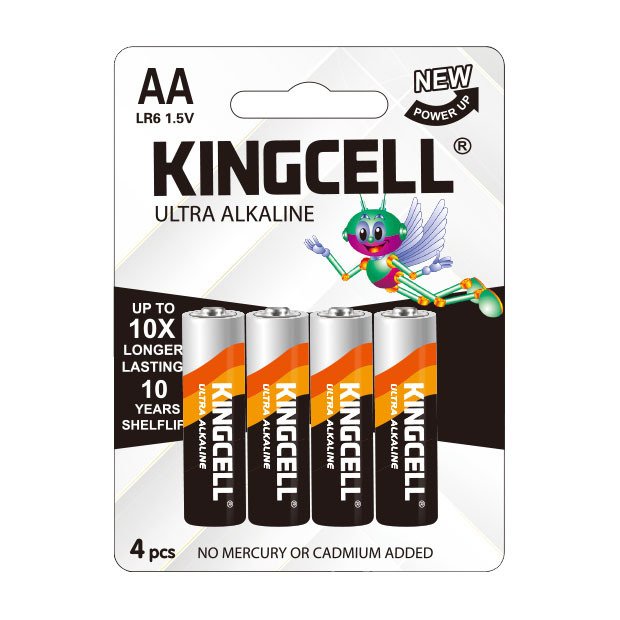
From Huatai Battery’s manufacturing perspective, Chinese alkaline batteries have several structural advantages.
Large-Scale Manufacturing
China has developed a mature primary battery manufacturing ecosystem covering:
- Electrolytic manganese dioxide
- Zinc materials
- Steel components
- Separators
- Sealing materials
- Battery assembly
- Packaging
- Automation equipment
- Testing equipment
- Logistics
- OEM/private-label production
Large factories can spread fixed production costs across very high output volumes.
For a product such as an AA alkaline battery, where the unit selling price is relatively low, manufacturing efficiency has a significant influence on the final cost.
High-Speed Automated Production
Modern battery manufacturing increasingly relies on automated assembly and quality-control systems.
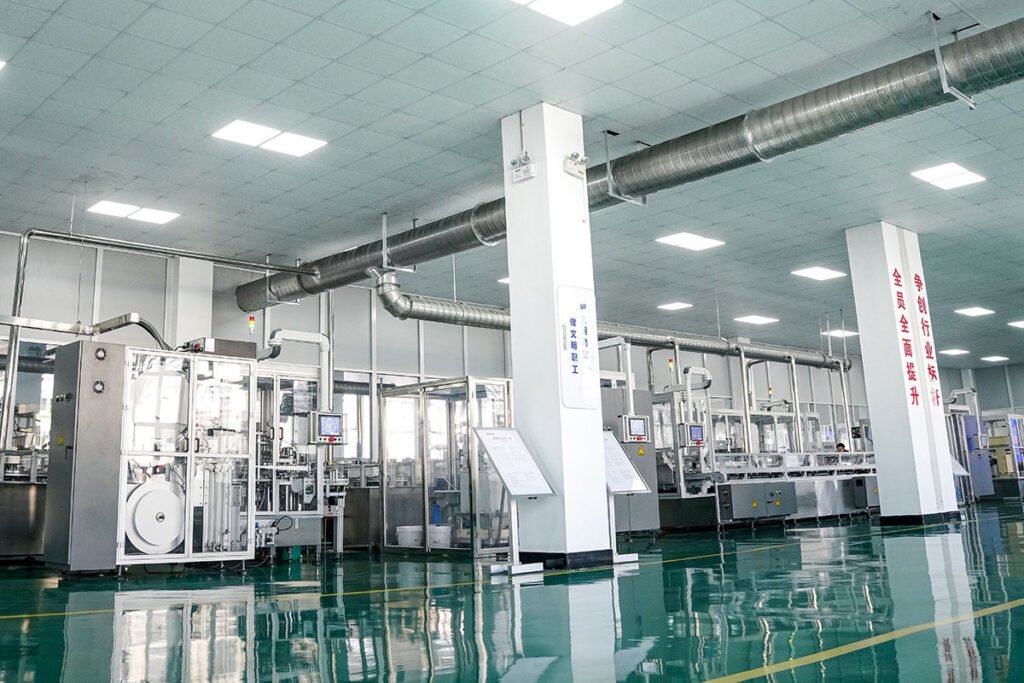
Huatai has invested in advanced HIBAR automated battery production technology, together with large-scale production lines for carbon zinc and alkaline batteries.
This type of production infrastructure can improve:
- Production consistency
- Labor productivity
- Production speed
- Material utilization
- Quality control
- Cost efficiency
- Large-volume order fulfillment
The competitive advantage therefore does not come simply from paying lower wages.
It comes from the interaction of scale + automation + supply chain + engineering experience + procurement efficiency + manufacturing utilization.
Is the EU Saying Chinese Alkaline Batteries Are Too Cheap?
This requires careful wording.
The EU investigation is examining allegations of dumping and whether Chinese imports have caused injury to the Union industry. The Commission’s notice says the complainant provided evidence that Chinese imports increased in absolute terms and market share, while import volumes and prices allegedly had negative effects on the quantities sold, prices and market share of the Union industry.
The Commission also states that the complainant alleged significant distortions affecting prices and costs in China.
Under the EU’s anti-dumping methodology, the Commission may examine whether domestic prices and costs in the exporting country are appropriate for determining normal value. In this case, the complaint argued that significant distortions exist and proposed Thailand as a representative country for constructing normal value.
This is an important point for Chinese manufacturers.
The legal question is not simply:
“Is the Chinese battery cheaper?”
It is closer to:
Is the export price unfairly low when assessed under EU anti-dumping rules, and have the allegedly dumped imports caused material injury to the EU industry?
That is a much more precise question.

What Does the EU Mean by “Significant Distortions”?
The Commission’s notice records allegations concerning factors including:
- State presence
- Energy
- Land
- Capital
- Raw materials
- Labour
- Government influence
- Upstream industrial policy
The complaint also referred to the role of the China Industrial Association of Power Sources and the China Battery Industry Association, and alleged state influence in parts of the battery supply chain. The Commission considered that there was sufficient evidence to justify investigating the allegations.
This is particularly relevant because alkaline batteries depend heavily on upstream raw materials.
The complaint specifically identifies electrolytic manganese dioxide (EMD) as an important input and alleges that EMD represents more than 17% of production cost for the investigated product. It also raises alleged raw-material price distortions involving EMD.
This means that the case is not only about finished AA or AAA batteries.
It also involves the economics of the upstream battery-material supply chain.

Why Manufacturing Scale Matters So Much in the Alkaline Battery Industry
Alkaline batteries are mature products.
The basic chemistry has been commercialized for decades.
Consequently, competition is not primarily about inventing a completely new battery chemistry every year.
Instead, manufacturers compete through:
Energy performance + leakage resistance + consistency + production efficiency + quality control + packaging + logistics + cost per unit.
For example, an international buyer purchasing millions of AA batteries does not evaluate only the factory quotation.
The buyer may also consider:
| Purchasing Factor | Why It Matters |
| Unit price | Determines retail and distributor margins |
| Capacity | Affects runtime and product positioning |
| Discharge performance | Determines actual product value |
| Leakage resistance | Protects consumers’ equipment |
| Shelf life | Important for inventory management |
| Production capacity | Reduces supply interruption risk |
| Certification | Supports EU market access |
| OEM capability | Allows private-label branding |
| Packaging | Supports retail positioning |
| Delivery reliability | Reduces inventory risk |
| Quality consistency | Reduces customer complaints |
This is where large Chinese battery manufacturers can be highly competitive.

Why European Battery Manufacturers Face a Different Cost Structure
European battery manufacturing operates within a different economic environment.
European producers generally face substantial costs related to:
- Labour
- Energy
- Environmental compliance
- Occupational safety
- Industrial property
- Regulatory reporting
- Waste management
- Sustainability requirements
None of these factors automatically proves that European production is uncompetitive or that Chinese products are unfairly priced.
However, they do help explain why manufacturing cost structures can differ significantly between China and Europe.
The current EU investigation is essentially testing whether those differences, together with the alleged pricing behavior of Chinese exporters, amount to dumping that has injured the Union industry.
Chinese Alkaline Battery Competitiveness Is More Than a Price Advantage
This point is particularly important from Huatai’s perspective.
International buyers often describe Chinese batteries as “cheap.”
That is an incomplete description.
A competitive Chinese battery manufacturer can offer a combination of:
High production volume + automated manufacturing + mature supply chain + engineering expertise + flexible OEM services + competitive logistics + multiple product categories.
For Huatai, this manufacturing model has developed over decades.
The company traces its battery manufacturing history back to the Linyi Battery Factory established in 1956 and began developing alkaline battery production in the early 2000s.
Today, Huatai’s product portfolio extends across:
- Carbon zinc batteries
- Heavy Duty batteries
- Super Heavy Duty batteries
- Alkaline batteries
- AA batteries
- AAA batteries
- C batteries
- D batteries
- 9V batteries
- Button batteries
- Lithium batteries
- NiMH rechargeable batteries
- USB rechargeable batteries
- LiFePO4 batteries
- Energy storage products
This broader manufacturing structure can provide international customers with a more integrated sourcing solution.

How Could the Investigation Affect European Battery Buyers?
European buyers should not assume that an investigation automatically means that a large tariff will immediately apply.
The European Commission states that the investigation will determine whether dumping exists, whether injury has been caused, and whether measures would be in the Union interest.
The Commission also states that provisional measures may be imposed within the applicable statutory timetable, while the investigation is expected to be completed within one year and no later than 14 months from publication of the notice.
This creates several potential scenarios for importers.
Scenario 1: No Anti-Dumping Measures
If the investigation does not establish the necessary legal conditions, the case could conclude without definitive anti-dumping duties.
Scenario 2: Provisional Measures
The Commission could impose provisional measures during the investigation if the legal requirements are satisfied.
Scenario 3: Definitive Measures
If the investigation ultimately confirms dumping, injury and the required causal relationship, definitive anti-dumping measures could potentially be imposed.
The final outcome should therefore not be predicted before the investigation is completed.
What Should Chinese Alkaline Battery Manufacturers Do?
For Chinese battery manufacturers, the investigation is a warning that international competitiveness cannot depend only on low prices.
Manufacturers exporting to Europe should strengthen:
1. Cost transparency
Factories need accurate production-cost data and reliable accounting systems.
2. Production records
Manufacturing records, raw-material purchasing records, sales contracts and export documentation should be properly maintained.
3. Product traceability
Each product specification should have clear information regarding:
- Model
- Chemistry
- Production batch
- Materials
- Packaging
- Destination market
4. Compliance management
European customers increasingly expect documentation related to:
- RoHS
- REACH
- Battery Regulation requirements
- Safety documentation
- Product testing
- Environmental compliance
5. Technical differentiation
Chinese factories should compete on:
- Leakage resistance
- Discharge performance
- Shelf life
- Quality consistency
- Automation
- OEM capability
- Supply stability
rather than simply lowering the quotation.

What Does This Mean for Huatai Battery?
For Huatai, the European market represents a long-term strategic market rather than a short-term price opportunity.
The company has several characteristics that are particularly relevant in the current environment.
Large-Scale Production
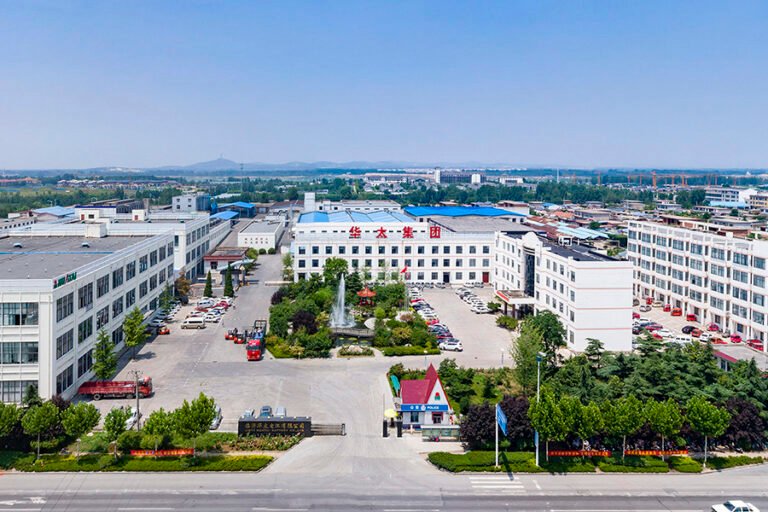
Huatai operates a large-scale manufacturing system covering carbon zinc, alkaline and lithium battery products.
Its overall battery production capability is measured in billions of units annually, providing the scale required for major international B2B contracts.
HIBAR Automated Production
The company has introduced advanced Canadian HIBAR automated production technology into its manufacturing system.
For high-volume alkaline battery orders, automation supports consistent manufacturing and scalable production.
Leakage Protection
Leakage is one of the most important quality concerns for primary batteries.
Huatai has developed dual-sealing and leakage-control technologies for its battery products, with the goal of improving long-term storage and reducing leakage-related customer complaints.
OEM and Private Label
European importers do not necessarily want to sell a Chinese manufacturer’s brand.
Many need:
Private label alkaline batteries manufactured in China.
Huatai can therefore provide OEM/private-label services covering:
- AA alkaline batteries
- AAA alkaline batteries
- C batteries
- D batteries
- 9V batteries
- Carbon zinc batteries
- Button batteries
- Other battery products
Multi-Category Supply
A European distributor may purchase both carbon zinc and alkaline batteries.
Another customer may need alkaline batteries plus button batteries.
A larger customer may require primary batteries and rechargeable products.
A multi-category battery manufacturer can therefore reduce sourcing complexity.

The European Battery Market May Become More Selective
One possible long-term consequence of the investigation is that European buyers may place greater emphasis on supplier compliance and manufacturing transparency.
The cheapest supplier may not always be the lowest-cost supplier after considering:
- Tariffs
- Customs
- Compliance
- Quality claims
- Leakage returns
- Inventory losses
- Delivery delays
- Documentation
- Regulatory risk
This creates an important distinction between:
Low Price
and
Low Total Cost of Ownership.
For professional battery distributors, the second metric is usually more meaningful.
A battery that costs slightly more but has better leakage resistance, stable discharge performance, reliable delivery and complete documentation can produce a better commercial result than a battery purchased at the lowest initial price.

Is the EU Anti-Dumping Investigation Bad News for Chinese Battery Manufacturers?
Not necessarily.
It is certainly a commercial and regulatory challenge, but it can also push the industry toward a more mature model.
Chinese battery manufacturers that rely primarily on low prices may face greater pressure.
Manufacturers with:
- Strong production systems
- Reliable quality
- Transparent documentation
- International certifications
- OEM capability
- Stable supply chains
- Long-term customer relationships
may be better positioned to adapt.
For Huatai, this reinforces a strategy that has already been developing for years:
From low-cost manufacturing to high-value manufacturing.
The objective is not simply to sell an AA battery at the lowest possible price.
The objective is to provide European customers with a competitive battery supply solution.

FAQ: EU Anti-Dumping Investigation into Chinese Alkaline Batteries
Why did the EU start an anti-dumping investigation into Chinese alkaline batteries?
The European Commission initiated the investigation after VARTA Consumer Batteries GmbH & Co. KGaA submitted a complaint alleging that Chinese-origin alkaline manganese dioxide batteries were being dumped and causing injury to the Union industry. The Commission found sufficient evidence to open the proceeding, but the final determination has not yet been made.
Does this mean Chinese alkaline batteries have already been found to be dumped?
No. The July 2026 announcement is an investigation initiation, not a final dumping determination. The Commission must investigate dumping, injury and causation before deciding whether definitive measures are justified.
Which batteries are covered by the 2026 EU investigation?
The investigation concerns cylindrical, non-rechargeable primary cells and batteries using alkaline manganese dioxide chemistry originating in China. The notice identifies CN code 8506 10 11 for information purposes, while the legal product scope is defined by the investigation notice itself.
Are carbon zinc batteries included in this investigation?
The investigation specifically concerns alkaline manganese dioxide primary cells and batteries. Carbon zinc batteries are a different electrochemical category and should not automatically be treated as covered by this case.
Will the EU definitely impose anti-dumping duties?
No. At this stage, that cannot be stated as a certainty. The investigation will determine whether the legal conditions for measures are satisfied and whether imposing measures would be in the Union interest.
Why are Chinese alkaline batteries so competitive in international markets?
Chinese competitiveness comes from a combination of manufacturing scale, mature supply chains, automation, material sourcing, engineering expertise, production efficiency and flexible OEM/private-label capabilities. Price is only one part of the overall advantage.
What should European importers do now?
Importers should identify whether their products fall within the investigation scope, monitor official EU announcements, review customs classifications and maintain accurate import documentation. For large-volume buyers, it is also sensible to evaluate alternative sourcing strategies and the total landed cost of different suppliers.
Can Huatai supply private-label alkaline batteries to European customers?
Huatai develops and manufactures alkaline batteries and other battery categories and provides OEM/private-label solutions. European customers can discuss product specifications, packaging, documentation and applicable market-compliance requirements directly with the company.

Conclusion: The Real Competition Is Moving From Price to Total Value
The 2026 EU anti-dumping investigation into Chinese alkaline batteries is an important development for the European primary battery market. It reflects a deeper structural issue: how should mature European battery manufacturing compete with China’s large-scale, highly integrated and cost-efficient manufacturing ecosystem?
The answer will ultimately depend on the evidence presented during the investigation, not on assumptions made by either side.
For Chinese manufacturers such as Huatai Battery, however, the strategic message is already clear.
The future of international battery competition cannot rely solely on offering the lowest factory price.
It will increasingly depend on:
Manufacturing scale + product quality + leakage resistance + automation + regulatory compliance + supply stability + OEM capability + total cost of ownership.
Huatai Battery’s long manufacturing history, large-scale carbon zinc and alkaline battery production, HIBAR automated production technology and OEM/private-label capabilities provide a foundation for competing on these broader dimensions.
For European battery buyers, the current investigation is therefore not simply a question of “China or Europe?”
The more practical question is:
Which battery supplier can provide the best combination of quality, compliance, supply security and total cost over the entire purchasing cycle?
That is where the next stage of competition in the European alkaline battery market will be decided.