English
 Spanish
 French
 Arabic
 Portuguese
 Russian
 Chinese
The EU Needs Chinese Carbon Zinc Batteries
Why has the EU launched an anti-dumping investigation into Chinese alkaline batteries but not carbon zinc batteries? Explore the market, product, competition and trade-defense factors from Huatai Battery‘s perspective.
China has become one of the world’s most important manufacturing bases for carbon zinc batteries, zinc-carbon dry batteries and heavy duty batteries, supplying global markets with R6, R03, R14, R20 and 6F22 batteries through OEM, private-label and branded channels. However, unlike the EU’s 2026 anti-dumping investigation into certain Chinese alkaline manganese batteries, Chinese carbon zinc batteries are not currently included in that EU investigation. The main explanation is not simply that Chinese carbon zinc batteries are “too cheap” or that European manufacturers have no concerns, but that the competitive structure, product positioning, European production base, market economics and evidence required for an EU trade-defence case are different.
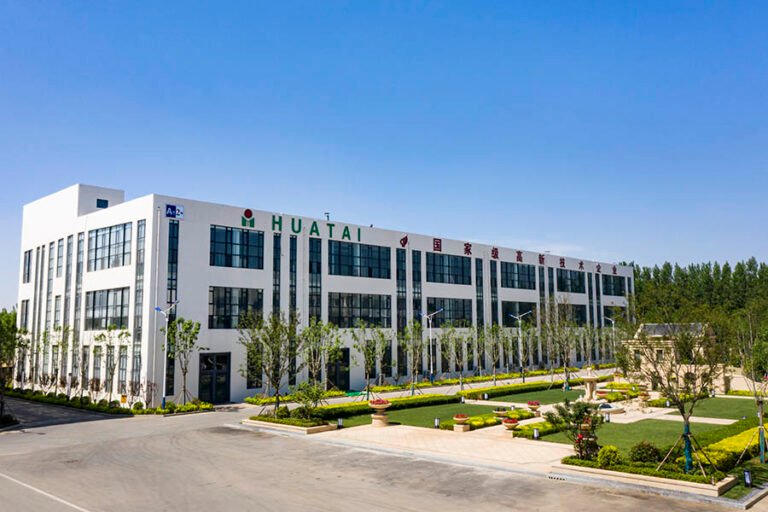
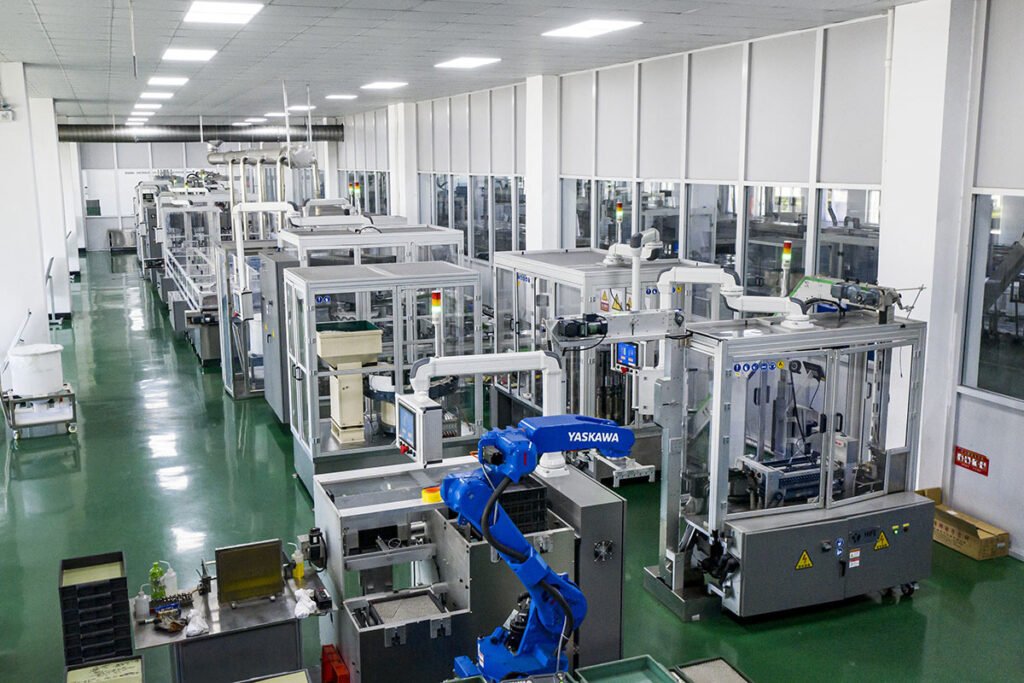
For manufacturers such as Shandong Huatai New Energy Battery Co., Ltd., this distinction is particularly important. Huatai has developed deep manufacturing capabilities in zinc-carbon batteries over decades, with large-scale production covering AA, AAA, C, D and 9V batteries, while also supplying alkaline batteries, lithium batteries and private-label battery solutions. Understanding why the EU treats these product categories differently can help European importers and distributors make better sourcing decisions.

The First Point: The EU’s Current Investigation Is Specifically About Alkaline Batteries
The most important fact is the scope of the current EU case.
The European Commission’s AD756 investigation concerns:
- Primary cells and batteries using alkaline manganese dioxide
- Cylindrical cells
- Non-rechargeable batteries
- Products originating in China
- Currently associated with CN code 8506 10 11
The official EU notice does not describe the investigated product as all dry batteries or all primary batteries. It defines the product much more narrowly as cylindrical, non-rechargeable alkaline manganese dioxide cells and batteries.
This distinction is technically important.
Carbon zinc batteries and alkaline batteries are both primary zinc-manganese battery technologies, but they are different electrochemical systems.
| Technical factor | Carbon Zinc Battery | Alkaline Battery |
| Common terminology | Zinc-carbon / Carbon-zinc / Heavy Duty | Alkaline manganese |
| Electrolyte | Mainly zinc chloride / ammonium chloride systems | Potassium hydroxide (KOH) |
| Typical voltage | 1.5 V | 1.5 V |
| Common sizes | R6, R03, R14, R20, 6F22 | LR6, LR03, LR14, LR20, 6LR61 |
| Typical positioning | Economy / standard / low-drain | Higher-performance consumer battery |
| Rechargeable? | No | No |
| EU AD756 scope | Not included in the stated scope | Included |
| Typical applications | Remote controls, clocks, radios, basic toys, flashlights | Toys, electronic devices, flashlights, high-drain consumer products |
Therefore, it would be inaccurate to describe the current EU investigation as an investigation against “Chinese dry batteries” as a whole.
Why Does the Difference Matter for Chinese Battery Manufacturers?
From a manufacturer’s perspective, product classification is fundamental to trade-defence policy.
An anti-dumping investigation is normally initiated around a defined product under investigation, rather than simply around an entire industry.
This means that the EU does not automatically investigate:
Chinese batteries → Chinese dry batteries → Chinese carbon zinc batteries → Chinese alkaline batteries
as one single category.
Instead, the Commission defines the product based on technical characteristics, commercial substitutability, customs classification and the evidence presented by the complainant.
In the current case, the complainant is VARTA Consumer Batteries GmbH & Co. KGaA, and the complaint was submitted on behalf of the Union industry producing alkaline manganese dioxide primary batteries.
This provides an important clue about why carbon zinc batteries are currently outside the case.

One Major Reason: The European Carbon Zinc Battery Industry Is Structurally Different
The European market for carbon zinc batteries is not identical to the market for premium alkaline batteries.
Carbon zinc batteries are traditionally positioned as cost-effective primary batteries for low-drain applications.
Typical products include:
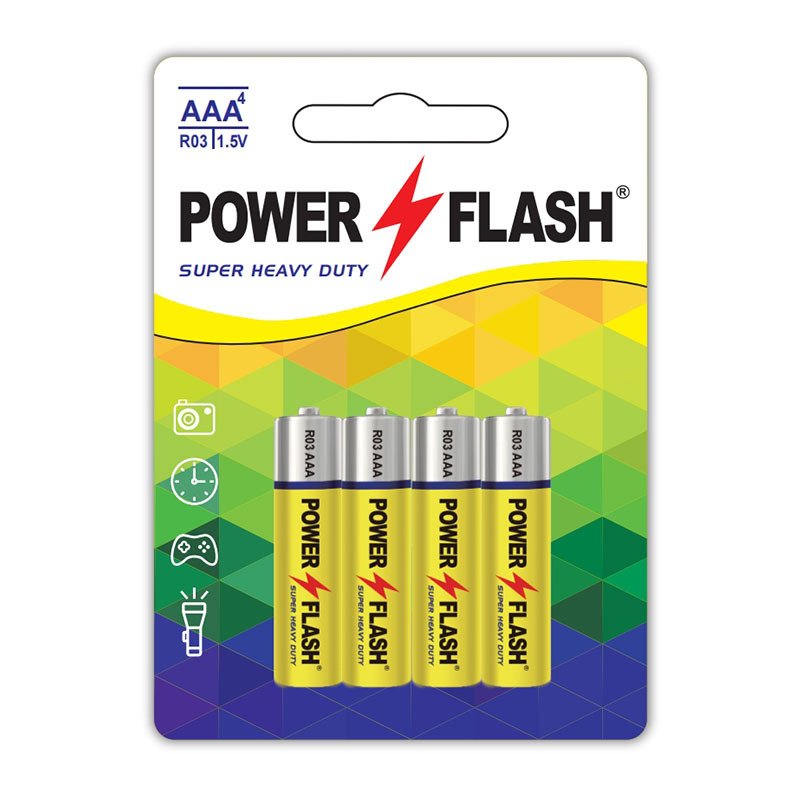
- R6P / AA carbon zinc batteries
- R03P / AAA carbon zinc batteries
- R14P / C batteries
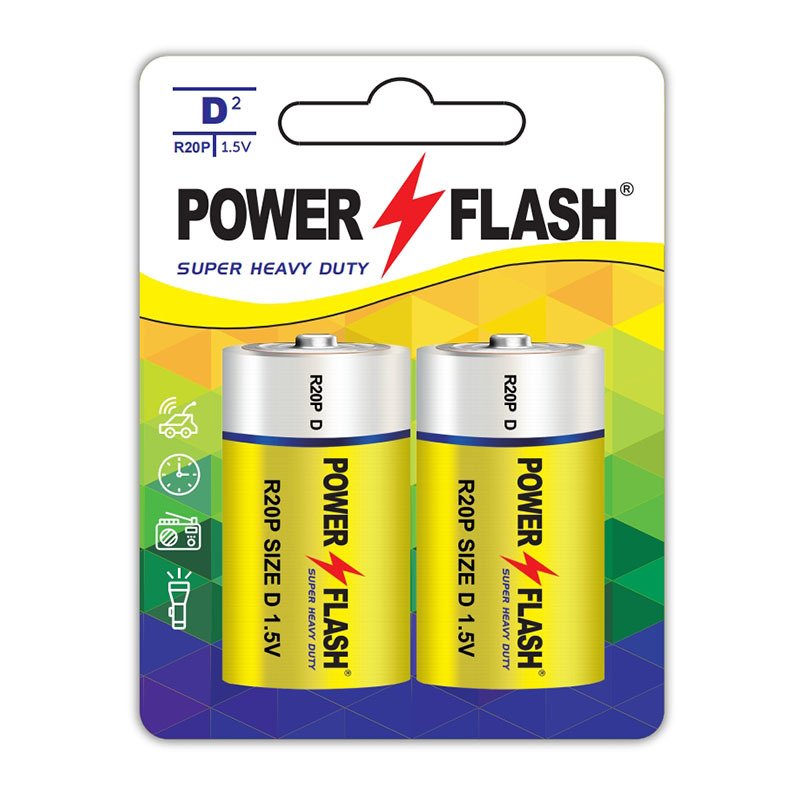
- R20P / D batteries
- 6F22 / 9V zinc-carbon batteries
- Heavy Duty batteries
- Super Heavy Duty batteries
These products compete heavily on:
unit cost + usable energy + leakage resistance + shelf life + supply stability + packaging + distribution efficiency.
That creates a different competitive environment from premium alkaline batteries.
For many European buyers, importing carbon zinc batteries from Asia is not simply a matter of replacing a European factory with a Chinese factory. It is part of a long-established global supply chain.
In some European markets, imported zinc-carbon batteries are already deeply integrated into private-label, discount retail, wholesale and general consumer-goods distribution.
Third-party market data also indicates that countries such as France and Italy rely heavily on imported zinc-carbon batteries, with China among the major supply origins. However, these market estimates should be treated as commercial research rather than official EU trade-defence statistics.

Chinese Carbon Zinc Batteries Serve a Different Economic Role
This is another important reason why a direct comparison with alkaline batteries can be misleading.
The core competitive advantage of Chinese carbon zinc battery manufacturers is not necessarily an attempt to sell a premium product below its “fair value.”
It is often based on manufacturing scale and supply-chain efficiency.
For example, a large Chinese carbon zinc battery factory can achieve economies of scale through:
- high-volume production;
- automated assembly;
- centralized procurement;
- standardized battery sizes;
- integrated component supply;
- optimized packaging;
- container-load efficiency;
- mature export logistics;
- long-term OEM relationships.
This is particularly relevant to Huatai Battery.
Huatai’s carbon zinc battery business has roots going back to the Linyi Battery Factory established in 1956. The company subsequently expanded its production capabilities and developed large-scale manufacturing covering major zinc-carbon battery formats.
Today, Huatai’s product portfolio includes:
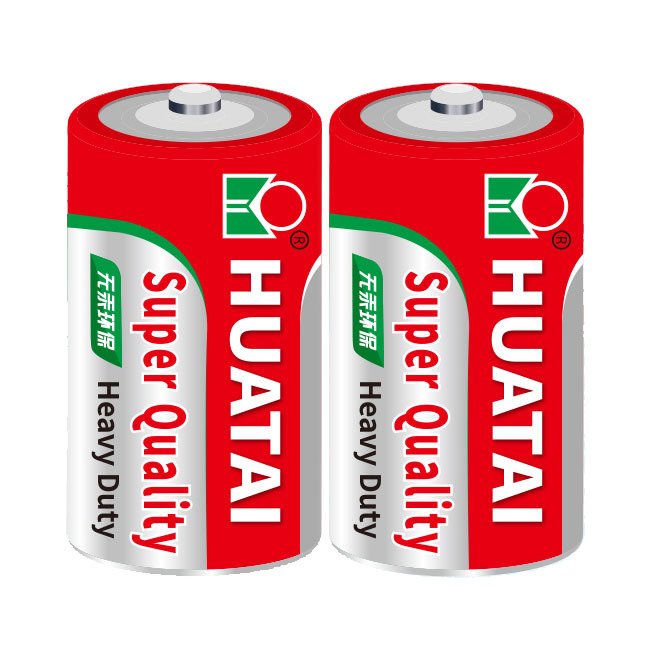
R6 / AA, R03 / AAA, R14 / C, R20 / D and 6F22 / 9V carbon zinc batteries, alongside alkaline, lithium, rechargeable and other battery products.
The commercial proposition is therefore not simply:
“Chinese batteries are cheaper.”
It is more accurately:
Large-scale manufacturing + mature supply chain + automated production + standardized quality control + competitive energy cost per unit = competitive total procurement cost.
That distinction matters in any future trade-defence assessment.
Carbon Zinc Batteries Are Highly Price-Sensitive Products
Carbon zinc batteries occupy one of the most price-sensitive areas of the primary battery market.
For many applications, buyers are not looking for the highest possible energy density.
They are looking for the lowest practical total cost of ownership.
Typical applications include:
- remote controls;
- wall clocks;
- table clocks;
- radios;
- basic toys;
- flashlights;
- low-power household devices;
- promotional products;
- emergency-use products.
For these applications, a buyer may prefer a reliable R6P or R03P battery that provides adequate performance at a highly competitive unit price rather than paying substantially more for an alkaline battery.
This creates a strong market for private-label carbon zinc batteries.
For European importers, the question is often:
Can the battery deliver acceptable runtime, shelf life and leakage resistance at the target retail price?
rather than:
Which battery has the highest energy density?
This explains why Chinese carbon zinc battery manufacturers continue to have an important role in the European supply chain.

Why Has the EU’s Alkaline Investigation Attracted More Attention?
The current investigation is important because the European Commission is examining whether Chinese imports of the investigated alkaline batteries are being dumped and whether those imports are causing injury to the Union industry.
The complaint was formally submitted by VARTA Consumer Batteries GmbH & Co. KGaA.
This means there is an identifiable European industrial base arguing that it has been materially affected by the investigated imports.
That is an essential component of a trade-defence case.
In simplified terms, an anti-dumping case needs much more than:
“Chinese products are cheaper.”
The investigation must address questions such as:
- Are the products being imported at dumped prices?
- Is there material injury to the EU industry?
- Is there a causal relationship between the imports and the injury?
- Is the complainant representative of the relevant Union industry?
- What is the appropriate product scope?
The EU’s official notice confirms that the alkaline battery complaint was submitted under Article 5 of the EU’s basic anti-dumping regulation and on behalf of the relevant Union industry.
Therefore, the existence of a strong Chinese export industry alone does not automatically result in an EU anti-dumping investigation.

Another Reason: Carbon Zinc Batteries and Alkaline Batteries Are Not Perfect Substitutes
From a technical and commercial perspective, carbon zinc and alkaline batteries overlap but are not identical products.
A buyer purchasing batteries for a low-drain remote control may consider:
R6P carbon zinc → economical choice
while another buyer purchasing batteries for a high-drain electronic toy may choose:
LR6 alkaline → higher-performance choice
This means the two products can compete at the retail level but still occupy different segments.
The distinction becomes particularly important when defining a product under investigation.
If an investigation included every primary battery simply because all of them provide portable electrical energy, the product scope would become excessively broad.
The EU’s current approach demonstrates why technical and commercial product definitions matter. The AD756 notice specifically identifies alkaline manganese dioxide cylindrical primary cells and batteries rather than all primary batteries.

Does This Mean Chinese Carbon Zinc Batteries Will Never Face EU Trade Defence Measures?
No.
This is an important point for Chinese manufacturers and European importers.
The correct conclusion is:
There is currently no EU AD756 investigation covering Chinese carbon zinc batteries, but that does not mean carbon zinc batteries are permanently exempt from future trade-defence action.
If European producers or an eligible industry association believe that Chinese zinc-carbon battery imports are causing injury and can meet the legal requirements for initiating a complaint, a separate investigation could theoretically be requested.
Trade-defence measures are product-specific and case-specific.
The current EU trade-defence database shows AD756 as an initial investigation concerning certain alkaline batteries from China.
Therefore, European buyers of Chinese carbon zinc batteries should continue monitoring:
- EU Official Journal notices;
- European Commission trade-defence cases;
- CN/TARIC classifications;
- battery environmental regulations;
- product compliance requirements;
- future industry complaints.
What Does This Mean for Huatai Battery?
For Shandong Huatai New Energy Battery Co., Ltd., the current situation creates both an opportunity and a responsibility.
Huatai has particularly deep experience in zinc-carbon battery manufacturing, with the company’s industrial history tracing back to the Linyi Battery Factory established in 1956.
Its carbon zinc battery product range covers the mainstream international formats:
- R6P / AA carbon zinc batteries
- R03P / AAA carbon zinc batteries
- R14P / C batteries
- R20P / D batteries
- 6F22 / 9V carbon zinc batteries
- Heavy Duty batteries
- Super Heavy Duty batteries
The company also operates large-scale alkaline and lithium battery businesses, enabling European importers to source multiple battery chemistries from one established supplier.
For European distributors, this provides a potentially important advantage:
one supplier → multiple battery technologies → OEM/private label → standardized export documentation → scalable production.

Why Huatai’s Carbon Zinc Battery Strategy Is Based on “Value,” Not Simply Low Price
Huatai does not view carbon zinc batteries simply as the cheapest possible battery.
A professional carbon zinc battery supplier needs to balance:
| Buyer Requirement | Huatai’s Manufacturing Focus |
| Low unit cost | Large-scale production and supply-chain efficiency |
| Stable voltage | Controlled manufacturing processes |
| Long storage | Battery formulation and quality control |
| Leakage resistance | Sealing and structural control |
| Consistent batches | Automated production and inspection |
| Private label | Flexible packaging and OEM production |
| Large orders | High-volume production capacity |
| Export compliance | Product testing and documentation |
| Competitive landed cost | Packaging and logistics optimization |
This is especially important for European private-label battery buyers.
A battery that is €0.01 cheaper but generates customer complaints, leakage claims or retailer returns is not necessarily the cheapest battery.
The real objective is competitive cost per usable battery.
Carbon Zinc vs. Alkaline: Why European Buyers Should Not Treat Them as the Same Product
| Factor | Carbon Zinc | Alkaline |
| Main positioning | Value / economy | Higher-performance primary battery |
| Typical chemistry | Zinc-carbon | Alkaline manganese |
| Common AA designation | R6/R6P | LR6 |
| Common AAA designation | R03/R03P | LR03 |
| Energy density | Lower | Higher |
| Typical unit price | Lower | Higher |
| Low-drain applications | Excellent fit | Excellent fit |
| High-drain applications | More limited | Better suited |
| OEM/private label | Very common | Very common |
| Chinese manufacturing strength | Very strong | Very strong |
| Current EU AD756 investigation | No | Yes, certain products |
The table also explains why it would be misleading to say:
“The EU investigated Chinese alkaline batteries, so carbon zinc batteries are next.”
There is currently insufficient evidence to make that prediction.

What Should European Carbon Zinc Battery Importers Do Now?
For European importers, the best response is not to abandon Chinese suppliers.
Instead, buyers should strengthen supplier due diligence.
A professional sourcing process should examine:
1. Product consistency
Ask suppliers for batch testing and performance specifications rather than relying only on catalogue descriptions.
2. Leakage performance
For zinc-carbon batteries, leakage resistance should be an important purchasing criterion, especially for products intended for long-term retail storage.
3. Shelf life
The supplier should clearly specify the recommended storage conditions and shelf-life period.
4. Compliance documentation
European buyers should request relevant documentation according to the specific product and market, including environmental and chemical compliance documentation where applicable.
5. OEM traceability
Private-label buyers should maintain clear records of:
- manufacturer;
- production batch;
- product specification;
- packaging;
- test reports;
- shipment documentation.
6. Trade-defence monitoring
Buyers should monitor future EU trade-defence developments instead of assuming that today’s regulatory situation will remain unchanged.

Frequently Asked Questions About Chinese Carbon Zinc Batteries and EU Anti-Dumping
Is the EU currently investigating Chinese carbon zinc batteries?
Not under the current AD756 investigation. The investigation launched on 2 July 2026 concerns certain cylindrical, non-rechargeable alkaline manganese dioxide primary cells and batteries originating in China.
Why are Chinese alkaline batteries under investigation?
The investigation follows a complaint submitted by VARTA Consumer Batteries GmbH & Co. KGaA on behalf of the relevant EU alkaline battery industry. The complaint alleges dumping and injury to the Union industry. The investigation will determine whether the legal requirements for anti-dumping measures are met.
Are carbon zinc and alkaline batteries the same type of battery?
No. Both are primary zinc-manganese battery technologies and normally provide 1.5 V per cell, but they use different electrolyte systems and have different performance and market positioning. Carbon zinc batteries are commonly identified by designations such as R6P and R03P, while alkaline batteries use designations such as LR6 and LR03.
Does the absence of an EU carbon zinc investigation mean Chinese carbon zinc batteries are not competitive?
No. Chinese carbon zinc batteries are highly competitive, but competitiveness alone does not establish dumping under EU trade-defence law. A trade-defence case requires evidence concerning dumping, injury and causation.
Are Chinese carbon zinc batteries important to the European market?
Yes. European markets rely substantially on imported zinc-carbon batteries, and China is an important supply source. Commercial market research indicates particularly high import dependence in several European countries.
Can EU authorities investigate Chinese carbon zinc batteries in the future?
Yes, theoretically. If an eligible Union industry submits a properly supported complaint and the legal conditions are met, the European Commission could initiate a separate investigation covering a defined category of zinc-carbon batteries.
Why are carbon zinc batteries still popular in Europe?
Their major advantages are competitive price, broad availability, simple technology and suitability for low-drain applications. They remain particularly relevant for remote controls, clocks, radios, basic toys and other everyday devices.
Is Huatai Battery suitable for European private-label carbon zinc battery projects?
Huatai has long-term experience in zinc-carbon battery manufacturing and produces major formats including R6P, R03P, R14P, R20P and 6F22. The company also provides alkaline and other battery products, allowing importers and distributors to develop multi-product OEM/private-label sourcing programs.
Conclusion: The Current EU Position Is a Product-Specific Trade Defence Issue
The most important conclusion is straightforward:
The EU has launched an anti-dumping investigation into certain Chinese alkaline manganese batteries, but this investigation does not currently cover Chinese carbon zinc batteries. The reason should not be oversimplified as “Europe does not care about Chinese carbon batteries” or “Chinese carbon batteries are not competitive.” The current distinction is primarily related to the defined product scope, the structure of the relevant Union industry, the evidence presented by the complainant and the legal requirements for initiating an anti-dumping proceeding.
For Huatai Battery, this reinforces the importance of maintaining a strong carbon zinc manufacturing base while continuing to improve product consistency, leakage resistance, testing, documentation, environmental compliance and OEM capabilities.
The long-term competitive advantage of Chinese battery manufacturers should not depend only on lower prices. It should increasingly come from manufacturing scale, reliable quality, technical capability, compliance, supply-chain efficiency and measurable value for international buyers.
For European battery distributors and private-label brands, that is also the more important question: not simply whether a Chinese carbon zinc battery is cheap, but whether it delivers reliable performance and competitive total procurement cost over the entire product lifecycle.
From Huatai’s perspective, this is the sustainable way for Chinese carbon zinc battery manufacturers to remain competitive in Europe—even as the EU’s trade-defence environment becomes increasingly complex.