English
 Spanish
 French
 Arabic
 Portuguese
 Russian
 Chinese
Top China Battery Manufacturer for Uruguay
Explore South America Uruguay’s battery market, including carbon zinc, alkaline, lithium and rechargeable batteries, regulatory requirements, renewable energy storage and private-label battery opportunities from China Huatai Battery Group.
Shandong Linyi Huatai New Energy Battery Co., Ltd. was established in May 1993,but our factory’s history can date back to the establishment of the Linyi Battery Plant in 1956.We are currently one of the leading Eco-friendly & Mercury-free alkaline battery manufacturers and lithium battery manufacturers in China and the world’s largest heavy duty zinc-carbon batteries manufacturer & factory. Our products are produced with HUATAI, Power Flash and KINGCELL brands and customer’s private label, supplied 6 billion annual output by HIBAR high-speed automated production lines, offering OEM solutions for zinc carbon, alkaline, and lithium batteries worldwide.

Uruguay is a relatively small market in South America, but its battery industry has characteristics that make it worth treating separately from Argentina, Brazil or the wider Latin American market. The country has stable demand for carbon zinc batteries, alkaline batteries, lithium batteries, rechargeable batteries and button cells, while its rapidly developing renewable-energy system is creating additional demand for lithium-ion and energy-storage batteries.
For importers and distributors, the Uruguay battery market is therefore not simply a low-price consumer battery market. Traditional AA and AAA batteries remain important for household and commercial applications, but environmental management, battery registration, product traceability and the development of electric mobility and energy storage are becoming increasingly relevant.
This creates a useful opportunity for Chinese battery suppliers that can provide both cost-effective primary batteries and higher-performance lithium and rechargeable battery solutions.
Understanding the Uruguay Battery Market
Uruguay has a smaller population than Brazil or Argentina, so the market volume for disposable batteries is naturally more limited. However, the country has a relatively developed retail and distribution system, a high level of urbanization and an unusually strong renewable-energy profile.
This produces two different battery markets.
The first is the traditional consumer market:
- AA and AAA batteries
- C and D batteries
- 9V batteries
- Carbon zinc batteries
- Alkaline batteries
- Button batteries
- Rechargeable NiMH batteries
The second is the emerging energy and mobility market:
- Lithium-ion batteries
- LiFePO4 batteries
- Solar energy storage batteries
- Residential energy storage
- Commercial and industrial battery storage
- Electric vehicle and mobility batteries
Uruguay’s Ministry of Environment specifically notes that battery use is increasing through electric mobility, renewable-energy installations and other applications, which was one reason the country updated its battery-waste management regulations in 2025.
Uruguay Battery Market by Product Segment
| Segment | Main Products | Typical Applications | Market Position |
| Economy disposable | Carbon zinc AA/AAA/C/D/9V | Remotes, clocks, radios, toys | Price-sensitive |
| Mainstream disposable | Alkaline AA/AAA/C/D/9V | Toys, flashlights, electronics | Higher performance |
| Specialty disposable | Lithium, button cells | Sensors, electronics, medical and specialty devices | Higher value |
| Rechargeable | NiMH AA/AAA/C/D | Consumer electronics | Reusable |
| New energy | Li-ion, LiFePO4 | Solar storage, backup power, mobility | Growing |
| Industrial storage | Lithium battery systems | Renewable energy and grid applications | Emerging |
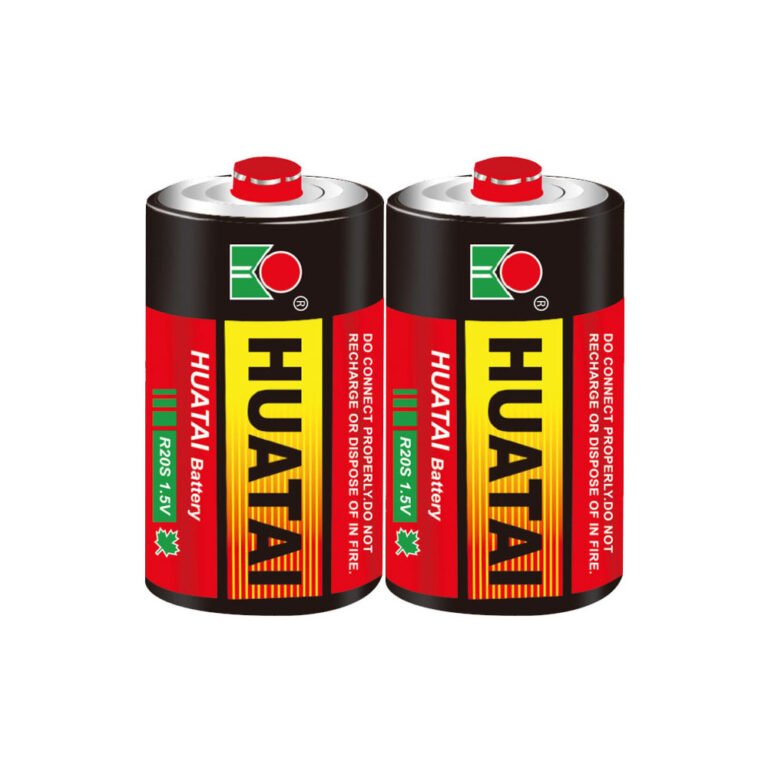
Carbon Zinc Batteries Still Have a Place in Uruguay
For a Chinese supplier entering the Uruguay carbon zinc battery market, the key point is that the country should not be approached as a premium-only market.
Carbon zinc batteries remain useful for low-drain applications where purchase price is important and the equipment does not require the higher discharge performance of alkaline technology.
Typical applications include:
- Remote controls
- Wall clocks
- Basic toys
- Radios
- Low-power flashlights
- Household devices
- Promotional products
For these applications, a well-controlled zinc-carbon battery can provide an economical solution.
This is particularly relevant for wholesalers and distributors that sell large quantities through traditional retail channels. Instead of replacing carbon zinc batteries with alkaline batteries across the entire product range, distributors can maintain two different price levels.
Carbon Zinc vs. Alkaline for Uruguay
| Purchasing factor | Carbon Zinc | Alkaline |
| Unit cost | Lower | Higher |
| Low-drain devices | Suitable | Very suitable |
| Higher-drain devices | Limited | Better |
| Retail positioning | Economy/value | Mainstream |
| OEM/private label | Strong opportunity | Strong opportunity |
| Best strategy | Volume and price | Performance and value |
The commercial logic is straightforward: carbon zinc protects the low-price segment, while alkaline expands the higher-performance segment.
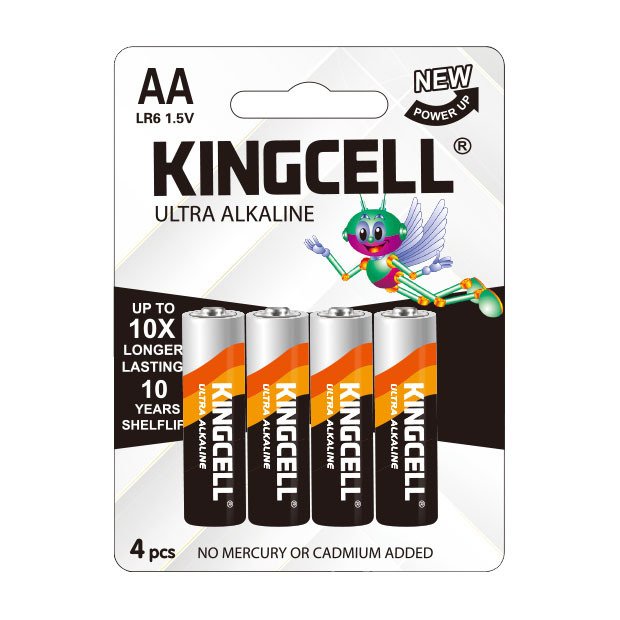
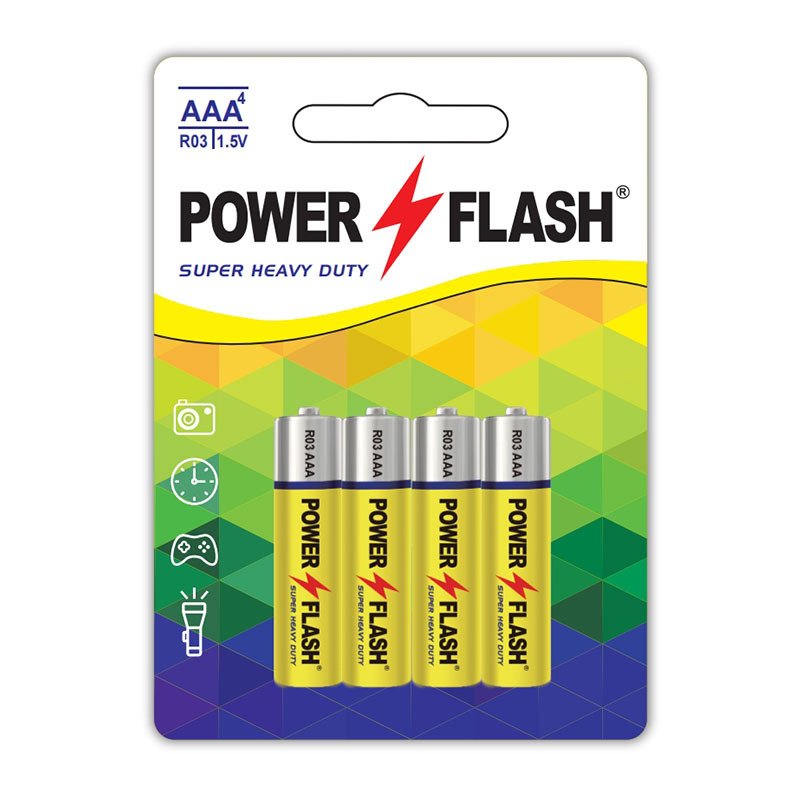
Alkaline Batteries Are Important for Higher-Performance Applications
The alkaline battery market in Uruguay is more closely connected with applications where consumers expect longer operating time and more stable performance.
AA and AAA alkaline batteries can serve toys, flashlights, wireless accessories, household electronics and other medium-drain devices. C, D and 9V batteries provide additional options for products requiring larger capacities or different form factors.
For a distributor building a local battery brand, an effective product portfolio could include:
- Carbon zinc AA and AAA
- Carbon zinc C, D and 9V
- Alkaline AA and AAA
- Alkaline C, D and 9V
- Lithium button cells
- Rechargeable NiMH AA and AAA
- Selected lithium primary batteries
This product structure allows an importer to cover different retail prices without maintaining completely different supplier relationships.
Long Shelf Life and Leakage Resistance Matter for Imported Batteries
Uruguay is geographically compact compared with Argentina or Brazil, but imported battery products still need to pass through international transportation, customs clearance, warehouses, wholesalers and retail channels.
Consequently, battery shelf life and leakage resistance remain important purchasing criteria.
A low-cost battery that leaks during long-term storage can create much greater costs through retailer complaints, product replacement and damaged equipment.
For Uruguay distributors, supplier evaluation should therefore include:
- Shelf-life specification
- Leakage-resistance testing
- Sealing technology
- Storage-temperature recommendations
- Batch consistency
- Production traceability
- Packaging durability
For carbon zinc and alkaline batteries, the supplier’s sealing system can be just as commercially important as the advertised capacity.
Uruguay’s Battery Waste Regulations Changed Significantly in 2025
One of the most important developments for the Uruguay battery market is Decree No. 227/025, promulgated in October 2025 and published in November 2025.
The decree repealed the previous Decree 373/003 and established an updated framework for the management of used or discarded batteries. It covers batteries, accumulators, cells and supercapacitors.
The regulation is particularly important because it reflects the changing nature of the battery market. Uruguay’s government explicitly linked the regulatory update to the growing use of batteries in electric mobility and renewable-energy installations.
For covered batteries, importers and manufacturers have obligations that include registration, battery-waste management planning, labeling and coordination with distributors and sales or service points.
The regulation also establishes registration requirements for importers, manufacturers and certain special users. The registration includes information such as quantities, composition and materials, use, brand and estimated service life.
This means that Uruguay battery importers should consider end-of-life management when selecting a supplier, rather than treating waste management as an issue that only appears after the product is sold.
Important Distinction: Primary Batteries vs. Mobility and Energy-Storage Batteries
The 2025 regulation does not treat every battery application identically.
The current framework specifically establishes a registration process for batteries of more than 1 kW that can be used in land, marine or air vehicles and agricultural machinery, as well as batteries for stationary energy-storage systems exceeding 2 kWh. Uruguay’s Ministry of Environment provides a dedicated registration process for these batteries.
This distinction is commercially important.
A company importing ordinary AA and AAA household batteries should not automatically assume that the regulatory requirements for large lithium battery systems apply identically to its primary battery business.
Conversely, an importer entering Uruguay’s electric mobility or energy-storage market needs to pay much closer attention to the country’s battery registration and waste-management framework.

Battery Market Compliance Considerations in Uruguay
| Product | Key issue for importer |
| Carbon zinc AA/AAA | Product specifications, labeling and applicable waste-management requirements |
| Alkaline AA/AAA | Product specifications, environmental information and applicable registration |
| Button batteries | Product-specific compliance and safe handling |
| NiMH rechargeable | Battery composition and waste-management obligations |
| Lithium primary | Transport and product documentation |
| EV batteries | Registration and waste-management requirements |
| Large LiFePO4 storage | Registration if within applicable capacity scope |
| Stationary BESS | Additional environmental and battery-management requirements |
For any commercial shipment, the importer should verify the exact current requirements with Uruguay’s relevant authorities before production and shipment.
Uruguay’s Renewable-Energy Structure Creates a Different Battery Opportunity
Uruguay is particularly interesting for lithium battery suppliers because its electricity system already has an exceptionally high share of renewable generation.
Uruguay’s national utility UTE stated in June 2026 that the country’s electricity generation matrix is 98% renewable on average, with some days reaching 100%. UTE also highlighted a new challenge: storing renewable electricity when wind or solar generation exceeds immediate demand.
This creates a different logic for the Uruguay lithium battery market.
The country does not need batteries simply because renewable generation is unavailable. Instead, energy storage can help manage the variability and timing of renewable generation.
Potential applications include:
- Residential solar-plus-storage
- Commercial backup systems
- Industrial energy storage
- Renewable-energy integration
- Peak-demand management
- Grid-support applications
- Electric mobility
UTE has been working since 2025 on ways to store renewable-energy surpluses, specifically addressing the challenge of maintaining system flexibility when wind and solar output does not match demand.
For Chinese lithium battery manufacturers, this creates an opportunity beyond traditional consumer batteries.

Lithium and Rechargeable Battery Demand Is Expanding
The growth of lithium-ion batteries should not be interpreted as meaning that disposable batteries will disappear from Uruguay.
Instead, the market is becoming more segmented.
A household may still use alkaline AA batteries in a remote control while the same household uses lithium-ion storage for solar power or backup electricity.
Similarly, an importer may sell carbon zinc batteries through traditional retail while supplying LiFePO4 systems to renewable-energy installers.
This means a comprehensive battery supplier can potentially serve several parts of the market through one supply relationship.
Industry trade data also indicates growing lithium battery imports into Uruguay. One 2026 trade-data analysis reported approximately US$12.9 million in 2025 imports under HS 8507600090, covering lithium-ion batteries and accumulators, with demand linked to energy storage, electric mobility and other applications.
The figure should be treated as trade-data analysis rather than an official market-size statistic, because the HS category can cover multiple applications.
Why Huatai Battery Is More Than a Carbon Zinc Battery Manufacturer
For a Uruguayan importer searching for a top China battery manufacturer, supplier breadth can be more valuable than a single product advantage.
Huatai Battery’s manufacturing heritage can be traced back to Linyi Battery Factory, established in 1956.
Over more than six decades of industrial development, the company has evolved from its historic strength in carbon zinc batteries into a comprehensive battery manufacturer.
Being one of the world’s largest carbon zinc battery manufacturers became an important historical label for Huatai. However, it does not fully describe the company’s current capabilities.
Today, Shandong Huatai New Energy Battery Co., Ltd. has developed a broader product portfolio covering:
- Carbon zinc batteries
- Alkaline batteries
- Lithium batteries
- Rechargeable NiMH batteries
- Li-ion batteries
- LiFePO4 batteries
- Sodium-ion battery technology
- Solar and energy-storage batteries
- OEM and private-label battery solutions
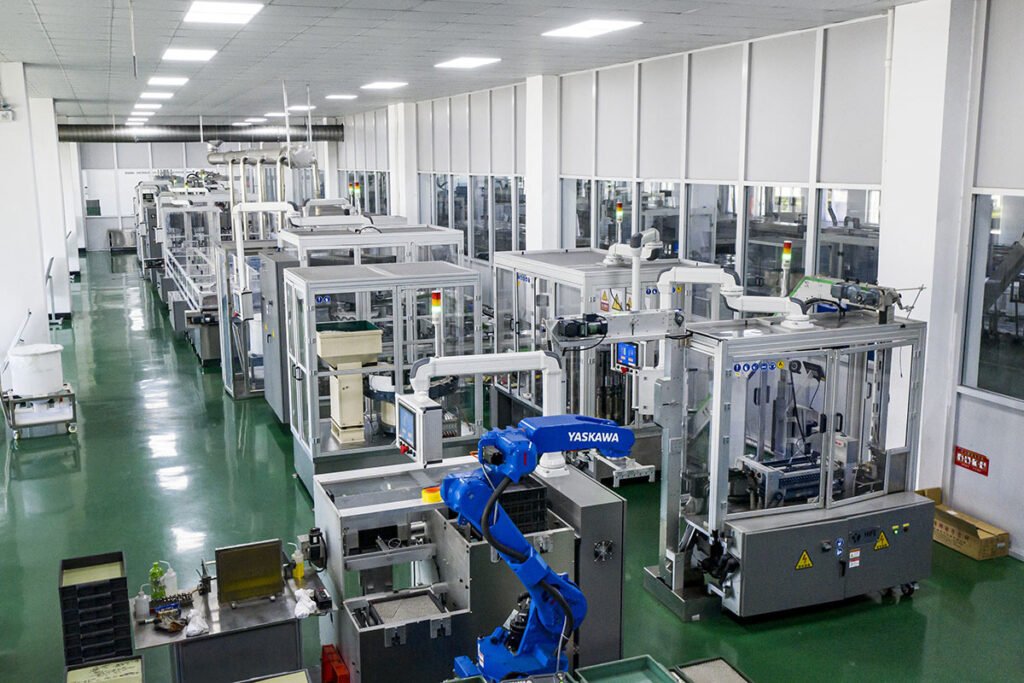
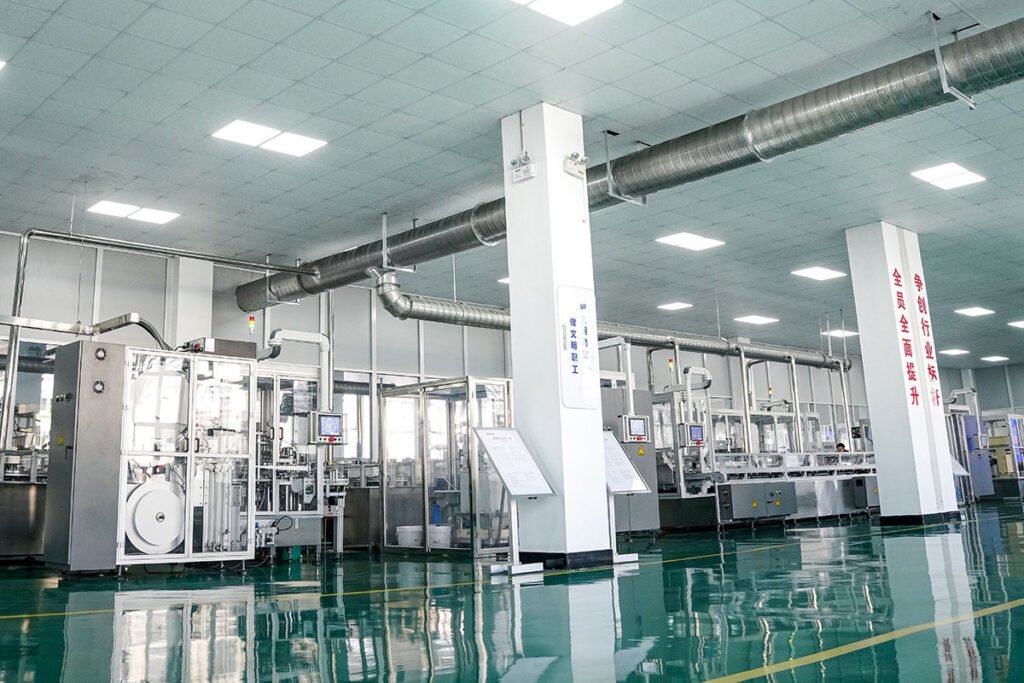
Huatai’s manufacturing system includes more than 40 production lines and seven component workshops. Its high-speed alkaline production capability and international export experience provide a foundation for supplying both conventional disposable batteries and newer battery technologies.
For Uruguay, this matters because the market itself is becoming more diversified.
OEM and Private Label Battery Opportunities in Uruguay
Uruguay’s relatively compact market can be attractive for distributors that have established local channels and want to develop a differentiated brand.
A private-label strategy does not necessarily require launching a large number of products immediately.
A practical starting portfolio could be:
| Product | Target market |
| Carbon zinc AA/AAA | Economy retail |
| Alkaline AA/AAA | Mainstream retail |
| Alkaline C/D/9V | Specialty applications |
| Lithium button cells | Electronics and specialty retail |
| NiMH rechargeable | Reusable consumer applications |
| Lithium/LiFePO4 | Solar and energy-storage channels |
The advantage of working with a comprehensive manufacturer is that the distributor can gradually expand its range without changing suppliers every time it enters a new battery category.
How Should Uruguayan Buyers Evaluate a Chinese Battery Supplier?
For Uruguayan importers, five questions are particularly useful.
Does the factory manufacture the batteries itself?
This helps distinguish an actual battery manufacturer from a trading company.
Can the supplier provide different battery chemistries?
Carbon zinc, alkaline, lithium and rechargeable products may serve different customer segments.
Can the supplier support compliance documentation?
Technical specifications, safety documents, environmental information and applicable transport documentation should be prepared before shipment.
Can the factory provide consistent OEM production?
Private-label buyers need stable specifications across repeated orders.
Can the supplier support the transition toward new-energy batteries?
This becomes increasingly relevant as Uruguay develops energy storage and electric mobility.

FAQs About the Uruguay Battery Market
1. Are carbon zinc batteries still in demand in Uruguay?
Yes. Carbon zinc batteries remain suitable for low-drain applications such as clocks, remote controls, basic toys, radios and similar household products. Their lower cost allows distributors to serve economy-oriented customers.
2. What batteries should a Uruguayan distributor import from China?
A practical portfolio can include carbon zinc and alkaline AA/AAA batteries as core products, with C/D/9V batteries, button cells and rechargeable NiMH products added according to local demand. Lithium and LiFePO4 products can address the growing energy-storage and mobility sectors.
3. What changed in Uruguay’s battery regulations in 2025?
Decree 227/025 replaced Decree 373/003 and established a new framework for managing used and discarded batteries. It introduced updated registration, management-plan, labeling and distribution-related obligations for covered batteries.
4. Does the new Uruguay battery regulation apply to all batteries?
The decree establishes a broad battery-waste management framework, but specific obligations depend on battery type and application. In particular, the current registration process identifies batteries above 1 kW used in mobility and machinery and stationary energy-storage batteries above 2 kWh. Importers should verify their exact product category before shipment.
5. Are lithium batteries becoming more important in Uruguay?
Yes. Uruguay’s strong renewable-energy system is increasing the importance of energy storage, while electric mobility creates additional lithium-battery applications. UTE has specifically identified energy storage as a strategic challenge for managing renewable-energy surpluses.
6. Is LiFePO4 suitable for the Uruguay market?
LiFePO4 can be suitable for applications requiring safe, durable stationary energy storage, solar backup and other energy-storage systems. The appropriate battery capacity and system design depend on the customer’s load profile and installation requirements.
7. Can a Chinese battery manufacturer provide private-label batteries for Uruguay?
Yes. Chinese manufacturers with OEM capabilities can produce private-label carbon zinc, alkaline, rechargeable and lithium products. The importer should define specifications, packaging, labeling and compliance requirements before mass production.
8. Why should Uruguayan buyers choose a comprehensive battery manufacturer instead of a carbon zinc specialist?
A comprehensive supplier can support different market segments as demand changes—from economical carbon zinc batteries and mainstream alkaline batteries to rechargeable, lithium and energy-storage products. This can reduce supplier fragmentation and make it easier for a distributor to expand its product portfolio.

Conclusion: Uruguay Is Small but Increasingly Diverse as a Battery Market
The Uruguay battery market is smaller than Brazil or Argentina, but its structure makes it particularly interesting for a comprehensive Chinese battery manufacturer.
Carbon zinc batteries continue to serve price-sensitive everyday applications, while alkaline batteries address higher-performance consumer demand. Rechargeable and lithium batteries are creating additional opportunities, and Uruguay’s exceptionally high renewable-energy share is making energy storage increasingly relevant.
At the same time, Uruguay’s updated 2025 battery-waste management framework means that environmental management, registration and product traceability should be considered part of the sourcing process rather than treated as an afterthought.
For importers and distributors, the practical strategy is therefore to build a product portfolio around cost, performance, compliance and long-term supply stability.
For Huatai Battery, the opportunity extends well beyond its historic reputation as a major carbon zinc battery manufacturer. With industrial roots dating back to the 1956 Linyi Battery Factory and today’s capabilities covering alkaline, lithium, rechargeable and new-energy batteries, Huatai can provide a broader battery supply platform for Uruguay’s changing market.